What Is a Packaged HVAC Unit? Everything You Need to Know Before You Buy
If you’ve shopped for HVAC equipment and kept running into terms like “packaged unit,” “rooftop unit,” or “all-in-one system” — you’re not alone in wondering exactly what separates these from the more familiar split systems found in most American homes. Packaged HVAC units are one of the most widely installed types of heating and cooling equipment in North America, yet they remain far less understood by homeowners than their split-system counterparts. This guide explains everything: what packaged units are, how they work, the five distinct types, how to size and select one, what they cost, and when they’re the right choice over a split system.
What Is a Packaged HVAC Unit?
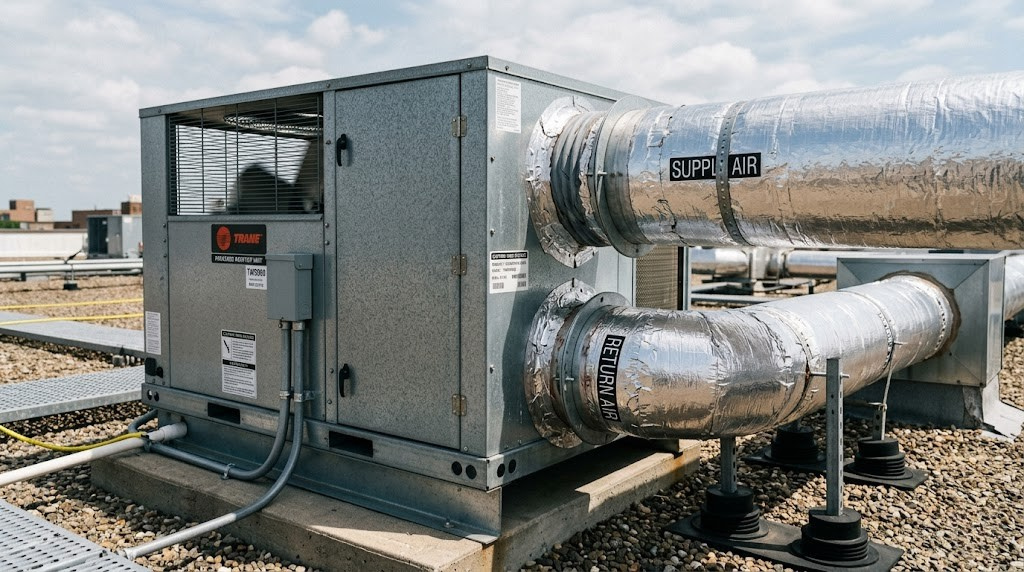
A packaged HVAC unit is a self-contained heating and cooling system that houses all of its major components — the compressor, condenser coil, evaporator coil, air handler, and in many cases the heating element — inside a single outdoor cabinet. Unlike a traditional split system, where the outdoor unit contains the compressor and condenser while a separate indoor air handler contains the evaporator coil and blower, a packaged unit consolidates everything into one enclosure.
The term “packaged” refers precisely to this consolidation: the entire mechanical system arrives pre-assembled, pre-charged with refrigerant, and ready to connect to your home or building’s ductwork and electrical supply. There’s no indoor unit to install, no refrigerant lines to run between an outdoor condenser and an indoor air handler, and no need for mechanical room space inside the structure.
These systems are most commonly installed in one of three physical configurations:
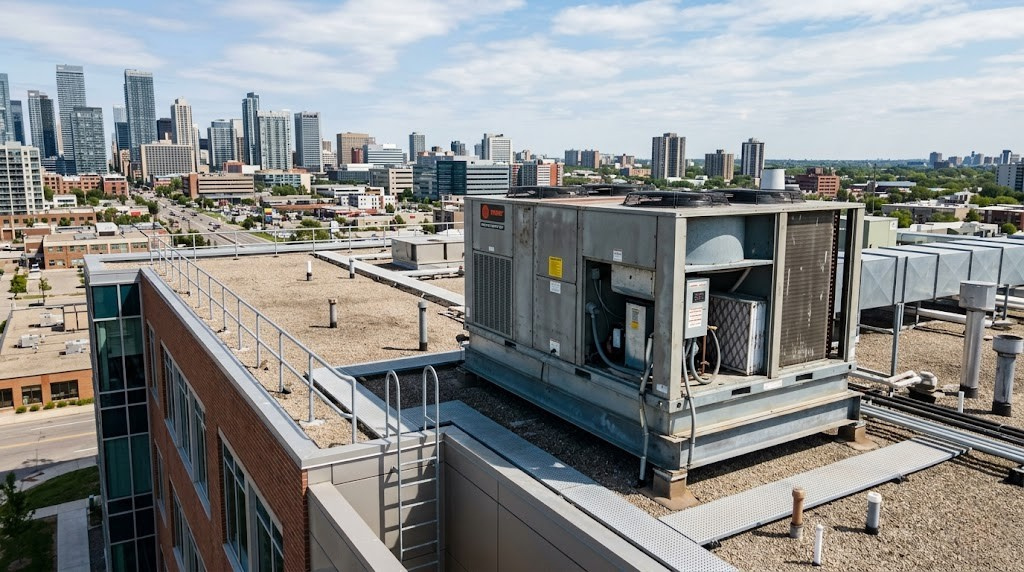
- Rooftop placement — the unit sits on the roof of a flat or low-slope building, connecting to interior ductwork through curb-mounted openings. This is the dominant configuration for light commercial buildings.
- Ground-level slab placement — the unit sits on a concrete pad beside the building and connects via ductwork that runs through the foundation or exterior walls. Common in residential applications.
- Crawlspace or under-building placement — in mobile homes and manufactured housing, packaged units are frequently installed underneath the structure.
The packaged unit concept dates to the early days of commercial air conditioning. As air conditioning expanded from movie theaters and department stores into smaller commercial spaces in the 1950s and 1960s, the need for a system that could be installed without a dedicated mechanical room became apparent. The rooftop unit (RTU) solved this elegantly: by placing everything on the roof, valuable floor space and interior volume were preserved entirely for occupancy.

Shop Packaged HVAC Units on Amazon
Compare Goodman, Rheem, and Carrier packaged systems with verified specs and real customer reviews.
🛒 Browse Packaged UnitsHow a Packaged HVAC Unit Works
Understanding how a packaged unit operates requires walking through the refrigeration cycle — the same fundamental physics that govern all air conditioners and heat pumps, just happening inside a single cabinet instead of across two separate indoor and outdoor units.
The Cooling Cycle
When operating in cooling mode, the packaged unit’s compressor pressurizes the refrigerant gas, raising its temperature significantly. This hot, high-pressure gas flows to the condenser coil — on the side of the cabinet facing the outdoor air. The condenser fan draws outside air across this coil, pulling heat out of the refrigerant and releasing it into the outdoor environment. The refrigerant cools, condenses into a liquid, and passes through an expansion valve that drops its pressure dramatically, causing it to become very cold.
This cold refrigerant then moves to the evaporator coil on the “indoor air” side of the cabinet. A blower fan draws the return air from the building’s duct system across this cold coil. The refrigerant absorbs heat from the building air, cooling and dehumidifying it in the process, then exits the evaporator as a warm gas and returns to the compressor to repeat the cycle. The newly cooled, dehumidified air is pushed by the supply fan through the supply duct system into the building’s occupied spaces.
The Heating Cycle (Gas or Electric)
In a packaged unit with gas heat, a gas burner assembly sits within the same cabinet. When heating is called for, the burner ignites, and the blower draws return air across a heat exchanger that is warmed by combustion gases. The flue gases exit through a flue connection in the cabinet, while the heated supply air is pushed through the duct system. In packaged heat pump models, the refrigerant circuit reverses via a reversing valve, effectively moving heat from outdoor air into the building even in winter conditions.
The Control Sequence
A packaged unit is typically governed by a standard thermostat inside the building — the same 24V thermostat interface used by split systems. When the thermostat calls for cooling or heating, it sends a low-voltage signal to the packaged unit’s control board, which sequences the components: first the supply fan starts, then (after a brief delay to establish airflow) the compressor or burner ignites. On a call for cooling, both the compressor and condenser fan run. The blower distributes conditioned air through the duct system, and the process continues until the thermostat’s setpoint is satisfied.
Modern packaged units increasingly incorporate inverter technology for variable-speed compressor control, allowing the system to modulate its output rather than simply cycling on and off. This dramatically improves efficiency and comfort precision, and is becoming more common even in packaged configurations as manufacturers bring variable-speed drives into this product category.
The 5 Main Types of Packaged HVAC Systems
Not all packaged units are created equal — in fact, there are five distinct types, each suited to different climates, fuel sources, and building requirements. Understanding the distinctions is essential before evaluating any specific product.
1. Packaged AC (Cooling Only)
Houses only the air conditioning components. Requires a separate heating system (furnace, boiler, or radiant). Best for climates with minimal heating needs.
2. Packaged Gas/Electric
The most popular residential type. Gas burner for heating, electric compressor for cooling — all in one cabinet. No auxiliary heating needed.
3. Packaged Heat Pump
Electric heat pump provides both heating and cooling. Higher efficiency than gas/electric in mild climates. Best where natural gas is unavailable.
4. Packaged Dual Fuel
Heat pump plus gas backup burner. Heat pump runs when outdoor temps are mild; gas takes over when temps drop below the balance point. Maximum efficiency.
5. Packaged Electric/Electric
Electric resistance heat plus electric cooling. Simple and low cost. Least efficient heating option — only practical where winters are very mild or electricity is cheap.
Gas/Electric Packaged Units: The Most Common Residential Choice
The gas/electric packaged unit dominates residential applications in the United States. In this configuration, the compressor-based cooling system and the gas heat exchanger share the same cabinet, with dedicated airflow sections for each function. The beauty of this design for homeowners replacing older systems is simplicity: one system, one utility connection (plus natural gas), one service point, and one warranty to manage.
These units are particularly common in the southern and southwestern United States, where single-story homes with slab foundations, limited attic access, and no basement make split-system installations more difficult. A crawlspace or ground-level packaged unit eliminates the need for an indoor air handler entirely.
Packaged Heat Pumps: Growing in Popularity
As heat pump technology has advanced — particularly with the advent of variable-speed inverter-driven compressors — packaged heat pumps have become a compelling option even in colder climates. A packaged heat pump provides both heating and cooling from a single electric system with no gas line required. For homes in areas where natural gas is unavailable or where electricity rates are favorable, packaged heat pumps represent exceptional value and simplicity.
The dual-fuel variant pairs a packaged heat pump with a gas auxiliary burner in the same cabinet. The heat pump operates in mild weather when it’s most efficient, automatically switching to gas heat when outdoor temperatures drop below the system’s balance point (typically 35–45°F). This combination captures the best of both technologies: heat pump efficiency when it matters most, and gas reliability when temperatures are extreme.
Packaged Units vs. Split Systems: A Complete Comparison
The choice between a packaged unit and a split HVAC system is one of the most fundamental decisions in HVAC selection. Both can deliver equivalent comfort outcomes, but they differ meaningfully in installation requirements, space demands, efficiency potential, and service accessibility. Here’s a thorough comparison across every dimension that matters.
| Comparison Factor | Packaged Unit | Split System |
|---|---|---|
| Component Location | All components outdoors (roof or slab) | Outdoor condenser + indoor air handler |
| Indoor Space Required | None — no indoor equipment | Yes — closet, attic, or mechanical room |
| Refrigerant Lines | None between indoor/outdoor | Required — adds installation complexity |
| Installation Complexity | Lower — single unit to place and connect | Higher — two units, refrigerant lineset, matching required |
| Max Efficiency (SEER2) | Up to ~18–20 (residential) | Up to 33+ (premium mini-splits) |
| Service Access | All from outdoors — no indoor access needed | Some components require indoor access |
| Best For | Slab homes, manufactured housing, commercial | Two-story homes, homes with basements/attics |
| Heating Options | Gas, heat pump, electric, dual fuel (in one unit) | Furnace or air handler with heat strips/heat pump |
| Noise Inside Home | Very low — all noise sources are outdoors | Some blower noise from indoor air handler |
| Typical Residential Cost | $3,500–$8,500 installed | $4,000–$12,000+ installed |
The service-access advantage deserves special attention. Because every serviceable component in a packaged system is accessible from outside the building, an HVAC technician can diagnose and repair the unit without ever entering the occupied space. For commercial building owners, this means maintenance can happen without disrupting business operations. For homeowners, it means a technician arriving on a Saturday morning doesn’t need to squeeze through an attic hatch or rearrange your utility closet.
Where Split Systems Win
The split system’s primary advantage is efficiency ceiling. Ductless mini-split systems — the highest-performing split system variant — can achieve SEER2 ratings of 25–33+, significantly above the 16–20 SEER2 typically available in packaged residential units. If maximum efficiency is your priority and your home is suitable for a split-system installation, a premium split system or mini-split will deliver lower operating costs over its lifetime. The blower comparison is also relevant here — our analysis of HVAC blower wattage (PSC vs. ECM motors) shows how the indoor blower motor choice significantly impacts annual operating costs in split systems where that motor runs for thousands of hours per year.
✅ Packaged Unit Advantages
- No indoor mechanical space required
- All service access from outdoors
- Simpler installation (one unit)
- No refrigerant lines to run indoors
- Lower initial cost in many cases
- Heating and cooling in one system
- Ideal for slab and manufactured homes
- Lower indoor noise profile
❌ Packaged Unit Disadvantages
- Lower maximum efficiency vs. mini-splits
- Exposed to weather year-round
- Rooftop access can complicate service
- Fewer inverter/variable-speed options
- Cabinet corrosion in coastal environments
- Duct runs from outdoors can lose efficiency
- Fewer ultra-premium brand options
Who Actually Needs a Packaged HVAC Unit?
Packaged units aren’t universally the best choice — but in specific situations, they’re not just a good option, they’re the obvious option. Understanding who benefits most from packaged system design will help you quickly determine whether this is the right direction for your project.
Manufactured and Mobile Home Owners
This is perhaps the single most common residential application for packaged HVAC. Manufactured homes and mobile homes are almost universally served by packaged units — often referred to as “mobile home packaged units” — installed on a slab or mounted under the structure. These homes lack the interior mechanical space, attic depth, and basement access that split systems typically require. Packaged units designed for manufactured housing have specific airflow configurations and duct connection sizes matched to mobile home duct systems.
Slab-Foundation Single-Story Homes
A significant portion of American homes, particularly in the South and Southwest, are built on concrete slabs without basements or usable attic space. When the original HVAC system fails in one of these homes, there may simply be nowhere to put a new indoor air handler without a major construction project. A ground-level packaged unit connects through the exterior wall or slab to the existing duct system, providing a straightforward replacement path that avoids structural modifications.
Light Commercial Buildings
Retail stores, restaurants, small office buildings, schools, and warehouses of virtually every description use rooftop packaged units. The rooftop placement preserves all ground-level and interior space for productive use, keeps noisy equipment away from occupants and customers, and allows HVAC service technicians to work on equipment without entering the occupied building. A typical strip mall might have 8–15 packaged rooftop units serving different tenant spaces, each independently controlled and serviceable.
Buildings Without Mechanical Room Space
In dense urban environments where interior square footage commands premium rents, the absence of an indoor mechanical footprint is a significant economic advantage of packaged design. Historic building renovations often use rooftop packaged units specifically to avoid gutting interior spaces for mechanical rooms that the original building was never designed to accommodate.
Efficiency Ratings and Energy Performance
Efficiency in packaged HVAC equipment is measured and rated using the same metrics as split systems, but the achievable ratings are somewhat different in practical terms. Understanding what the numbers mean — and what to look for when comparing products — is essential for making a cost-effective purchasing decision.
SEER2 for Cooling
SEER2 (Seasonal Energy Efficiency Ratio 2) is the primary cooling efficiency metric. As of 2023, federal minimum SEER2 standards for packaged air conditioners are 13.4 (northern states) and 14.3 (southern states). Most mid-grade packaged units fall in the 14–16 SEER2 range, while premium residential packaged units top out at approximately 18–21 SEER2. This is lower than the 25–33+ SEER2 achievable in top-tier mini-split split systems, but for many applications the packaged unit’s installation and operational simplicity more than compensates for the efficiency gap.
HSPF2 for Heat Pumps
For packaged heat pumps, HSPF2 (Heating Seasonal Performance Factor 2) measures heating efficiency. Minimum federal standards for packaged heat pumps are 6.7 HSPF2, while premium units reach 8.5–9.5 HSPF2. Higher HSPF2 numbers translate directly to lower winter electricity bills in climates where the heat pump carries the majority of the heating load.
AFUE for Gas Heat
The gas heating section of a packaged gas/electric unit is rated by AFUE (Annual Fuel Utilization Efficiency). Federal minimum for packaged units is 80% AFUE, meaning 80% of the gas energy is converted to useful heat while 20% exits through the flue. Some packaged gas/electric units offer 81–83% AFUE — modest but meaningful gains. Unlike split systems paired with high-efficiency modulating furnaces (which can reach 98% AFUE), packaged unit gas efficiency is generally limited to 80–83% due to flue configuration constraints in the self-contained cabinet design.
| Efficiency Metric | Federal Minimum | Good | Best Available (Packaged) |
|---|---|---|---|
| SEER2 (cooling) | 13.4–14.3 | 15–17 | 18–21 |
| HSPF2 (heat pump heating) | 6.7 | 7.5–8.0 | 8.5–9.5 |
| AFUE (gas heat) | 80% | 81–82% | 83% |
The Variable-Speed Efficiency Frontier
The packaged unit market is increasingly adopting variable-speed inverter-driven compressors, which have long been standard in premium split systems. A packaged unit with a variable-speed compressor modulates its output between approximately 40% and 100% of rated capacity, dramatically improving efficiency at part-load conditions (which represent the majority of operating hours in most climates). These units achieve the higher end of the SEER2 ranges cited above and deliver the comfort benefits — tighter temperature control, better dehumidification — associated with inverter technology in any system type.
Our comprehensive resource on HVAC energy efficiency tips provides practical guidance on maximizing your packaged unit’s in-field performance through thermostat programming, filter maintenance schedules, and duct system optimization — strategies that apply equally whether you’re operating a packaged unit or a split system.

Smart Thermostats Compatible with Packaged Units
Most packaged units work with standard 24V smart thermostats — upgrade yours for scheduling, remote access, and energy reports.
🛒 Browse Smart ThermostatsPackaged HVAC Unit Cost: Equipment, Installation, and Lifetime Value
Cost transparency is one area where packaged units genuinely shine relative to split systems. Because the equipment is self-contained and there’s no indoor unit to match, size, or interconnect, the cost structure is more predictable. That said, total installed cost still varies substantially based on tonnage, efficiency tier, configuration type, and regional labor rates.
Equipment Cost by Capacity and Type
| System Type & Capacity | Equipment Cost | Installation Cost | Total Installed |
|---|---|---|---|
| Gas/Electric 2-ton (entry) | $1,100–$1,800 | $1,500–$2,500 | $2,600–$4,300 |
| Gas/Electric 3-ton (standard) | $1,600–$2,600 | $1,800–$3,000 | $3,400–$5,600 |
| Gas/Electric 4-ton (premium) | $2,200–$3,500 | $2,200–$3,500 | $4,400–$7,000 |
| Heat Pump 3-ton (standard) | $1,800–$3,200 | $1,800–$3,000 | $3,600–$6,200 |
| Dual Fuel 3-ton (premium) | $2,800–$4,500 | $2,200–$3,800 | $5,000–$8,300 |
| Commercial RTU 5-ton | $3,500–$6,000 | $3,000–$6,000 | $6,500–$12,000 |
For a detailed breakdown of what drives HVAC replacement costs in your region — including contractor tier differences, permit costs, and the impact of existing ductwork condition — our complete 2026 HVAC system replacement cost guide is the most comprehensive resource available. If you’re evaluating the packaged unit against a split-system alternative, our dedicated breakdowns of AC unit installation costs and furnace replacement costs provide the component-level detail you need for a fair comparison.
Operating Cost Comparison: 10-Year Horizon
Tax Incentives for Packaged Units
Qualifying packaged heat pumps are eligible for the federal 25C energy efficiency tax credit — 30% of the installed cost, up to $2,000 per year, through 2032 under the Inflation Reduction Act. To qualify, the unit must meet specific SEER2 and HSPF2 thresholds (currently SEER2 ≥ 16, HSPF2 ≥ 8.5 for the heat pump portion). Standard gas/electric packaged units typically do not qualify for the heat pump credit, but may qualify for smaller credits related to energy efficiency improvements in some states.
Top Packaged HVAC Brands: How They Compare
The packaged unit market has a different brand landscape than the split-system market. Several manufacturers that dominate the residential split-system world play a smaller role in packaged equipment, while others have built their reputations primarily on commercial rooftop unit excellence.
Carrier
Carrier’s WeatherMaker series is one of the most recognized residential packaged product lines. Available in gas/electric, heat pump, and cooling-only configurations from 2 to 5 tons, the WeatherMaker is known for reliable performance and broad contractor availability. Carrier’s commercial RTU lineup — the 48/50 series — is among the most widely installed rooftop units in North American light commercial buildings. For a detailed analysis of how Carrier’s technology compares to Trane in terms of coil design and efficiency technology, our comparison of Trane vs. Carrier: Spine Fin vs. Greenspeed is essential reading.
Trane
Trane’s packaged units — particularly the XL and XB series in residential and the Precedent/Voyager lines in commercial — are built to the same rigorous manufacturing standards as their split-system products. Trane is particularly strong in the commercial RTU segment, with units ranging from 3 tons to over 25 tons for large commercial applications. Their variable-speed packaged residential units represent some of the highest-efficiency packaged products currently available in the US market.
Goodman / Daikin
Goodman (owned by Daikin) is the dominant value-tier packaged unit brand, offering an extensive lineup of gas/electric and heat pump packaged units at price points that significantly undercut the premium brands. Quality has improved substantially since Daikin’s acquisition, and Goodman packaged units are an excellent choice for budget-conscious replacement projects where performance expectations are standard rather than premium.
Rheem / Ruud
Rheem and its contractor brand Ruud offer strong packaged unit products at mid-tier prices. The Classic Plus and Prestige packaged series provide good efficiency (up to 16–17 SEER2 in residential configurations) with Rheem’s characteristic build quality. Rheem also offers one of the better-warranted packaged unit lineups in the mid-tier segment.
Lennox
Lennox’s packaged offerings are somewhat narrower than their split-system lineup but include capable residential units. The LRP16 heat pump and LRP14 gas/electric series are reliable performers. Lennox’s real packaged-unit strength is their commercial rooftop units, which are known for quiet operation — particularly relevant for applications where building occupants are directly below the rooftop equipment.
| Brand | Max Residential SEER2 | Configurations | Warranty (compressor) | Price Tier |
|---|---|---|---|---|
| Carrier WeatherMaker | 18 | Gas/elec, HP, cool only | 10 yr (registered) | Mid-premium |
| Trane XL/XB Series | 20 | Gas/elec, HP, dual fuel | 10 yr (registered) | Premium |
| Goodman/Daikin | 16 | Gas/elec, HP, cool only | 10 yr (lifetime on some) | Value |
| Rheem/Ruud | 17 | Gas/elec, HP | 10 yr (registered) | Mid-tier |
| Lennox LRP Series | 17 | Gas/elec, HP | 5–10 yr | Mid-tier |
| York Affinity | 16 | Gas/elec, HP | 10 yr (registered) | Mid-tier |
Installation: What to Expect and What Matters
Packaged unit installation is generally simpler and faster than split-system installation, but it still involves several critical steps that significantly impact long-term performance. Understanding the installation process helps you ask better questions when getting contractor bids and verify that the work is being done correctly.
Site Preparation
Whether the unit is going on a rooftop curb, a concrete slab, or a mounting platform beside the foundation, the support structure must be level, adequately sized for the unit’s weight, and properly vibration-isolated. Rooftop units require a roof curb — a sheet-metal frame that spans a roof opening, seals against weather, and provides a level mounting surface for the unit. The curb must match the unit’s dimensions exactly and be properly flashed to prevent water infiltration.
Ground-level units require a concrete pad at minimum 4 inches thick, sized to extend several inches beyond the unit’s footprint on all sides. Adequate clearances around the unit must be maintained per manufacturer specifications — typically 18–24 inches on service access sides and 12 inches on return-air sides.
Ductwork Connection
The connection between the packaged unit and the building’s duct system is the most critical interface in the installation. On a rooftop unit, supply and return ductwork passes through the roof curb opening and connects to the unit’s discharge and return plenums. On a ground-level unit, ductwork typically enters the building through the foundation wall or an exterior wall opening.
All duct connections must be airtight and thermally insulated to prevent condensation and energy losses. Leaky duct connections — particularly on the return side, where the negative pressure inside the system can pull in outdoor air — can significantly degrade system efficiency and indoor air quality. Well-sealed duct connections are one of the most impactful quality factors in packaged unit installation.
Electrical and Gas Connections
Packaged units require a dedicated electrical circuit, typically 240V single-phase for residential sizes. The circuit breaker size is specified on the unit’s nameplate (Minimum Circuit Ampacity and Maximum Overcurrent Protection). Gas-fired units also require a gas line connection with appropriate sizing for the unit’s BTU input rating. Both connections must be made by licensed tradespeople and typically require building permits and inspection.
Start-Up and Commissioning
After installation, proper commissioning includes verifying refrigerant charge (packaged units arrive pre-charged but connections must be verified for leaks), checking supply and return air temperatures, measuring system static pressure against the duct system, and confirming all controls function correctly. Request a written commissioning record from your contractor. This documentation is typically required to activate extended warranty coverage from the manufacturer.

HVAC Maintenance Kits for Packaged Units
Keep your packaged unit performing at its best with professional coil cleaners, fin combs, and condensate treatment products.
🛒 Shop Maintenance SuppliesPackaged Unit Maintenance: Keeping Your System Running Efficiently
Packaged units have a maintenance profile that differs meaningfully from split systems — mostly in their favor, since all serviceable components are accessible from a single location outdoors. However, rooftop placement introduces some unique access and safety considerations that don’t apply to ground-level equipment.
Filter Maintenance — The Most Impactful Task
Air filters in packaged units are typically located at the return-air inlet on the unit itself (for rooftop units) or at the return air grille inside the building. Clogged filters are the single most common cause of packaged unit underperformance — they restrict airflow, reduce cooling and heating capacity, cause the coil to ice up in cooling mode, and in extreme cases can cause the compressor to overheat and fail. Check filters monthly during heavy use seasons and replace them whenever they’re visibly dirty, regardless of the nominal replacement interval on the packaging.
Coil Cleaning
Both the evaporator coil (indoor air side) and the condenser coil (outdoor air side) accumulate dirt over time. The condenser coil in a packaged unit is particularly vulnerable because it’s exposed to all outdoor airborne debris — pollen, dust, cottonwood fluff, grass clippings, and in coastal areas, salt spray. A visibly dirty condenser coil can increase energy consumption by 15–30%. Annual cleaning with a gentle coil cleaner and low-pressure rinse is recommended. For heavily contaminated coils, professional cleaning with foam coil cleaner and proper rinsing is more effective than DIY methods.
Condensate Drainage
As the packaged unit dehumidifies supply air, moisture condenses on the evaporator coil and drains into a condensate pan. This pan must drain freely — a clogged condensate drain allows water to back up, overflow, and in rooftop installations, potentially damage the roof structure below. Inspect the condensate drain annually and flush it with a diluted bleach solution to prevent algae growth (the primary cause of drain clogs in humid climates).
Annual Maintenance Schedule
| Maintenance Task | Frequency | DIY or Pro | Impact |
|---|---|---|---|
| Air filter inspection/replacement | Monthly (heavy use) / Quarterly | DIY | Very High |
| Condenser coil rinse | Annually (spring) | DIY (gentle rinse) / Pro | High |
| Condensate drain flush | Annually | DIY or Pro | Moderate (prevents overflow) |
| Refrigerant level check | Every 2–3 years | Professional only | Critical |
| Electrical connections inspection | Every 3 years | Professional | Safety & reliability |
| Burner assembly inspection (gas units) | Annually | Professional | Safety & efficiency |
| Rooftop curb seal inspection | Annually (rooftop units) | Roofing contractor | Prevents water infiltration |
Rooftop Safety Considerations
For building owners with rooftop packaged units, safe roof access is a serious matter. OSHA regulations and many local building codes require fall protection equipment for personnel working within 6 feet of a roof edge. A roof hatch or permanent ladder access, with appropriate guardrails or anchor points for fall arrest equipment, is not just a legal requirement — it’s what ensures your HVAC technician can safely service the equipment without incident.
Accessories, Add-Ons, and Indoor Air Quality Enhancements
A packaged HVAC unit can serve as the foundation of a comprehensive indoor environment management system when paired with the right accessories. Several add-ons integrate directly with packaged unit configurations to address humidity, air quality, and control sophistication.
Whole-House Dehumidifiers
In hot-humid climates, the packaged unit’s standard dehumidification (which occurs as a byproduct of cooling) may not provide adequate moisture control during mild, humid shoulder seasons when cooling demand is low. A standalone whole-house dehumidifier that integrates with the duct system provides dedicated dehumidification independent of the cooling cycle. Our comprehensive guide to whole-house dehumidifiers explains how these systems work and how to select the right capacity for your home.
Whole-House Humidifiers
In climates with cold, dry winters, the packaged unit’s heating function tends to further dry indoor air — a common comfort complaint in gas-heated homes. A bypass or fan-powered humidifier installed in the duct system adjacent to the packaged unit’s supply plenum adds moisture to the supply air stream, maintaining comfortable relative humidity during the heating season. Our guide to the best whole-house humidifiers for 2026 covers the leading options with specifications and sizing guidance.
UV Air Purifiers and Media Filters
Packaged units lend themselves well to media air filtration upgrades — thick 4–5 inch media filters (MERV 11–16) that capture a much higher percentage of airborne particles than standard 1-inch filters, without the airflow restriction of high-MERV filters in standard filter slots. UV-C air purification systems can also be installed in the supply plenum to reduce airborne biological contaminants, a feature that gained significant consumer interest following the COVID-19 pandemic.
Smart Thermostat Integration
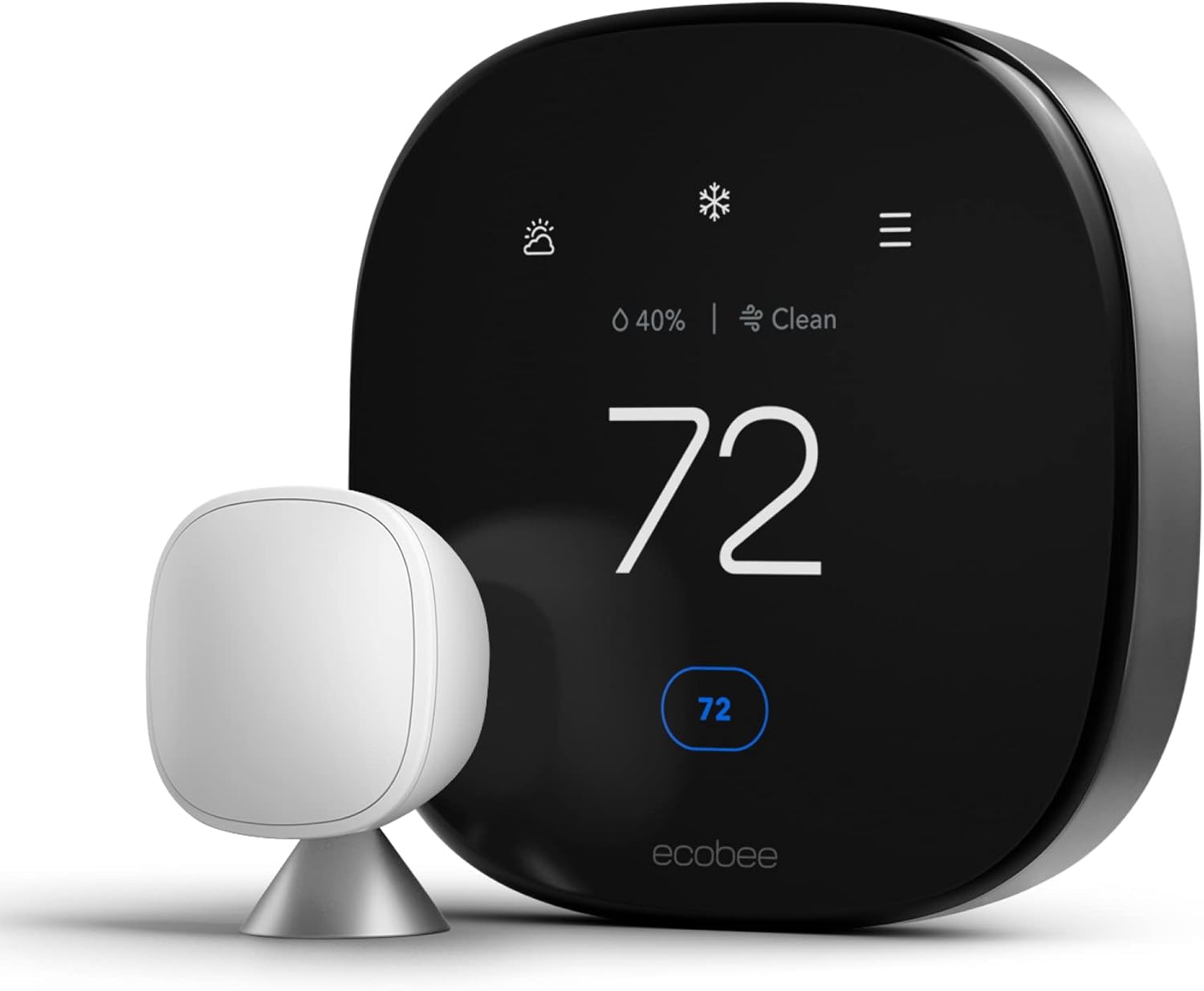
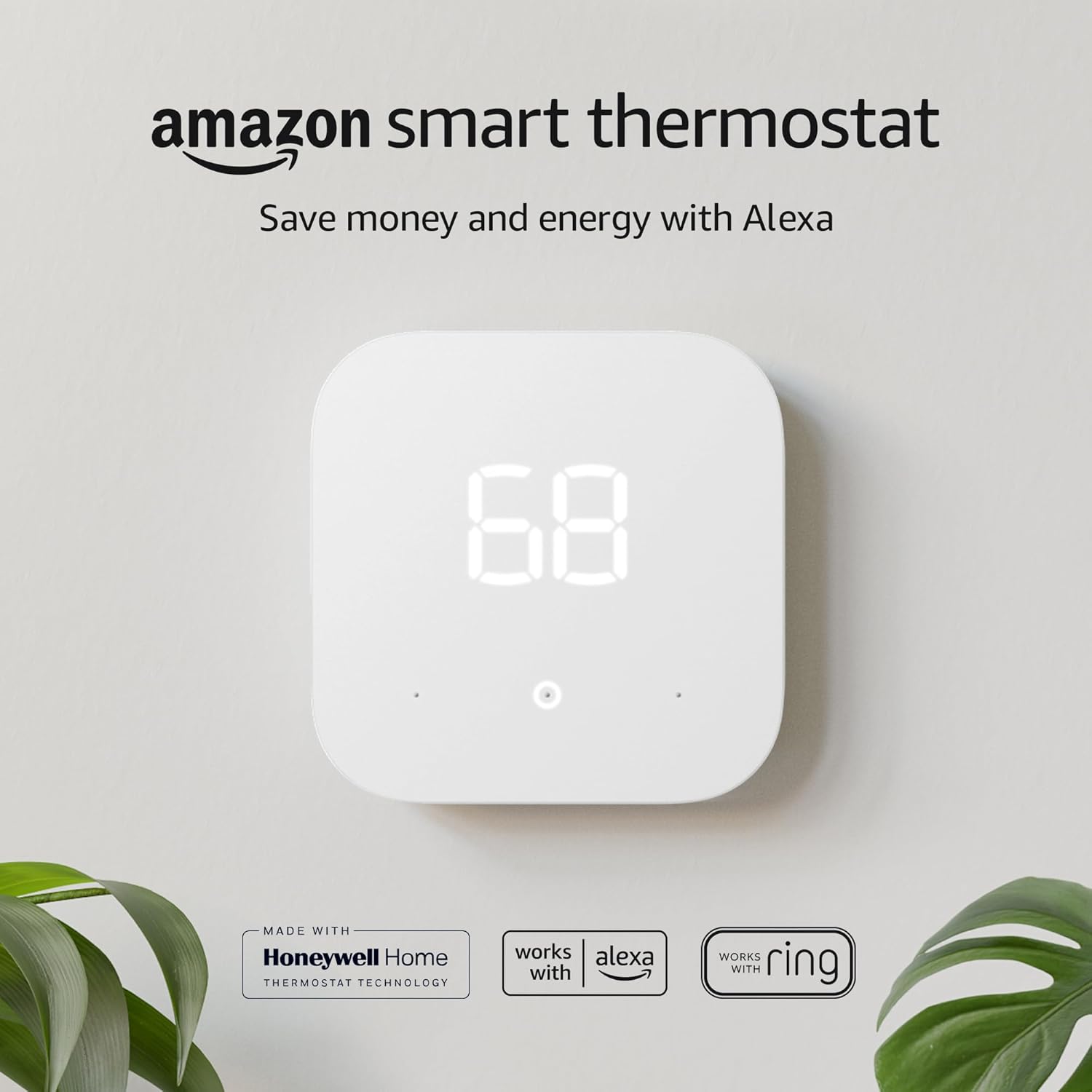
Most packaged units are compatible with standard 24V thermostat wiring and work with popular smart thermostats such as the Ecobee, Google Nest, and Honeywell T6 Pro. Smart thermostats add scheduling, remote access, occupancy sensing, and energy monitoring capabilities that can reduce annual energy consumption by 8–15% beyond the packaged unit’s inherent efficiency. The compatibility between smart thermostats and variable-speed communicating packaged units is more nuanced — our guide on how thermistors and smart thermostats sense temperature helps clarify what features to look for when selecting a compatible thermostat for a communicating packaged system.

Whole-House Dehumidifiers for Ducted Systems
Aprilaire and Santa Fe whole-house dehumidifiers integrate with packaged unit duct systems for independent humidity control in humid climates.
🛒 Shop Whole-House DehumidifiersFrequently Asked Questions
Conclusion: Is a Packaged HVAC Unit Right for You?
Packaged HVAC units represent one of the most practical, underappreciated solutions in the heating and cooling world. They’re not the flashiest technology — they don’t top efficiency charts the way a premium inverter mini-split can, and they don’t generate the same enthusiast conversations as high-performance heat pumps. But for the enormous range of applications where they genuinely excel, they deliver everything homeowners and building owners actually need: reliable, effective climate control with straightforward installation, outdoor-only service access, and a lifetime operating cost that competes well against more complex alternatives.
If your home has a slab foundation, if you’re living in a manufactured home, if you manage a commercial building where interior mechanical space is premium real estate, or if you’re simply replacing a failed unit and want the least complicated path forward — a packaged unit deserves to be at the top of your evaluation list rather than an afterthought.
The keys to getting the best packaged unit result are straightforward: size the system correctly with a Manual J load calculation, choose the right type for your climate and fuel availability, invest in at least a mid-tier efficiency rating (SEER2 15+), insist on proper refrigerant charging and duct sealing during installation, and commit to annual filter replacement and coil cleaning. Do these things, and a quality packaged unit will serve your home or building reliably for 15–20 years at operating costs well below what you’re likely paying on an aging, inefficient system today.
Ready to Find the Right Packaged Unit?
Get the complete cost picture before you commit. Our 2026 HVAC replacement cost guide breaks down what you should pay — by system type, region, and contractor tier — so you can negotiate from a position of knowledge.
📋 See the 2026 HVAC Replacement Cost Guide →



 Home
Home
 Info
Info
 Compare
 Reviews
 Shop
Shop