AC Short Cycling?
Discover why your thermostat keeps triggering the air conditioner.
Why Your Thermostat Keeps Turning On the AC — Causes & Solutions
If you notice your air conditioner kicking on for only a few minutes before shutting down, only to start up again shortly after, you are experiencing “short cycling.” Not only is this destructive to your electricity bill, but it also causes premature wear on your compressor — the single most expensive component in your entire HVAC system. A compressor that should last 15–20 years can fail in 7–10 years under chronic short-cycling conditions.
This guide covers every cause — from simple thermostat miscalibration and air filter neglect to refrigerant leaks, oversized systems, and smart thermostat software quirks. We walk through a complete diagnostic process so you can identify your specific cause and fix it, or know exactly what to tell a technician when you call.
Understanding Why the AC Keeps Turning On
Your AC does not run continuously — it operates in cycles designed to efficiently remove heat and humidity from your home’s air. Understanding what a normal cycle looks like helps you recognize when something has gone wrong.
What Normal AC Cycling Looks Like
On a typical summer day with outdoor temperatures in the 85–95°F range, a correctly sized and functioning AC system should run for approximately 15–20 minutes per cycle, cycling two to three times per hour. In extreme heat (100°F+), longer cycles are normal and expected. During mild weather (70–75°F outdoors), cycles may be shorter — 10–12 minutes — because the temperature differential between indoors and outdoors is small and the system reaches the setpoint quickly.
The goal of each cooling cycle is twofold: lower the air temperature to the thermostat setpoint, and remove enough moisture from the air to maintain comfortable humidity levels (ideally 40–50% relative humidity indoors). A cycle that ends too early achieves the first goal partially but fails the second — leaving your home feeling clammy even when the temperature reads correctly.
To fully understand how thermostats work and signal the AC to start and stop, including the role of the control circuit in initiating and terminating cooling cycles, our foundational explainer provides the electrical context that underlies this entire discussion.
When Frequent Cycling Becomes a Problem
Short cycling is defined as cycles lasting fewer than 10 minutes, often as short as 2–5 minutes. At this frequency, the compressor never reaches its optimal operating temperature, oil circulation within the compressor is incomplete, and the refrigerant system never achieves steady-state pressure and flow. Each start-up of a compressor is electrically and mechanically stressful — the motor draws 3–5 times its normal running current during startup, and the mechanical components experience maximum stress before lubrication fully distributes.
The other major consequence of short cycling is inadequate dehumidification. Moisture removal happens as warm, humid air passes over the cold evaporator coils — condensation forms on the coils and drains away. This process takes time; a 5-minute cycle barely begins the dehumidification process before the system shuts down. The result is a home that is technically at the right temperature but feels sticky and uncomfortable.
Common Causes the Thermostat Keeps Turning On the AC
🌡️ Thermostat Miscalibration
The internal sensor reads temperature incorrectly, causing the system to trigger based on false data.
📍 Bad Thermostat Placement
Sunlight, drafts, or heat sources near the thermostat create artificial temperature spikes.
🌬️ Clogged Air Filter
Restricted airflow causes evaporator coil freeze, triggering a safety shutdown.
📐 Oversized AC System
Too-large units cool so fast they shut off before completing the dehumidification cycle.
❄️ Low Refrigerant
Pressure drop triggers the low-pressure safety switch, cutting the compressor repeatedly.
⚡ Electrical / Control Board Issues
Loose wiring or a failing control board sends erratic start signals to the AC.
🔧 Deadband Set Too Narrow
A 0.5°F swing setting causes hyper-sensitive cycling at the slightest temperature change.
💧 Frozen Evaporator Coils
Ice formation cuts airflow and triggers thermal protection shutdowns independently of the thermostat.
Thermostat Malfunction or Miscalibration
A thermostat that is not calibrated correctly may believe the room temperature is fluctuating more than it actually is. Modern digital thermostats use thermistor-based temperature sensors — small semiconductor components whose electrical resistance changes with temperature. Over time, these sensors can drift, particularly in thermostats that have been in service for 7+ years or that have experienced electrical surges.
A miscalibrated thermostat may read 2–3°F higher than actual room temperature. If your setpoint is 72°F and the thermostat thinks it is 74°F when the actual temperature is 72°F, the system will run unnecessarily and then overshoot the setpoint before cutting off. The result is uncomfortable oscillation around the true setpoint and more frequent cycling than required.
You can test thermostat calibration by placing a calibrated digital thermometer (a cooking thermometer works well) next to the thermostat for 15 minutes and comparing readings. A discrepancy greater than 1–2°F suggests the thermostat sensor is drifting. Many smart thermostats allow you to apply a temperature offset correction in the settings menu — this is the first fix to try before replacing any hardware.
If the thermostat is displaying the wrong room temperature, our dedicated diagnostic guide covers calibration checks, offset settings, and sensor replacement procedures for every major brand. And if you suspect the thermostat itself is failing entirely rather than just drifting, our checklist of 12 signs your thermostat is bad provides a systematic way to confirm before purchasing a replacement.
Poor Thermostat Placement or False Temperature Sensing
Thermostat location is one of the most underappreciated factors in HVAC efficiency and comfort. If your thermostat is located near a drafty door, a heat-producing appliance, a poorly insulated exterior wall, or in direct sunlight for any part of the day, it will experience false temperature readings that trigger unnecessary AC cycles.
Here are the most common placement problems that cause over-cycling:
- Direct sunlight exposure: Even indirect sunlight through a nearby window can warm the thermostat housing 3–5°F above actual room temperature. A thermostat in a west-facing hallway may see artificial temperature spikes every afternoon, triggering cooling cycles that the rest of the house does not actually need.
- Near heat-generating appliances: A thermostat on the same wall as an oven, refrigerator compressor vent, or entertainment center will sense heat from those sources rather than true room temperature.
- Above a supply vent: Mounting a thermostat directly above or adjacent to an HVAC supply vent is one of the most common installation errors. Cold air from the vent chills the thermostat, causing it to terminate cooling cycles prematurely — then the room warms up, and the cycle starts again.
- Near exterior doors or windows: Hot outdoor air infiltrating through an improperly sealed door or window will warm the thermostat, causing it to trigger cooling more frequently than the home’s interior actually requires.
- In a dead-end hallway with poor air circulation: If air does not circulate past the thermostat naturally, it may read a temperature that does not represent the rooms you actually occupy.
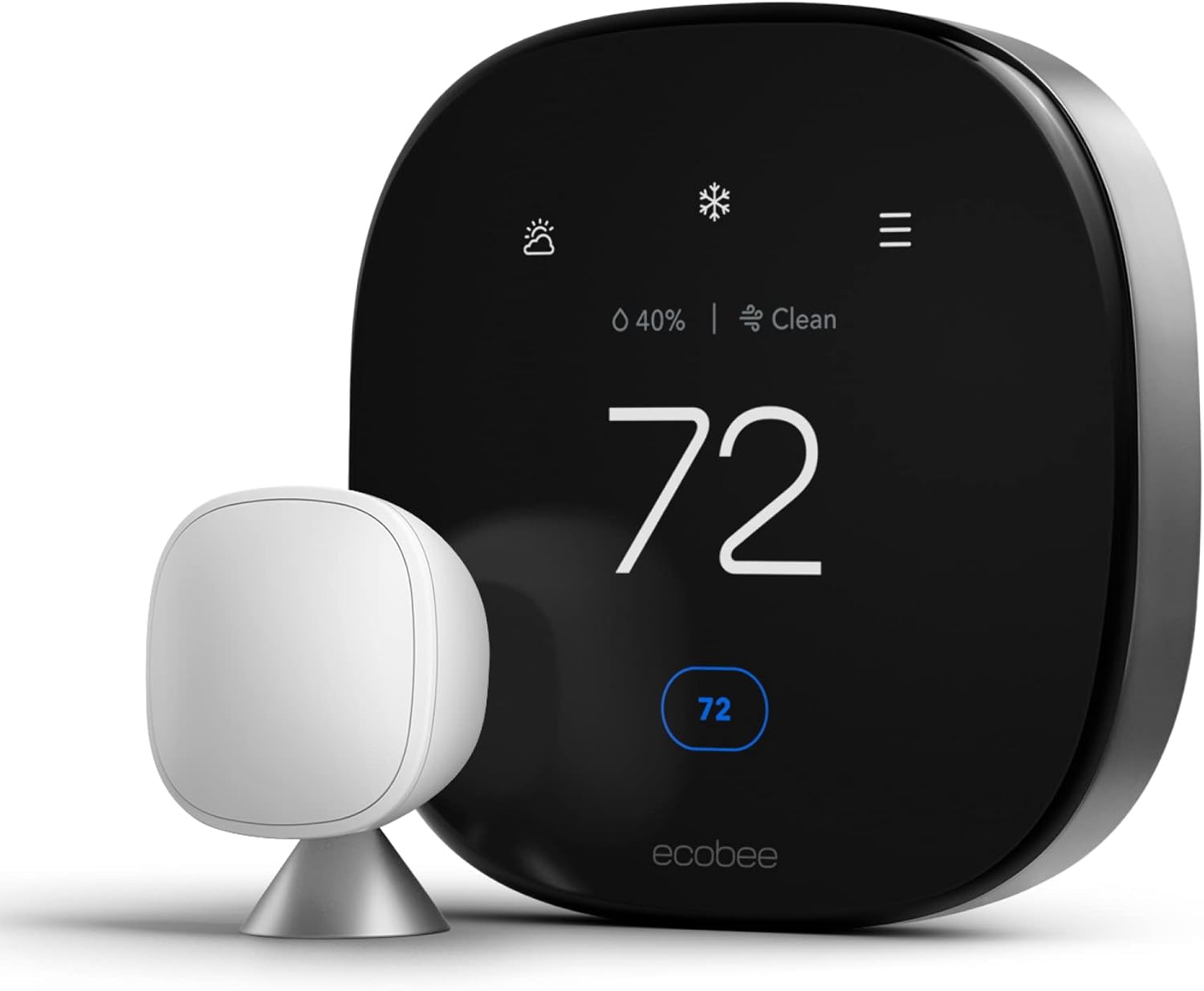
The solution to placement problems is to use remote sensors. Ecobee’s SmartSensors and Nest’s Temperature Sensors place temperature measurement where you actually spend time, rather than relying solely on a potentially compromised thermostat location. For a detailed comparison of how remote sensor approaches work in practice, see our guide on Nest vs Ecobee SmartSensors for comfort, which directly addresses the false-sensing problem and its solutions. You can also learn more about what a thermostat remote sensor is and how it eliminates placement-induced false readings.
Dirty or Clogged Air Filters Restrict Airflow
Air filter condition is the most commonly neglected factor in HVAC performance, and it is directly connected to short cycling through a specific mechanical chain of events. Here is exactly what happens when a filter becomes too clogged:
A blocked filter restricts the volume of warm air that can pass over the evaporator coil. The evaporator coil is designed to have a continuous flow of warm, relatively humid air moving across it. When airflow is reduced, the coil temperature drops below the frost point — the refrigerant inside continues absorbing heat but there is not enough warm air to prevent ice formation on the coil surface. Ice builds up on the coil, further restricting airflow, which causes more ice formation in a rapidly accelerating feedback loop.
Modern AC systems have a low-pressure switch that detects when refrigerant pressure drops (which happens when airflow is insufficient and the evaporator coil over-cools). When this switch trips, it cuts power to the compressor to prevent damage. The system shuts down. As the ice melts slightly and airflow partially restores, the pressure switch closes and the system attempts to restart — beginning the cycle again. This can look identical to a thermostat problem from the homeowner’s perspective.
The fix is straightforward: replace the filter. Check the MERV rating — a MERV 13 or higher filter in an older system with limited blower capacity can restrict airflow even when clean. If your system struggles with high-efficiency filters, drop to MERV 8 and change more frequently.
Oversized or Improperly Sized AC System
This is one of the most frustrating causes of short cycling because it is a design problem — it cannot be fixed without replacing the equipment. An oversized AC unit is extremely common in residential installations where the contractor sized the system too large “just to be safe” or used a simplified rule-of-thumb calculation rather than a proper Manual J load calculation.
An oversized unit has too much cooling capacity for the home’s heat load. On a typical summer day, it reaches the thermostat setpoint in 5–8 minutes, shuts off, and then the home warms back up quickly because the oversized unit also creates pressure imbalances in the ductwork that cause excess infiltration. The cycle repeats continuously.
Beyond short cycling, an oversized unit causes two additional problems: inadequate dehumidification (cycles too short to remove meaningful moisture) and temperature stratification (the thermostat location reaches setpoint while other rooms are not yet cooled). If you live in a humid climate and your home consistently feels clammy despite the AC running, oversizing is a likely culprit.
The proper fix is replacing the unit with correctly sized equipment after a Manual J load calculation. A workaround — not a fix — is to set your thermostat 1–2°F lower than your comfort target and accept longer, more complete cycles. Variable-speed or inverter-based AC systems are dramatically better at handling this problem because they can modulate their output down to 30–40% capacity, running longer and more efficiently rather than cycling on and off. For more on how inverter technology in HVAC works and why it matters for cycling behavior, our dedicated article covers the technology in depth.
Low Refrigerant or Refrigerant Leaks
Refrigerant is not consumed — it circulates in a closed system. If your system is low on refrigerant, it has a leak somewhere in the refrigerant circuit. Low refrigerant causes a specific failure mode that produces short cycling through the low-pressure safety switch.
As refrigerant level drops, the suction pressure on the low side of the refrigerant circuit falls. Modern AC systems include a low-pressure switch that opens (cuts compressor power) when suction pressure drops below a safe threshold — typically around 25–30 PSI for R-410A systems. When the switch opens, the compressor shuts off. Pressure slowly equalizes across the system. The switch closes. The compressor starts again. If refrigerant is significantly low, this cycle repeats every 3–5 minutes.
Symptoms that point to a refrigerant issue rather than a thermostat or filter issue: hissing or bubbling sounds from the refrigerant lines, ice forming on the copper refrigerant lines or the outdoor unit, a noticeable decrease in cooling capacity (the house takes much longer to cool than it used to), and higher than normal electricity bills despite reduced cooling effectiveness.
Refrigerant handling requires EPA certification — this is not a DIY repair. However, correctly identifying the symptom pattern saves you time and money when you call a technician, because you can communicate what the system is doing precisely rather than describing a vague “AC problem.”
Electrical or Control Board Issues
Loose wiring at the thermostat backplate, a failing control board in the furnace or air handler, or corroded wire connections can cause intermittent signals that trigger erratic AC behavior. Electrical issues typically produce a specific symptom: the thermostat commands the AC to run, the system starts, then stops within seconds or minutes not because of a mechanical safety trip but because the control signal is lost.
Common electrical culprits include a loose Y wire (the cooling control wire — yellow in most systems) at either the thermostat terminal or the air handler control board, a failing capacitor on the outdoor unit (which causes the compressor to struggle during startup and trigger a thermal overload), or a cracked or corroded solder joint on the thermostat’s internal circuit board.
If your thermostat is clicking but the HVAC system does not consistently respond, our article on why your thermostat is clicking but not turning on covers the specific electrical scenarios that produce this symptom. For a complete overview of thermostat wiring connections and how to verify them, our thermostat wiring guide provides terminal-by-terminal diagrams for every common HVAC configuration.
When Your Thermostat Shows the Wrong Temperature
A subtler cause of frequent AC cycling is a thermostat that consistently reads the room as warmer than it actually is. This causes the system to run cycles that the home does not actually need, effectively short-cycling relative to actual comfort requirements even if each individual cycle reaches the (incorrectly sensed) setpoint.
Beyond physical placement issues and sensor drift (discussed above), there are several less obvious causes of incorrect temperature readings. Thermostat location on an exterior wall — particularly a poorly insulated one — allows the wall itself to conduct heat into the thermostat housing. In summer, a south-facing wall may be 10–15°F warmer than the interior air temperature; the thermostat senses this conducted heat and reads artificially high.
Air leaks behind the thermostat — around the hole where the wire bundle passes through the wall — can also cause false readings. If the wall cavity is connected to unconditioned attic or exterior space, hot air infiltrates behind the thermostat and warms it from behind. Sealing the wire hole with low-expansion foam or thermostat putty eliminates this source of false readings.
For a comprehensive diagnosis of incorrect temperature readings and their specific fixes, our dedicated guide on why your thermostat shows the wrong room temperature covers every scenario including sensor drift, placement effects, and wall conduction issues. Understanding the ideal room temperature for different activities and times of day also helps you set realistic setpoints that reduce unnecessary cycling.
Heat Pump-Specific Short Cycling Causes
If your system is a heat pump rather than a conventional split AC, there are additional causes of short cycling that are specific to heat pump operation. Heat pumps are more sensitive to certain failure modes because they operate bidirectionally — cooling in summer and heating in winter — which creates more potential failure points.
Defrost Cycle Confusion
Heat pumps include an automatic defrost cycle that periodically reverses refrigerant flow to melt ice from the outdoor unit in heating mode. Some thermostats or homeowners mistake the defrost cycle’s temporary outdoor unit shutdown as a malfunction. During defrost, the system runs the backup heat strips while the outdoor unit defrosts — this appears as a short interruption followed by restart. This is normal behavior, not short cycling.
Low Ambient Temperature Lockout
Older heat pumps have a low-ambient temperature lockout — a switch that prevents the compressor from running when outdoor temperatures drop below approximately 35–40°F (because the refrigerant system cannot function efficiently below this point). In shoulder seasons with overnight temperatures near this threshold, the system may cycle on and off as outdoor temperatures fluctuate around the lockout threshold. This is a system design limitation rather than a malfunction.
Refrigerant Charge Sensitivity
Heat pumps are significantly more sensitive to refrigerant charge than conventional AC systems. Even a slight undercharge (as little as 5% below optimal) can cause low-pressure switch trips in cooling mode and poor performance across both modes. If your heat pump short cycles only during cooling (not heating), refrigerant charge is a primary suspect. For context on how to evaluate heat pump performance overall, our review of whether Bosch heat pumps perform well and our guide on the best thermostats for Bosch heat pumps cover heat pump-thermostat interaction in detail, including how thermostat settings affect cycling behavior.
The Role of Humidity in AC Cycling Behavior
Humidity is the hidden variable in most short cycling discussions. In humid climates (southeastern US, coastal regions, summer monsoon areas), your AC system is doing double duty: removing sensible heat (temperature reduction) and latent heat (moisture removal). When a system short cycles, it removes far less moisture per hour of operation than a properly cycling system — even if the temperature readings look the same.
The practical consequence: a home with short cycling feels muggy and uncomfortable at 72°F, while a properly cycling home at the same temperature feels cool and dry. The thermostat is “satisfied” in both cases — but occupant comfort is dramatically different. If you consistently feel uncomfortably humid at home despite a correct thermostat reading, short cycling combined with an oversized unit is frequently the explanation.
Solutions include: running the AC fan on “On” rather than “Auto” to improve air mixing (though this reduces dehumidification efficiency slightly), adding a standalone whole-home dehumidifier to supplement the AC system’s moisture removal, and — most effectively — replacing an oversized system with correctly sized equipment. Our guide on what a whole-house dehumidifier is and how it works with your HVAC covers the supplemental dehumidification approach in detail.
Deadband Settings: The Overlooked Thermostat Adjustment
The “deadband” (also called “swing” or “differential”) is the temperature range around your setpoint within which the thermostat does NOT trigger the AC. If your setpoint is 72°F and your deadband is ±1°F, the system only turns on when the temperature rises to 73°F and turns off when it reaches 71°F. This creates a 2°F operational band that prevents the system from cycling every time the temperature moves by 0.1°F.
Many smart thermostats ship with an extremely narrow deadband — sometimes as low as ±0.5°F — to appear highly responsive and precise. In practice, a deadband this narrow causes excessive cycling that accelerates compressor wear without meaningfully improving comfort. The human body cannot reliably perceive a 0.5°F temperature change in a room, making this level of precision entirely unnecessary.
The recommended deadband setting for most residential HVAC systems is ±1°F to ±1.5°F. Increasing your deadband from ±0.5°F to ±1°F can reduce AC cycling by 30–50% with no perceptible change in comfort. Check your thermostat’s advanced settings for “temperature swing,” “deadband,” or “differential” and increase it if it is set below 1°F.
This setting is available on most programmable and smart thermostats, though it may be buried in installer or advanced menus. Our guide on how to set, change, and lock your thermostat settings covers how to access advanced configuration menus for the most common thermostat brands.
How Geofencing Can Cause Unexpected Cycling
Smart thermostats with geofencing capabilities — which use your phone’s location to detect when you leave and return home — can inadvertently cause short cycling patterns that appear to be mechanical problems. Here is how it happens:
When geofencing detects you leaving home, the thermostat raises the setpoint to a “away” energy-saving temperature (say, 78°F). When you return, it drops back to your comfort setpoint (72°F). If your home has warmed to 80–82°F during your absence, the system runs a long cycle to bring the temperature down. So far, normal behavior.
The problem occurs when geofencing is imprecise. GPS location services can bounce in and out of the home geofence if the fence radius is too small or if you live near the edge of reliable GPS accuracy (common in urban areas with tall buildings). Each time geofencing incorrectly detects a “home” to “away” transition and back, the setpoint changes — causing the AC to cycle in response to phantom occupancy changes rather than actual temperature needs.
If you suspect geofencing is causing erratic cycling, check your thermostat’s activity log (available in most smart thermostat apps) for unexpected setpoint changes that correlate with times you were actually home. The fix is to increase the geofence radius, disable geofencing and use a schedule instead, or switch to an occupancy-sensor-based approach. To understand how geofencing thermostats work and their accuracy limitations, our explainer covers the GPS and Wi-Fi triangulation techniques used and their inherent imprecision zones. You can also learn more about how the home/away feature works and best practices for configuring it reliably.
Smart Thermostat-Specific Causes of Frequent AC Cycling
Beyond the mechanical and placement issues that apply to all thermostats, smart thermostats introduce software-specific causes of over-cycling that deserve dedicated attention.
Adaptive Learning Overshoot
Smart thermostats with learning algorithms — most notably the Nest Learning Thermostat — attempt to anticipate your preferred temperature by pre-cooling before you typically arrive home. If the learning algorithm has developed an incorrect model (perhaps because your schedule changed and the thermostat has not fully adapted), it may aggressively pre-cool the home, driving the temperature too low, then cycle repeatedly as the temperature rises back through the setpoint. For a detailed explanation of how thermostat adaptive learning works and its limitations, including how to reset or adjust the learned schedule, our guide covers the algorithm behavior in practical terms.
“Eco+” and Time-of-Use Optimization
Ecobee’s Eco+ feature includes a “Time of Use” mode that pre-cools your home before peak electricity rate periods (typically 4–9 PM in most utility markets). During pre-cooling, the AC runs an extended cycle to lower the home temperature below the normal setpoint. When the target is reached, the system shuts off — then the home warms up through the setpoint and the regular cycle resumes. This can appear as unusual cycling behavior if you are not aware that pre-cooling is active. Review your Ecobee app’s Eco+ settings to confirm whether this feature is enabled and whether its pre-cooling target is configured appropriately for your home’s thermal mass.
Remote Sensor Conflicts
When multiple sensors are active in a smart thermostat system, the thermostat averages or weights temperature readings from sensors in occupied rooms. If sensors are placed in rooms with dramatically different temperatures — for example, a sunny south-facing home office and a cool north-facing bedroom — the averaged temperature may oscillate around the setpoint more than the thermostat location alone, causing more frequent cycling. Adjusting which sensors are active at different times of day (available in the Ecobee scheduling system) can smooth out this oscillation. For a comparison of how different sensor configurations affect system behavior, see our Ecobee3 Lite vs Nest temperature sensor comparison which covers real-world sensor placement strategies.
Firmware Bugs and Schedule Conflicts
Smart thermostats are computers, and software bugs are real. A firmware update that introduces a bug in the cooling control logic can cause erratic cycling behavior that appears mechanical but resolves after the next firmware update or a factory reset. If your AC short cycling started suddenly after a thermostat app or firmware update, check the manufacturer’s support forums — other users experiencing the same issue will typically report it within days, and the manufacturer usually issues a hotfix within 1–2 weeks.
Schedule conflicts — where two schedule entries overlap and the thermostat attempts to satisfy both simultaneously — can also cause oscillating setpoints that produce short cycling. Review your thermostat’s schedule for overlapping time blocks, particularly around day/night transitions and work-from-home configurations.
The Real Cost of AC Short Cycling
Understanding the financial and mechanical cost of short cycling provides the motivation to diagnose and fix the problem promptly rather than living with it.
| Impact Area | Short Cycling Effect | Estimated Cost |
|---|---|---|
| Electricity Bill | Compressor startup draws 3–5x normal current; 50–100 short starts per day vs 30–50 normal starts | +15–30% higher monthly bill |
| Compressor Lifespan | Each startup is mechanically stressful; chronic short cycling can halve compressor life | $1,500–$3,000 early replacement |
| Dehumidification | Inadequate moisture removal per cycle; home stays muggy | Possible mold remediation ($500–$5,000+) |
| Comfort | Temperature swings, humidity discomfort, inconsistent room temperatures | Non-monetary but significant |
| Refrigerant Stress | Repeated pressure cycling stresses refrigerant fittings, increasing leak risk | $200–$600 refrigerant recharge |
The cumulative cost of unaddressed short cycling over a 3–5 year period easily exceeds $3,000–$5,000 in extra operating costs and accelerated equipment wear. This makes even a $200–$300 professional HVAC service call an excellent investment if it identifies and resolves the root cause. For context on what replacement equipment costs if short cycling damages your compressor or requires a full system replacement, our AC unit installation cost guide provides current market pricing, and our complete HVAC system replacement cost guide covers full system scenarios.
Step-by-Step Troubleshooting
Work through these steps in order, starting with the simplest and least expensive checks. Most short cycling problems are resolved at steps 1–4.
Check and Adjust Thermostat Deadband/Swing Setting
Access your thermostat’s advanced or installer settings and look for “temperature swing,” “deadband,” or “differential.” If it is set below 1°F, increase it to 1–1.5°F. This single change can eliminate short cycling caused by hyper-sensitive triggering with no effect on perceived comfort. If you are unsure how to access advanced settings on your model, our guide on how to set and change thermostat settings covers the process for all major brands.
Inspect and Replace the Air Filter
Remove the air filter and hold it up to a light source. If you cannot see light through it, replace it immediately. If the filter is clean but ice has formed on the evaporator coil (visible through the air handler’s service panel or inspection window), shut the system off completely and run just the fan for 2–4 hours to melt the ice before restarting. Ice on the coil will cause continued short cycling until fully thawed.
Calibrate the Thermostat Temperature Reading
Place a calibrated thermometer adjacent to the thermostat for 15 minutes. Compare readings. If the thermostat reads more than 1.5°F high, apply the available temperature offset correction in the thermostat settings. If no offset is available and the discrepancy is larger than 3°F, the sensor may need replacement. Our guide on why your thermostat shows the wrong temperature covers the calibration process in detail for each brand.
Assess Thermostat Placement
At the same time of day that short cycling is most frequent, check whether the thermostat is exposed to direct sunlight, near a supply vent, or adjacent to any heat source. Temporarily shield the thermostat from sunlight and observe whether cycling frequency changes. If it does, relocation is the permanent fix. Also check and seal the wire hole behind the thermostat with low-expansion foam to eliminate wall cavity infiltration.
Verify Electrical Connections at Both Ends
Remove the thermostat from its wall plate and check that every wire is firmly seated in its terminal — particularly the Y wire (cooling). Go to the air handler and check the same connections at the control board. A wire that appears connected but is not clamped solidly will make intermittent contact, causing the system to start, lose the control signal, and stop. Check our thermostat wiring guide for terminal identification and correct wire assignments.
Check Smart Thermostat Geofencing and Schedule Settings
Review your thermostat app’s activity log for unexpected setpoint changes. If setpoints are changing at times you are home, disable geofencing temporarily and observe whether cycling normalizes. Also review your schedule for overlapping entries or settings that conflict with occupancy sensor behavior. For Nest users specifically, check the Home/Away Assist settings in the Google Home app and ensure the geofence radius is set to at least 1 mile. For a full explanation of how the home/away feature works, see our dedicated guide.
Listen and Look for Mechanical Symptoms
During a cooling cycle, listen for unusual sounds: hissing or bubbling from refrigerant lines (leak), grinding or clanking from the outdoor unit (mechanical bearing failure), or a humming that stops without the fan running (capacitor failure). Look for ice on the refrigerant lines at the outdoor unit or on the copper lines near the indoor unit. These physical symptoms indicate problems that require a professional HVAC technician — they cannot be resolved through thermostat or filter adjustments.
Prevention: Keeping Your AC Cycling Normally Long-Term
- Change air filters every 30–60 days during peak cooling season. Set a recurring calendar reminder. A clean filter is the single most effective preventive measure.
- Schedule annual HVAC maintenance in spring before cooling season. A technician will check refrigerant charge, clean evaporator and condenser coils, verify electrical connections, and test the capacitor — addressing the mechanical causes of short cycling before they fail.
- Clean outdoor condenser coils annually. Dirty condenser coils cause high head pressure, which triggers high-pressure safety switches and causes short cycling. A garden hose rinse from the inside out removes most debris. Never use a pressure washer on condenser coils — it bends the fins.
- Keep outdoor unit clear of vegetation. Shrubs and vines growing within 18 inches of the condenser unit restrict airflow and cause overheating. Trim vegetation back and ensure the top of the unit has at least 5 feet of clearance.
- Seal home air leaks. Air infiltration through poorly sealed windows, doors, and penetrations increases the cooling load, causing the system to work harder and cycle more frequently. Weatherstripping, caulk, and foam sealing are inexpensive and highly effective.
- Set realistic temperature setpoints. Trying to achieve 68°F in a home with poor insulation during 100°F outdoor temperatures causes the system to run continuously and overstress the compressor. Our guide on HVAC energy efficiency tips covers realistic setpoint expectations for different climate zones.
- Upgrade to a variable-speed system when replacing equipment. Variable-speed compressors and air handlers eliminate short cycling by design — they modulate output to match the actual load rather than cycling on and off at full capacity.
If you are not sure whether your current thermostat is contributing to cycling problems due to age or design limitations, our guide on how to know if you need a new thermostat provides a framework for evaluating whether replacement makes sense. For comparisons of specific models that handle cycling behavior well, our best smart thermostats for energy savings roundup includes cycling behavior and compressor protection as evaluation criteria.
When to Call a Professional HVAC Technician
Signs You Should Not DIY
- Hissing or Bubbling Sounds: These indicate a refrigerant leak. Refrigerant handling requires EPA 608 certification — this is strictly a professional repair. Do not attempt to “top off” refrigerant without finding and repairing the leak first.
- Ice on Refrigerant Lines or Outdoor Unit: Even after changing the filter and allowing the system to thaw, persistent ice formation points to a refrigerant charge problem, a failed blower motor, or a blocked metering device — all requiring professional diagnosis.
- Electrical or Burning Smells: A burning odor from the air handler or outdoor unit indicates a failing capacitor, motor, or compressor — components that store dangerous electrical energy even after the system is powered down. Do not open the outdoor unit’s electrical panel without proper training.
- Tripped Circuit Breakers: If the AC circuit breaker is tripping, the system is drawing excessive current — a sign of a failing compressor, short circuit, or ground fault. Resetting and restarting is safe once; repeated breaker trips require professional evaluation before any further operation.
- Dramatically Reduced Cooling Capacity: If your system is short cycling AND the house cannot reach the setpoint temperature even given longer run times, multiple systems are failing simultaneously — refrigerant, airflow, and possibly compressor efficiency. This requires comprehensive professional diagnosis, not incremental DIY fixes.
✅ Safe to DIY
- Replacing the air filter
- Adjusting thermostat deadband settings
- Calibrating thermostat temperature offset
- Repositioning or shielding the thermostat from heat sources
- Tightening thermostat wire terminal connections
- Disabling geofencing or adjusting schedule settings
- Rinsing condenser coils with a garden hose
- Sealing the thermostat wire hole with foam
- Performing a thermostat factory reset
🔧 Requires a Professional
- Refrigerant leak detection and recharge
- Capacitor testing and replacement
- Compressor diagnosis and replacement
- Control board replacement
- Metering device (TXV/orifice) inspection
- Manual J load calculation for sizing assessment
- High-pressure and low-pressure switch testing
- Blower motor diagnosis and replacement
When you do call a technician, describing the symptom pattern precisely — “the system runs for approximately 5 minutes, shuts off, waits about 8 minutes, then starts again” — allows them to narrow down the cause before they arrive, saving diagnostic time and your money. Mentioning what you have already checked (filter condition, thermostat settings, geofencing configuration) further narrows the field and demonstrates that you have ruled out the simple causes. If you find yourself needing an entirely new thermostat as part of the resolution, checking whether your home’s wiring supports a thermostat upgrade first will save you from discovering compatibility issues during installation.
Frequently Asked Questions
Why does my AC short cycle even when the thermostat is set correctly?
This is often due to an internal safety lockout in the HVAC system itself — not the thermostat. The compressor detects an unsafe operating condition (low refrigerant pressure, high discharge temperature, or overheating) and shuts itself down to prevent damage. Once the condition clears slightly, it attempts to restart, beginning the cycle again. A correctly set thermostat has no effect on this type of protection circuit — it is entirely within the HVAC equipment. A technician is needed to identify which safety switch is tripping and why.
Can thermostat batteries cause the AC to turn on repeatedly?
Yes, in battery-powered thermostats, low batteries can cause the internal relay to flutter or the processor to reboot mid-cycle, sending erratic or incomplete control signals to the AC unit. The system receives a “start” command, begins starting, then loses the signal as the thermostat reboots, causing an aborted cycle. Replace the batteries with fresh alkaline cells (not rechargeable — the lower voltage of NiMH batteries can cause problems in some thermostat models) and observe whether cycling normalizes.
Does thermostat placement really affect AC cycling that much?
Significantly, yes. A thermostat exposed to afternoon sunlight or near a heat-generating appliance can read 3–5°F higher than actual room temperature. If your setpoint is 72°F and the thermostat reads 75°F due to a nearby lamp, the system runs a full cooling cycle to 72°F (or slightly below, per the deadband), shuts off, then the thermostat immediately reads 73–74°F again due to the heat source — triggering another cycle within minutes. Moving or shielding the thermostat from these heat sources can reduce cycling frequency by 30–50% with no other changes.
How often should air filters be changed to prevent short cycling?
During peak summer cooling months, check your filter every 30 days. Standard 1-inch MERV 8 filters need replacement every 1–3 months depending on household dust levels, pets, and system runtime. Thicker 4-inch MERV 11 filters last 6–12 months but restrict airflow more when they load up. If you have multiple pets or live in a dusty environment, monthly replacement is appropriate during peak season. A filter replacement calendar reminder is one of the most impactful habits for preventing short cycling and maintaining system efficiency.
What is the ideal thermostat deadband setting to prevent short cycling?
For most residential systems, a deadband (temperature swing) of ±1°F to ±1.5°F is optimal. This means if your setpoint is 72°F, the AC turns on at 73°F and off at 71°F — a 2°F operational range. This prevents hyper-sensitive triggering while keeping the home within a comfortable temperature band. The human body typically cannot perceive temperature differences below 1°F in a room, so a narrower deadband provides no comfort benefit while significantly increasing cycling frequency and compressor wear.
Can a bad thermostat cause my AC not to cool properly?
Yes. A thermostat that terminates cooling cycles too early (due to miscalibration, a drafty location, or an oversensitive deadband setting) prevents the home from reaching the setpoint temperature and prevents adequate dehumidification. For a comprehensive look at all the ways a faulty thermostat can affect cooling performance, our article on whether a bad thermostat can cause the AC not to cool covers every failure mode and its specific effect on cooling output.
My AC short cycles only in the afternoon. What causes this?
Afternoon-specific short cycling is a strong indicator of thermostat placement causing false high readings from afternoon sunlight. West and south-facing walls experience the highest solar heat gain between 2–6 PM. If your thermostat is on one of these walls or in a hallway with afternoon sun exposure, it may read significantly warmer than actual room temperature during those hours, triggering extra cooling cycles. A secondary cause is condenser overheating: if the outdoor unit is in direct afternoon sunlight without shade, its efficiency drops and high-pressure safety switches may trip more frequently in the hottest part of the day.
Should I run the thermostat fan on “On” or “Auto” to reduce short cycling?
For most short cycling scenarios, keeping the fan on “Auto” is recommended — the fan runs only when the compressor runs, which is the most energy-efficient mode. However, if your short cycling is caused by thermostat placement in a poorly ventilated location, running the fan on “On” continuously helps circulate air past the thermostat, giving it a more representative temperature reading. The tradeoff is slightly higher electricity use for continuous fan operation and marginally reduced dehumidification (the evaporator coil cannot re-evaporate collected moisture as effectively when the fan runs continuously). For most homes, “Auto” is the right default with short cycling addressed at its root cause rather than through fan setting workarounds. Learn more about how much electricity the thermostat fan uses to make an informed decision about continuous fan operation costs.




 Home
Home
 Info
Info
 Compare
 Reviews
 Shop
Shop