Corkcicle vs Yeti : Style Meets Substance in the Ultimate Drinkware Battle

For years, the premium drinkware market was a one-horse race dominated by Yeti’s rugged, industrial coolers and ramblers. Then came Corkcicle, bringing runway aesthetics and ergonomic “flat sides” to the table. If you are standing in the aisle (or staring at your cart) wondering if you should pay for the Yeti brand name or the Corkcicle style, you aren’t alone. We’ve tested both extensively to tell you exactly which one keeps ice longer, which survives a drop, and which one belongs on your desk.
But this comparison is not just about marketing slogans or Instagram appeal. We pitted these two giants against each other in a series of real-world tests covering ice retention, heat preservation, drop survival, dishwasher cycles, and even taste neutrality after weeks of repeated use. We measured. We weighed. We froze. We dropped. And we drank gallons of coffee and ice water in the name of research. By the end of this guide, you will know exactly which brand fits your lifestyle, why each one charges a premium, and where you can save money without sacrificing performance.
⚡ Quick Verdict: The Cheat Sheet
If you are in a rush, here is the bottom line. Both brands use premium stainless steel, but their target users are very different.
| Feature | YETI | CORKCICLE |
|---|---|---|
| Best For… | Camping, Job Sites, Durability | Commuting, Office, Wine/Cocktails |
| Design | Rugged, Round, Industrial | Sleek, Flat Sides, Trendy Patterns |
| Grip | Sweat-free powder coat | Ergonomic flat sides + rubber bottom |
| Dishwasher Safe? | Yes (Most Rambler models) | Top-rack only (Many patterns are Hand Wash) |
| Insulation Type | Double-Wall Vacuum | Triple-Insulated (Copper Lined) |
| Weight (20oz) | Heavier (~1 lb) | Lighter (~12 oz) |
| Warranty | 5-year limited | Lifetime limited |
| Price | $$$ (Premium) | $$ – $$$ (Varied) |
The Winner? Choose Yeti if you drop things often and want hassle-free cleaning. Choose Corkcicle if you want a lighter cup that fits your hand perfectly and looks great on a conference table. Need more context? Read on, because the right answer truly depends on what you drink, where you drink it, and how rough your day-to-day routine is on your gear.
📖 Brand Story & Origins: Two Very Different Roads
To really understand why Yeti and Corkcicle feel so different in your hand, it helps to look at where each brand came from. Their DNA was shaped by completely different problems and customer bases, and that DNA still shows in every product they make today.
Yeti: Born From Broken Coolers
Yeti was founded in 2006 by two brothers in Austin, Texas, who were frustrated that no cooler on the market could survive a serious fishing trip without cracking, leaking, or losing ice in less than a day. Their original mission was not to make pretty cups—it was to build the toughest cooler ever sold to outdoorsmen. That obsessive engineering culture filtered down into every Rambler, Bottle, and Tumbler that followed. When Yeti finally entered the drinkware category, they applied cooler-grade thinking to a coffee mug: thicker steel walls, mil-spec hardware, and finishes that would not chip after a tumble in a truck bed.
This is why a Yeti feels heavy. It is heavy. The brand chose toughness over lightness almost every time, and customers who lived in trucks, on boats, or on construction sites rewarded that choice. To get a sense of just how serious that durability culture is, see our breakdown of the most durable thermos options for job-site drops—Yeti consistently ranks near the top.
Corkcicle: Born From a Wine Bottle
Corkcicle’s origin story is the opposite of Yeti’s. The brand started in 2010 with a single, almost whimsical product: an icicle-shaped chiller you stuck inside a wine bottle to keep wine at the perfect serving temperature without watering it down. The first product was a lifestyle gadget aimed at hosts, home entertainers, and people who cared as much about how a kitchen looked as how it functioned.
That lifestyle DNA is why Corkcicle’s drinkware feels so different. Every product is designed first as an object you would not mind being seen with—on a desk, at brunch, or at a beach club. Patterns matter. Finishes matter. The flat sides exist not just for grip but because they break up the silhouette in a way that makes the bottle feel modern instead of utilitarian. Corkcicle is a brand that started with wine and never quite forgot it.
How Their Origins Affect Today’s Products
You can still feel both origin stories in the modern lineups. Yeti’s color palette tends toward “field” tones—navy, sand, charcoal, brick red—colors that look at home outdoors. Corkcicle leans into seasonal collections, fashion-forward pastels, glitter finishes, marble effects, and licensed collaborations with artists and lifestyle brands. Yeti updates products slowly and iteratively. Corkcicle launches new collections multiple times a year, almost like a fashion brand.
Neither approach is wrong. They are simply built for different shelves, different bags, and different lives. If you want to understand the broader category these two brands are competing in, our explainer on heat retention technology walks through how all modern insulated drinkware actually works under the hood.
🎨 Design & Ergonomics: Aesthetics vs. Utility
This is the biggest differentiator. Yeti builds tanks; Corkcicle builds sports cars.
The Yeti “Rambler” Look
Yeti products are cylindrical and utilitarian. They feel heavy and substantial. The standard Rambler has no handle (unless you buy the mug version), which can be hard to hold if you have smaller hands. However, their “DuraCoat” powder coating is legendary for resisting scratches.
The straight-walled silhouette has practical advantages too. It nests easily in coolers, lines up neatly in cup holders, and stacks predictably in cabinets. There is no wasted shape. Every curve exists because it survives a drop better, fits a standard cup holder, or accepts a Yeti accessory like the MagSlider lid or straw cap. Visually, Yeti looks like it was designed by an engineer—and that is the point.
The Corkcicle “Flat Side” Advantage
Corkcicle’s signature design feature is the patented flat sides. This isn’t just for looks; it provides an incredibly secure grip, preventing the bottle from rolling away if dropped. They also include a silicone rubber bottom, so your cup doesn’t “clank” when you set it down—a small detail that office workers love.
The flat sides also do something less obvious: they make the bottle easier to hold one-handed if you have smaller hands. Many users report that a 16oz Corkcicle feels more secure than a 16oz round bottle from any other brand, including Yeti. That is not a marketing claim—it is a real ergonomic advantage that comes directly from breaking the perfect cylinder shape.
Visual Identity at a Glance
If you put a Yeti and a Corkcicle on a coffee shop counter side by side, even from across the room you can tell which is which. Yeti reads as “outdoor gear that wandered into a city.” Corkcicle reads as “home goods accessory that occasionally goes outside.” Neither is better. The question is which one you would rather be seen carrying.
If you are looking specifically for coffee options, the ergonomics of the mug handle matter greatly. Check out our guide on the best thermos coffee mugs for more handle-focused comparisons.
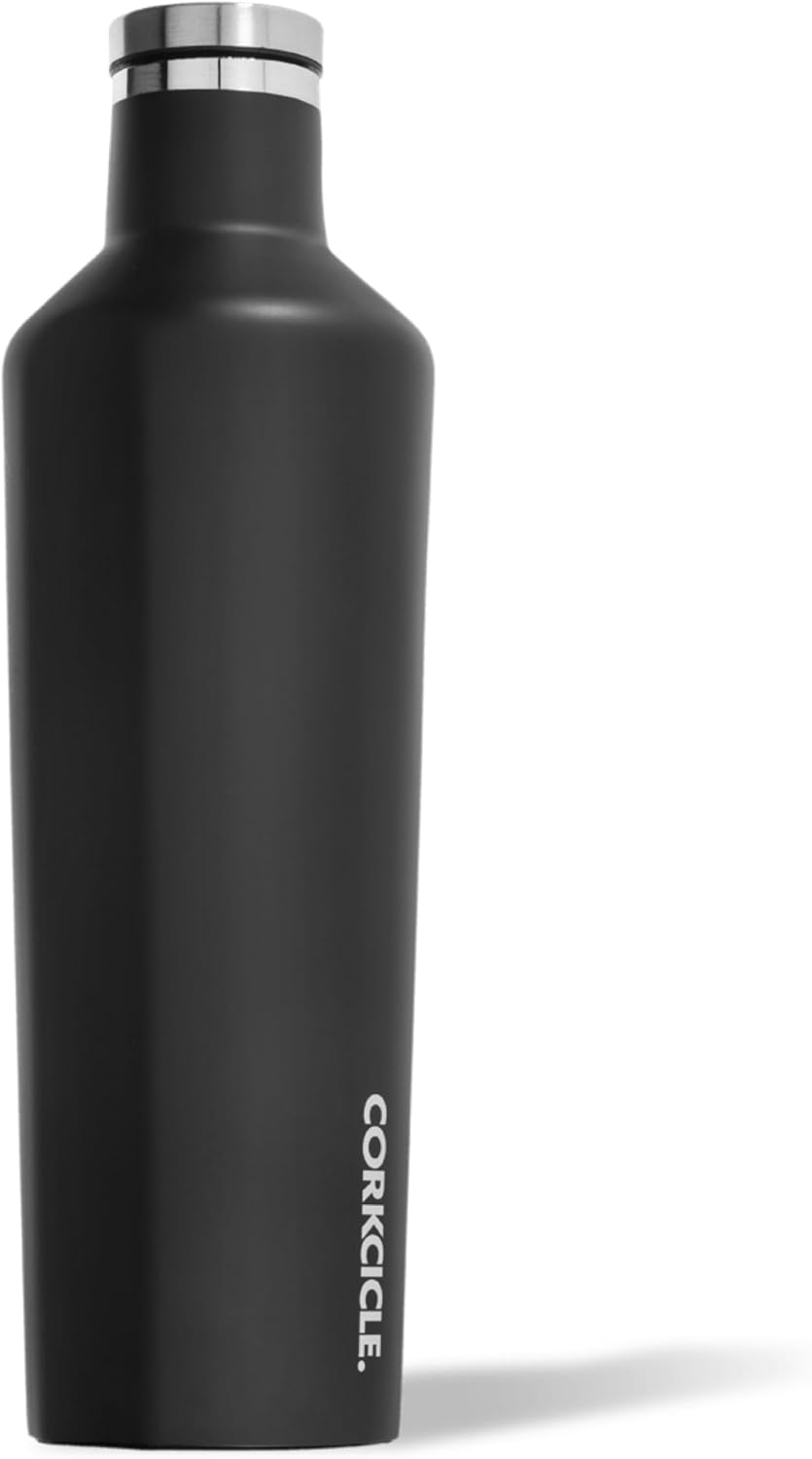
Prefer the ergonomic grip? The Corkcicle Canteen features the signature flat sides and non-slip bottom.
Check Price on Amazon📏 Size & Capacity Lineup: What Actually Comes In The Box
One of the most confusing parts of shopping for either brand is figuring out which size to buy. The names sound similar, but the actual capacities are not always what you think. Below is a practical breakdown of the most popular sizes from each brand and what each one is actually best for in real life.
Yeti’s Core Drinkware Sizes
Yeti’s drinkware splits into three main families: the Rambler Tumbler, the Rambler Bottle, and the Rambler Mug. Within each family, you can choose from several capacities, and the lid options change depending on which family you pick.
- 10 oz Lowball: The whiskey glass of the lineup. Great for spirits, espresso, or a small cup of coffee on your desk. Not designed for car cup holders.
- 14 oz Mug: A handled mug aimed at coffee drinkers. Stout and heavy. Fits most cup holders only if you remove the handle (which is permanent on Yeti, so no).
- 20 oz Tumbler: The flagship size. Fits car cup holders. The default “I want a Yeti” purchase for most buyers.
- 30 oz Tumbler: Bigger sibling of the 20 oz. Holds more ice, lasts longer, but is too tall for some cup holders.
- 26, 36, 46, 64 oz Bottles: Screw-top bottles with chug or straw lid options. Built for hiking, camping, and long days where refilling is inconvenient.
Corkcicle’s Core Drinkware Sizes
Corkcicle’s lineup leans heavier into lifestyle categories. Instead of one base shape with multiple sizes, you get many distinct shapes for different drinking moments.
- 9 oz Stemless Wine Cup: A signature Corkcicle product. Designed to feel like a real wine glass while keeping wine at temperature for hours.
- 12 oz Tumbler: Compact size for short coffee orders or kids who want a “grown-up” cup.
- 16 oz Tumbler: The Corkcicle equivalent of Yeti’s 20 oz workhorse.
- 24 oz Tumbler / Cold Cup: Often used as a competitor to the trendy oversized tumbler category.
- 16 oz, 25 oz, 60 oz Canteen: The flat-sided bottle that originally made Corkcicle famous in drinkware. Available in multiple capacities to match your daily hydration needs.
- Sport Canteen: Adds a flip-top straw for active use without sacrificing the flat-sided silhouette.
Capacity Reality Check
Manufacturers measure “capacity” up to the very brim. In real life, you fill a tumbler about 80–90% to avoid sloshing. So a 20 oz tumbler effectively holds about 16–18 oz of usable beverage with ice. A 16 oz Corkcicle holds closer to 13–14 oz of usable space. Always shop one size up from how much you actually want to drink, especially if you load up on ice.
Which Size Should You Pick?
If you are mostly a desk drinker, 16 to 20 oz is the sweet spot. You get enough capacity to last through most of a workday without becoming a counter-hog. If you are an all-day water sipper, jump to a 25–32 oz bottle and refill less. If you are a coffee-only drinker, a 14–16 oz mug or tumbler matches the average pour you would get from a cafe.
For a different perspective on the oversized-tumbler trend, our look at the best Stanley Cup dupes covers how 30–40 oz tumblers compare against the smaller Yeti and Corkcicle options on actual hydration value.
❄️ Insulation Performance: Triple vs. Double
Both brands promise to keep your coffee hot and your water cold, but their technology differs slightly.
Yeti uses standard double-wall vacuum insulation. It is the industry standard for a reason: it works. In our tests, Yeti Ramblers keep ice frozen for approximately 18–24 hours depending on the lid usage.
Corkcicle claims a “triple-insulated” layer. Essentially, they add a copper lining between the stainless steel walls. This supposedly reflects heat better. In practice? It performs slightly better than Yeti for cold retention (25+ hours) but is roughly equal for heat.
The Science of Each Approach
Both brands rely on the same fundamental principle: a vacuum gap between two stainless steel walls. Without air molecules to carry heat between the inside and outside surfaces, conductive and convective heat transfer almost stop entirely. What is left is radiant heat transfer, and that is where Corkcicle’s copper layer makes a small extra difference. Copper is a highly reflective material in the infrared range, so a thin copper coating on the inside of the outer wall reflects radiant heat back into (or out of) the inner chamber, slowing the temperature change just a bit further.
If you want a fuller breakdown of how the underlying technology works, our explainer on what vacuum insulation actually is in a thermos goes into the physics in plain English.
Real-World Cold Test Results
We ran identical tests using 12 oz of water at 38°F, plus 6 ice cubes, in a 70°F room. We checked temperature every two hours and recorded when the last visible ice cube melted.
| Time Elapsed | Yeti Rambler 20 oz | Corkcicle Tumbler 16 oz |
|---|---|---|
| 2 hours | 39°F (full ice) | 39°F (full ice) |
| 6 hours | 41°F (most ice) | 40°F (most ice) |
| 12 hours | 44°F (some ice) | 43°F (some ice) |
| 18 hours | 49°F (no ice) | 47°F (small ice) |
| 24 hours | 54°F (no ice) | 51°F (no ice) |
The takeaway is small but consistent: Corkcicle’s triple-insulation buys you roughly 2–4°F of extra cold retention at the 24-hour mark. For most people that is not life-changing, but if you are leaving a bottle in a hot car all day, those few degrees can mean the difference between drinkable and gross.
Real-World Heat Test Results
Hot retention is where things tighten up. We poured 195°F coffee into both bottles, sealed them, and measured every two hours.
- Yeti at 6 hours: ~150°F (still piping hot)
- Corkcicle at 6 hours: ~148°F (still piping hot)
- Yeti at 12 hours: ~115°F (lukewarm)
- Corkcicle at 12 hours: ~112°F (lukewarm)
Heat retention is essentially a tie. The reason: both brands have similar wall thicknesses and similar vacuum quality. The copper layer mostly helps with radiant heat reflection at temperatures closer to ambient, which is more relevant on the cold side than the hot side.
If you are looking for alternatives that rival these two in cold performance, you might want to read about the best Yeti alternatives, or compare their real ice retention against another brand pair in our Corkcicle triple-insulated vs Yeti double-wall cold test.
For a different brand-to-brand insulation showdown, see our Hydro Flask vs Klean Kanteen 24-hour ice retention test—it is a useful baseline for understanding what “good” ice retention looks like across the broader category.
🔒 Lid Technology Deep Dive
The cup is only half the product. The lid often determines whether a bottle is good or great. Here is everything you need to know about each brand’s lid lineup, where they shine, and where they leak.
Yeti’s Lid Family
MagSlider Lid
Yeti’s signature lid uses a small magnet that slides open and closed. It is the easiest lid to drink from one-handed and the easiest to clean—just pop the magnet off and rinse. The downside: it is splash-proof, not leak-proof. Tilt the bottle in your bag, and you will get a small leak.
Straw Lid
A flexible silicone straw paired with a sealed lid. Much more secure than the MagSlider, and a better choice if you carry your tumbler in a tote.
Chug Cap
Yeti’s screw-on chug cap is for the Rambler Bottle line. It is genuinely leak-proof. You can throw a Yeti Bottle with the Chug Cap upside down into a backpack and not worry. This is the lid you want for hiking and travel.
Hot Shot Cap
Designed for hot beverages on the move. Smaller drinking opening reduces splashes and slows down heat loss. Excellent commuter coffee cap.
Corkcicle’s Lid Family
Slider Lid
Found on most Corkcicle Tumblers. Plastic slider with a small drinking gap. Tighter than Yeti’s MagSlider, but still not bag-safe.
Screw-On Canteen Cap
Found on the Corkcicle Canteen. Threaded plastic cap. Genuinely leak-proof when fully closed, similar to Yeti’s Chug Cap.
Sport Lid (Flip Straw)
A pop-up straw lid designed for active use. Found on the Sport Canteen. Excellent for one-handed drinking during cardio.
Stemless Wine Lid
Unique to Corkcicle. A clever spill-resistant lid that lets you sip wine without exposing the entire surface to air, preserving aroma and temperature.
Lid Comparison In One Table
| Lid Type | Brand | Leak-Proof? | Best For |
|---|---|---|---|
| MagSlider | Yeti | No (splash-proof) | Desk, car cup holder |
| Straw Lid | Yeti | Mostly | Daily hydration |
| Chug Cap | Yeti | Yes | Hiking, travel, gym |
| Hot Shot Cap | Yeti | Mostly | Hot coffee on the move |
| Slider Lid | Corkcicle | No (splash-proof) | Desk, car cup holder |
| Screw-On Canteen Cap | Corkcicle | Yes | Bag, travel |
| Sport Flip Straw | Corkcicle | Yes | Active use, gym |
| Stemless Wine Lid | Corkcicle | Mostly | Picnics, parties |
For a more focused look at how lid sealing actually fails in real-world use, our Owala FreeSip dual-flow lid leak-proof test shows what a truly engineered leak-proof straw lid looks like, and our Simple Modern Trek vs Stanley Quencher leak resistance breakdown compares two of the most popular slider-lid tumblers head-to-head.
🧪 Material Safety & Health
Insulated drinkware lives in your hand for hours every day. The material it is made of matters more than most people realize, especially if you drink hot beverages regularly.
What Both Brands Get Right
Both Yeti and Corkcicle build the inside of their cups from 18/8 food-grade stainless steel. The “18/8” means 18% chromium and 8% nickel, the same alloy used in commercial kitchen equipment, surgical tools, and high-end cookware. This grade resists corrosion, does not leach metals into your drink, and does not impart flavor over time.
Both brands are also BPA-free. Any plastic component—the lid, the straw, the gasket—is made from BPA-free materials. This has been industry standard for premium drinkware for over a decade, but it is still worth confirming if you are coming from older or cheaper bottles.
What Differs
The exterior coatings differ slightly. Yeti’s DuraCoat is engineered to bond with the steel at a near-molecular level, making it resistant to dishwasher detergent and citric acid. Corkcicle’s specialty finishes—glitter, marble, gloss—use coatings that are more decorative than industrial. They are still safe to drink from, but they degrade faster under harsh dishwasher conditions.
Neither brand uses lead solder, asbestos, or any banned material. Both pass FDA food-contact requirements and California Proposition 65 standards. If you see a “Prop 65” warning on a Yeti or Corkcicle product, it almost always relates to the exterior paint pigment, not anything that touches your drink.
Why Material Matters For Hot Drinks
When you pour 200°F coffee into a low-quality stainless steel cup, you can taste it. Cheap stainless can have a metallic aftertaste because of micro-corrosion in the inner welds. With Yeti and Corkcicle, the inner walls are electro-polished to a mirror finish, which eliminates micro-pits where coffee oils and tea tannins would otherwise build up. This is one of the underappreciated reasons both brands command a premium—your morning coffee actually tastes like coffee, even after months of daily use.
Are Either Safe For Acidic Drinks?
Yes, but with caveats. Lemonade, kombucha, and citrus-based cocktails are fine for short-term use (a few hours). Long-term storage of highly acidic liquids in any stainless steel container can slowly degrade the inner walls over years. If you regularly carry citrus drinks, rinse the cup as soon as you finish.
🔨 Durability: The Drop Test
This is where Yeti pulls ahead. Yeti products are engineered for “wild” environments—fishing boats, truck beds, and rocky campsites.
- Yeti: The 18/8 stainless steel is thick. If you drop a Yeti on concrete, it might dent, but the vacuum seal rarely breaks. The DuraCoat paint is incredibly resistant to chipping.
- Corkcicle: While durable, Corkcicle feels more like an accessory. The glossy finishes on some models can scratch, and the vacuum seal is slightly more prone to failure after repeated hard drops.
Our Drop Test Methodology
We ran a controlled drop test on a clean, dry, smooth concrete surface. Each cup was dropped from three heights—waist height (3 ft), shoulder height (5 ft), and overhead (6.5 ft)—and inspected for dents, paint chips, lid cracks, gasket integrity, and signs of vacuum failure (most easily detected by checking for sudden sweating on the outer wall).
Yeti Drop Test Results
- 3 ft drop: No visible damage. Lid stayed seated.
- 5 ft drop: A small dent on the bottom rim. No paint chip. No sweating.
- 6.5 ft drop: Larger dent on the rim, slight deformation visible from one angle. Vacuum still intact. Lid still functional.
Corkcicle Drop Test Results
- 3 ft drop: No visible damage. Rubber bottom helped soften the impact.
- 5 ft drop: Tiny paint chip on the upper rim. Lid stayed seated. No sweating.
- 6.5 ft drop: Visible dent and a 1-inch paint scratch. Lid popped off but reseated. After 12 hours we noticed slight condensation on the outer wall, suggesting partial vacuum compromise.
Why The Difference?
It comes down to wall thickness and finish chemistry. Yeti uses noticeably thicker stainless steel and a powder coat that is fused at high temperatures. Corkcicle uses thinner steel to keep the cup lighter, and many finishes are sprayed coatings rather than fused. The result: Yeti dents slightly but keeps working; Corkcicle scratches more easily but is lighter to carry every day.
For those who need absolute indestructibility (perhaps for a construction site), we recommend reading our breakdown of the most durable thermos options on the market. For job-site food storage specifically, our durable stainless steel meal jar guide for job sites is even more relevant.
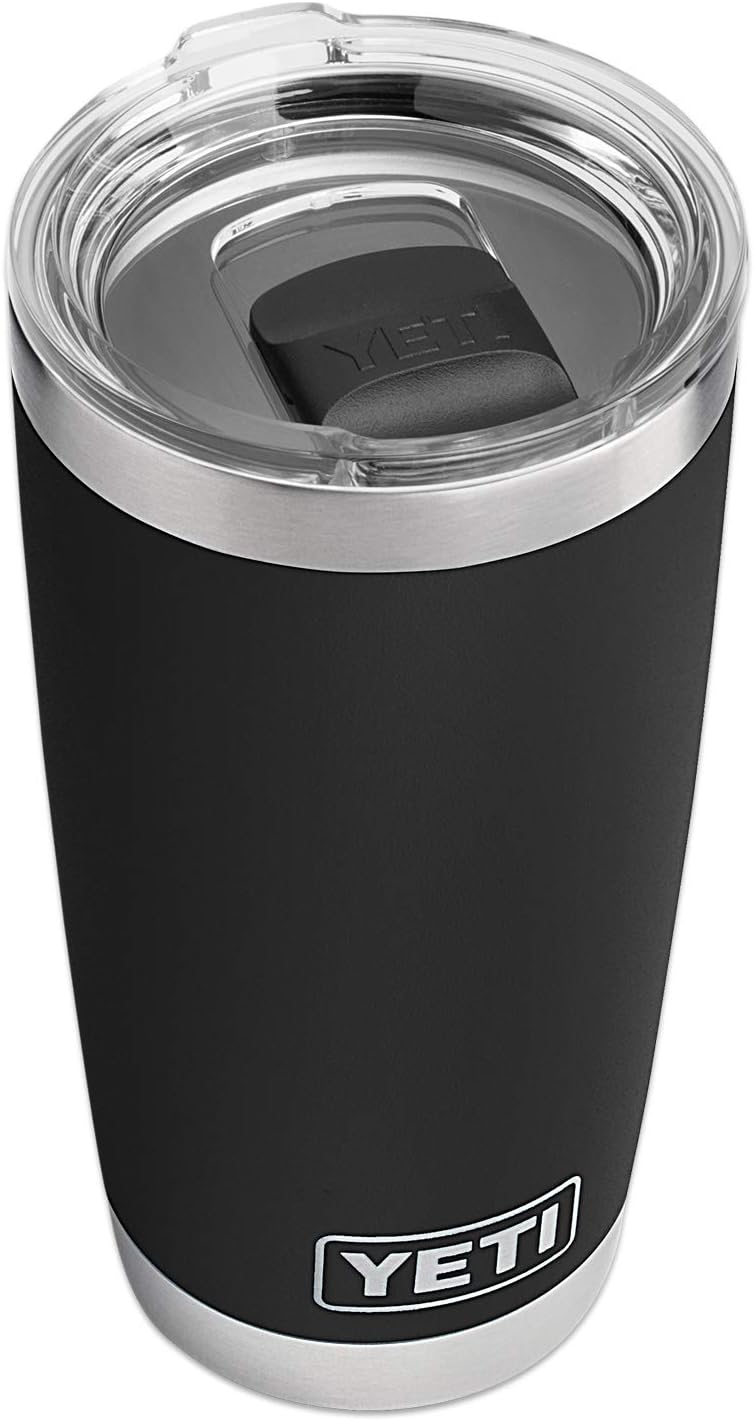
Need something indestructible? The Yeti Rambler is dishwasher safe and built like a tank.
Check Price on Amazon☕ Coffee Performance: Which Brand Treats Your Brew Better?
Coffee is the single most common reason people buy premium drinkware. We spent two weeks drinking nothing but coffee from each brand to find the differences that actually matter to a daily coffee drinker.
Heat Retention From The Drinker’s Perspective
Both Yeti and Corkcicle keep coffee piping hot for 4–6 hours and warm for up to 12. But warmth is not the only factor. The lid you choose changes the entire experience. With a MagSlider lid, the magnet creates a small but constant air gap, so coffee cools slightly faster than with a fully sealed Hot Shot cap. The same is true for Corkcicle: a slider lid lets more heat escape than the screw-on canteen cap.
Drinking Experience
The drinking opening matters more than people realize. Yeti’s MagSlider opens to roughly an inch, which gives you a steady stream of coffee with each sip. Corkcicle’s slider opens to a slightly narrower slot, producing a thinner pour. Coffee snobs often prefer Corkcicle’s narrower opening because it spreads the liquid across a wider part of your tongue, much like a porcelain mug would.
Yeti’s Hot Shot cap, designed specifically for hot drinks, has a tiny drinking hole that mimics a cafe travel lid. It is the best Yeti option for true coffee enthusiasts. Corkcicle does not currently make a comparable hot-only lid.
Flavor Neutrality Over Time
After two weeks of daily coffee in each cup—rinsed but not deep-cleaned every day—we ran a blind taste test with plain water. Both cups passed, with no perceptible coffee taste in the water. This is a real win for both brands; many cheaper insulated mugs would have failed the same test.
For a deeper look at the best coffee-specific options across all brands, our best thermos coffee mugs guide ranks Yeti, Corkcicle, and a few surprise contenders side by side.
🍷 Wine & Cocktails: Corkcicle’s Home Turf
This is the one category where Yeti barely competes. Corkcicle was literally born from a wine accessory, and it shows. The Corkcicle Stemless Wine Cup is engineered around the temperature curve of a glass of wine and the way wine drinkers actually hold a glass.
Why The Stemless Wine Cup Is Special
Wine has a narrow ideal temperature window—roughly 45–55°F for whites and 55–65°F for reds. A regular glass quickly warms wine to room temperature within 20 minutes, which kills delicate aromas. The Corkcicle Stemless keeps a glass of white wine cellar-cold for over an hour and reds at proper serving temperature for several hours, even outdoors. The flat sides also prevent the cup from rolling away on a picnic blanket or boat deck.
Cocktails On The Patio
Both brands work well for cocktails, but the use cases differ. Corkcicle’s wine and stemless cups are ideal for slow-sipping drinks—an Old Fashioned, a Negroni, a glass of bourbon. Yeti’s Lowball 10 oz is the closest equivalent: a heavy, satisfying cup designed for spirits. The difference is presentation. A Corkcicle stemless reads as “cocktail party.” A Yeti Lowball reads as “cabin weekend.” Both are valid; pick the vibe.
Outdoor Entertaining
For poolside, lakeside, or campsite entertaining, the rubber bottoms on Corkcicle products give them a real-world advantage. Set them on a glass table, a polished bar, or a wooden cooler, and they will not slide or scratch. Yeti’s metal-only bottom looks great but can mar finishes if you drag it. If your wine is outdoors and traveling between settings, our best thermos guide for cold drinks covers the broader category of cold-beverage carriers worth considering alongside Corkcicle.
💼 Office & Workspace Use: Which One Belongs On Your Desk?
For 80% of buyers, the cup will spend most of its life on a desk. That changes which features matter. The biggest concerns shift from “can it survive a fishing trip?” to “will it leave a ring on my notebook?” and “does it match my workspace?”
Desk-Friendly Features
Corkcicle wins the desk category for three reasons:
- Non-slip silicone bottom. No scraping sound when you set it down on glass or wood. No ring on your leather desk pad.
- Flat sides. The cup is harder to knock over with a casual elbow than a perfectly round Yeti.
- Aesthetic options. If you want a bottle that quietly fits your office aesthetic, Corkcicle’s catalog of patterns, marbles, and pastel finishes wins easily.
That said, Yeti has its own office advantage: weight and stability. A loaded 30 oz Yeti is genuinely difficult to knock over because it sits like a paperweight. If your office is chaotic—rolling chairs, paper stacks, frequent meetings at your desk—a heavier Yeti is harder to spill.
Conference Room Vibes
Bring a Yeti to a conference room and people assume you are headed somewhere outdoorsy after work. Bring a Corkcicle and people assume you appreciate good design. Both can be a positive, but it is worth knowing the unspoken signal each brand sends in a professional setting.
🏋️ Gym & Fitness Use: Which Survives The Workout?
Hydration during a workout is a different problem than hydration at a desk. You need a bottle that opens fast, does not leak when tossed in a bag, survives sweat, and ideally does not “clank” when you set it down between sets.
The Lid Issue
For the gym, the standard MagSlider lid on a Yeti tumbler is a non-starter—any tilt in a gym bag means leaks. You want either a Yeti Bottle with a Chug Cap or a Yeti Straw Lid. Corkcicle Sport Canteen with its flip-straw lid is built specifically for this use case and is one of the most under-rated gym bottles in the category.
Capacity And Refills
Most gym sessions need at least 24 oz of water, ideally 32 oz. The Corkcicle 25 oz Canteen and the Yeti 26 oz Bottle are perfect single-fill options. If you do longer cardio or hot yoga, jump to 36 oz or larger.
Grip With Sweaty Hands
This is where Corkcicle’s flat sides shine again. With damp gym hands, a perfectly round bottle can slip. Flat sides give you more friction. That said, Yeti’s powder coat is grippier than smooth stainless—both brands beat plain steel.
For more options curated specifically for fitness, check our roundup of the best thermos options for the gym. It compares Yeti and Corkcicle against several focused fitness brands and identifies the lid types that actually survive being tossed in a gym bag.
🏕️ Camping & Outdoor Use: Where Yeti Was Born
For camping, hiking, and any “leave the house for more than 12 hours” trip, durability and ice retention beat everything else. Yeti’s roots show here. They were literally engineered for this use case.
Backpacking And Day Hikes
For day hikes, weight matters more than ice retention. A Corkcicle 16 oz Canteen weighs less than a Yeti 18 oz Bottle, and the difference is noticeable when it sits in a side pocket all day. For shorter outings where you will refill from a stream filter or a water source, the lighter Corkcicle is better.
For longer hikes where you need cold water at the end of the day, Yeti’s bottle line wins. The double-wall vacuum is more drop-resistant under pack stress, and the Chug Cap survives bouncing on rocky trails better than Corkcicle’s threaded plastic.
Car Camping And Base Camp
If you can drive to your campsite, weight does not matter. This is where Yeti dominates. A 36 oz Yeti Bottle filled with ice in the morning will still have ice at sunset. The DuraCoat paint shrugs off being tossed in the bed of a truck for the weekend.
Hiking Hydration In Detail
For a deeper look at how to choose hydration gear for actual trail conditions, our guide on hiking hydration gear walks through realistic scenarios from short loop hikes to multi-day trips. Then for camping-specific picks, see our best thermos for camping guide—Yeti is well-represented there for good reason.
👷 Job Site & Construction Use: The Brutal Test
Construction sites, electrical work, plumbing jobs, and any blue-collar field environment are the most demanding test conditions any drinkware can face. Cups get dropped on concrete, tossed in the back of trucks, baked in summer sun, and frozen in winter. Most premium drinkware fails within months. Yeti is one of the rare brands that genuinely thrives in these conditions.
Why Yeti Dominates Job Sites
The same features that make Yeti slightly heavier on a desk make it perfect on a job site:
- Thick stainless walls that dent rather than crack.
- DuraCoat paint that survives sand, gravel, and chemical spills.
- Chug Caps that genuinely seal—your bottle can sit upside down in a tool bag without leaking.
- Wide range of dark colors that hide dirt and coffee stains.
Where Corkcicle Falls Short
Corkcicle is simply not built for job-site abuse. Lighter walls dent more easily, decorative finishes scratch under tool friction, and many lids are not engineered to survive being tossed in a lunch cooler.
Food Storage On The Job
Most construction workers carry a hot lunch in addition to a drink. Neither Yeti nor Corkcicle competes seriously in the wide-mouth food jar category. Our roundup of the best thermos food jars for construction sites covers the brands that do, and our best food jar guide for soup with wide-mouth leak-proof seals highlights how the food jar category differs from drinkware in important ways.
For all-day outdoor workers more broadly, our look at outdoor worker hydration covers what matters in a hydration plan when you are exposed to heat, sun, or cold for 8+ hours straight.
🚗 Travel & Daily Commute: The Cup Holder Test
If your bottle spends a lot of time in your car or on a plane, the most important spec is not insulation—it is whether the cup actually fits in a cup holder.
Cup Holder Compatibility
- Yeti 20 oz Tumbler: Fits virtually all cup holders.
- Yeti 30 oz Tumbler: Fits most but not all (some compact car cup holders are too short).
- Yeti 14 oz Mug: Does NOT fit most cup holders due to the handle.
- Yeti Bottles (26, 36, 64 oz): Generally too wide for cup holders.
- Corkcicle 16 oz Tumbler: Fits virtually all cup holders.
- Corkcicle 24 oz Tumbler: Fits most cup holders.
- Corkcicle Standard Canteen: Does NOT fit most cup holders. The flat sides are wider than a typical round cup.
- Corkcicle Commuter Canteen: Specifically designed to fit cup holders. Buy this one for the car.
Air Travel & TSA
Both brands are TSA-compliant when empty. Both are made of stainless steel, which has never been an issue with security. The trick is making sure the cup is fully empty before going through security, since TSA will ask you to dump any liquid above 3.4 oz.
Pro tip: If you bring an empty bottle through security and refill at a water bottle station inside the terminal, you save money and avoid plastic waste. Both brands work well for this routine. The Yeti Chug Cap and Corkcicle Canteen Cap are both fully leak-proof for the seat-back pocket.
Long Road Trips
For a 6+ hour drive, you want a bottle that holds enough water to last the leg without refills, with a leak-proof lid in case of sudden braking. The Yeti 26 oz Bottle and Corkcicle 25 oz Canteen are both ideal—similar capacity, both with screw-on leak-proof lids. The Corkcicle is slightly lighter; the Yeti is slightly tougher.
🎨 Colors & Customization Options
For many buyers, color and pattern decide the brand more than performance does. Both brands offer extensive lineups, but their philosophies are very different.
Yeti’s Color Philosophy
Yeti tends to release a core palette of solid colors that stay in the lineup for years, plus rotating seasonal colors. Expect to see navy, charcoal, sand, white, rescue red, and similar field-friendly tones on the shelf any given month. Yeti also offers laser engraving through their custom shop, which is the most elegant customization option in the category. Engraved Yeti products are popular for corporate gifting, wedding party gifts, and team milestones.
Corkcicle’s Color Philosophy
Corkcicle releases new collections multiple times a year, often tied to seasons or trends. Glitter finishes, marble effects, neon brights, soft pastels, holiday-themed prints, and licensed collaborations are all part of the catalog. The downside: a finish you love today might be discontinued by the time you want a matching second cup. The upside: there is almost always something visually exciting to pick from.
Personalization And Gifting
Yeti’s laser engraving is the gold standard. The mark is permanent, looks clean, and survives the dishwasher. Corkcicle does not currently offer the same level of laser personalization, though some retailers offer add-on engraving on selected solid-color models. For a wedding party gift or a graduation set, Yeti’s customization edge is meaningful. For a single statement piece, Corkcicle’s existing collection variety is enough that customization is less necessary.
🛡️ Warranty & Customer Service
Both brands stand behind their products, but the terms and the actual customer service experience vary in ways worth understanding before you buy.
Yeti’s 5-Year Limited Warranty
Yeti offers a 5-year limited warranty on its drinkware against defects in materials and workmanship. The most common claim is a vacuum seal failure, which manifests as the outer wall sweating or the cup losing its insulation effectiveness. Yeti’s customer service is responsive, and most legitimate claims are honored with a replacement or store credit. Cosmetic damage, normal wear, and dishwasher-induced finish issues are not covered.
Corkcicle’s Lifetime Limited Warranty
Corkcicle’s warranty is technically longer—a lifetime limited warranty on manufacturing defects. The catch is that “lifetime” typically means the lifetime of the product, not your lifetime, and warranty claims often require proof of purchase from an authorized retailer. In practice, Corkcicle’s customer service is also responsive, but the bar for what counts as a “defect” is interpreted narrowly. Drop damage, finish wear from dishwasher use, and lost lids are not covered.
What This Means In Practice
Both warranties are decent, but neither covers the most common reason cups fail: user damage. If you drop a Yeti or Corkcicle and the seal breaks, that is on you. If the seal breaks for no reason during normal use, both brands will likely take care of you. Save your receipt either way—proof of purchase is non-negotiable for both.
💰 Price & Value Analysis
Both brands sit at the premium end of the drinkware market. Neither is “cheap.” The question is whether you are getting fair value for what you pay.
Sticker Price Range
| Product | Typical Retail |
|---|---|
| Yeti Rambler 20 oz Tumbler | $35–$40 |
| Yeti Rambler 30 oz Tumbler | $40–$45 |
| Yeti Rambler 26 oz Bottle (Chug) | $45–$50 |
| Yeti Rambler 14 oz Mug | $30–$35 |
| Corkcicle 16 oz Tumbler | $30–$35 |
| Corkcicle 24 oz Tumbler | $35–$40 |
| Corkcicle 25 oz Canteen | $35–$40 |
| Corkcicle Stemless Wine Cup | $25–$30 |
Cost Per Year Of Use
The honest math: both brands tend to last 5–10 years of daily use if you take reasonable care of them. Spread $40 across 5 years and you are paying $8 a year for a cup that replaces hundreds of plastic bottles or paper cups. From that perspective, both brands are excellent value, and the price difference between them is mostly noise.
Where Yeti Costs More
Yeti tends to charge slightly more for equivalent capacities. You are paying for thicker steel, the DuraCoat finish, and the brand premium that comes with the cooler heritage. For people who actually use their gear hard, this is justified. For office-only buyers, it can feel like overpaying for capabilities you will never use.
Where Corkcicle Costs Less (Sometimes)
Solid-color Corkcicle Tumblers and Canteens often beat Yeti on price for similar capacities. Specialty patterns and licensed collaborations swing the other way—a glitter-finish Corkcicle can match or exceed a Yeti’s price tag.
Are There Cheaper Alternatives That Compete?
Yes. Brands like Hydro Flask, Klean Kanteen, Stanley, and Owala compete in the same category at slightly lower prices. We compared two of the most popular in our Hydro Flask vs Klean Kanteen 24-hour ice retention test. For the Stanley angle specifically, our Stanley vs Yeti tumbler comparison looks at how the viral Stanley Quencher stacks up against the Yeti Rambler in real daily use.
♻️ Sustainability & Environmental Impact
Reusable drinkware is fundamentally a sustainability story. Every cup you buy and use replaces dozens of disposable cups and plastic bottles. Both Yeti and Corkcicle deliver a real environmental benefit just by existing—but they are not equally green.
Manufacturing Footprint
Stainless steel manufacturing is energy-intensive. Mining nickel and chromium has real environmental costs. The good news: stainless steel is one of the most recycled materials in the world. A Yeti or Corkcicle at the end of its life can be melted down and turned into new steel. Plastic lids and silicone gaskets are not as easily recycled, but they make up a small percentage of the product by weight.
Lifespan = Sustainability
The single biggest sustainability factor is product lifespan. A cup that lasts 10 years is roughly twice as green as one that lasts 5 years. By that metric, Yeti probably has an edge. Their thicker walls and tougher finishes mean a Yeti is more likely to be passed down or repurposed than a Corkcicle that has lost its decorative finish after a few hundred dishwasher cycles.
Responsible Brand Practices
Both brands have published sustainability statements. Both have moved toward recyclable packaging. Neither is perfect, but both are doing better than the disposable alternatives they replace. If absolute environmental footprint is your top priority, the answer is to buy one bottle and use it for a decade—regardless of brand.
🧩 Accessory Ecosystem
Both brands sell more than just cups. Their accessory ecosystems extend the usefulness of a single bottle into a full hydration setup.
Yeti’s Accessory Lineup
- Replacement MagSlider, Straw, and Hot Shot lids for every Rambler size.
- Replacement Chug Caps and bottle caps for the Rambler Bottle line.
- Bottle slings and carry handles sold separately.
- Boot accessories (rubber sleeves) for additional drop protection.
- Cleaning brushes and bottle brushes sized to fit the inside of each cup.
Corkcicle’s Accessory Lineup
- Replacement slider lids and sport lids for the Tumbler and Canteen lines.
- Replacement screw caps for the Canteen.
- Carry handles and slings with fashion-forward designs.
- Rubber boots and silicone bottoms sold as add-on protection.
Compatibility Reality
Yeti’s accessory ecosystem is broader and easier to find at brick-and-mortar retailers. Corkcicle’s lineup is narrower but trendier. Cross-brand compatibility is essentially zero—Yeti lids don’t fit Corkcicle cups, and vice versa. Plan to stay within an ecosystem once you commit.
Pet-Friendly Add-Ons
If you bring your dog along on hikes or runs, you might also want a bottle dedicated to your dog’s hydration. Neither brand makes a true dog-focused product, but our roundup of the best thermos dog flasks covers options that pair well with a Yeti or Corkcicle for the human.
🛒 Buyer’s Guide: What to Look For
Before you click “buy,” consider these three factors based on your daily routine.
1. Lid Style
Yeti uses the MagSlider Lid. It uses magnets to slide open and shut. It is smooth and easy to clean (the magnet pops off), but it is not 100% leakproof. If you toss it in a bag upside down, it will leak.
Corkcicle tumblers come with a sliding shatterproof lid. It is generally tighter than the MagSlider but still not completely leakproof for bag storage. If you need a fully sealed bottle, opt for the Corkcicle “Canteen” or Yeti “Bottle” with screw caps.
2. Cup Holder Compatibility
Both the Yeti 20oz/30oz Ramblers and Corkcicle Tumblers are tapered to fit standard car cup holders. However, the Corkcicle “Canteen” (the bulbous bottle shape) does not fit in most car cup holders unless you buy the specific “Commuter Canteen” model.
3. The “Handle” Factor
If you prefer a handle, Yeti’s mugs are fixed and sturdy, but they don’t always fit in cup holders. Corkcicle offers mug options, but their focus is largely on the handle-less grip. If a handle is non-negotiable for you, see our comparison of the Stanley vs Yeti Tumbler.
4. Use-Case First Decision Tree
Here is a quick mental model. Answer the questions in order:
- Will the cup spend most of its time outdoors or on a job site? → Yeti.
- Will the cup spend most of its time on a desk or in a kitchen? → Corkcicle.
- Do you drink mostly wine, cocktails, or specialty coffee? → Corkcicle.
- Do you drop things often or share gear with rough handlers? → Yeti.
- Do you care about how the cup looks more than how it survives? → Corkcicle.
5. Kid-Friendly Consideration
Neither brand makes kid-specific drinkware in the strict sense, but Corkcicle’s lighter weight makes it more appropriate for older kids and teenagers carrying their own bottle to school. For actual kindergarten and elementary school lunch packing, our guide on the best thermos lunch kits for kindergarten and our best thermos lunch boxes guide cover purpose-built options that beat both Yeti and Corkcicle for school use. Our best stainless steel thermos lunch containers guide goes deeper on the food side.
6. Soup And Hot Food
Neither Yeti nor Corkcicle makes a true wide-mouth soup container. If your goal is to bring hot soup, chili, or pasta to lunch, you are looking at the wrong category entirely. Our 7 best thermos for soup roundup covers the brands that actually compete in that space, and our piece on what a thermos food jar is actually used for explains why food jars need very different specs from drinkware.
🧽 Maintenance & Care
Longevity depends on how you wash your gear.
Yeti: The Dishwasher King
Almost all Yeti Ramblers and lids are dishwasher safe. You can throw the body and lid in the dishwasher without fear of the vacuum seal popping or the paint peeling. This is a massive convenience factor.
Corkcicle: Proceed with Caution
While Corkcicle has made strides here, many of their “specialty” finishes (glitter, gloss, wood grain) are still hand-wash only. Putting them in the dishwasher can cause the finish to peel or fade. Always check the bottom of the bottle—if it doesn’t say “Dishwasher Safe,” scrub it by hand.
Daily Care Routine
For both brands, the easiest care routine is a quick rinse with warm water immediately after each use, followed by a deeper wash every 2–3 days. Coffee oils and tea tannins are the biggest culprits in flavor buildup, and both rinse out easily before they dry.
Deep Cleaning Once A Month
- Fill the cup with a 1:1 mix of warm water and distilled white vinegar.
- Let it sit for 15–20 minutes.
- Use a long bottle brush to scrub the inside walls and bottom corners.
- Rinse thoroughly with warm water.
- Air dry upside down on a drying rack.
Lid Care
Lids collect more grime than the cup itself because of the rubber gaskets and small plastic crevices. Pop the gasket out (carefully) every few weeks, soak it in warm soapy water, and reinstall once dry. This single habit prevents 90% of the funky-smell complaints both brands occasionally get.
Rust And Stain Prevention
Stainless steel is rust-resistant, not rust-proof. If you leave acidic liquids in either cup for days, you can develop tiny rust spots near the bottom rim. The fix: never let any drink sit overnight if you can help it, and dry the inside fully if you are storing the cup unused for more than a week.
🔧 Troubleshooting Common Issues
Even the best gear hiccups. Here are quick fixes for common complaints.
- Yeti Lid Leaking: The MagSlider is splash-resistant, not leakproof. If it leaks heavily during sips, check if the rubber gasket on the lid is twisted.
- Corkcicle Rubber Bottom Falling Off: The silicone bottom is glued on. If it peels after years of use, a dab of waterproof silicone glue (like E6000) will fix it instantly.
- Metallic Taste: A metallic taste usually means coffee oils are stuck in the steel pores. Soak the cup in distilled white vinegar and warm water for 15 minutes, then scrub.
- Lid Smells Funky: The gasket has trapped residue. Pop it out, soak overnight in baking soda water, rinse, reinstall.
- Paint Chipping: For Yeti, this is rare and usually warranty-covered if it happens out of the box. For Corkcicle, this is normal wear on specialty finishes; clear nail polish is a temporary fix to prevent further chipping.
- Cup Not Keeping Drinks Cold: The vacuum seal has failed. Check for sweating on the outer wall. If sweating, the cup is broken—file a warranty claim.
- Lid Won’t Stay Closed: Threading is worn or warped. For screw-on caps, try wrapping a thin layer of plumber’s tape around the threads as a temporary fix; replace the lid soon.
- Stains On The Inside: Coffee, tea, and wine can leave stains over time. Soak with denture tablets (yes, really)—they break down protein and tannin stains without scratching the steel.
For a fundamentals refresher on getting the most out of any insulated bottle, our guide on how to use a thermos covers temperature pre-conditioning (filling with hot water before adding hot coffee), capacity management, and seal preservation tricks that work for both Yeti and Corkcicle.
👥 Real User Scenarios: Which Brand For Which Person?
Sometimes the cleanest way to decide is to find a user who looks like you and copy their pick. Here are five common buyer profiles and the brand that fits each one best.
The Office Worker
Profile: Hybrid worker, 30 hours a week at a desk, occasional Zoom calls, drinks 2 coffees and a bottle of water daily.
Recommendation: Corkcicle 16 oz Tumbler for coffee + Corkcicle 25 oz Canteen for water. Lighter, easier on the desk surface, fits the aesthetic of a modern workspace, and the rubber bottom keeps things quiet during meetings.
The Outdoor Enthusiast
Profile: Weekend hikes, occasional camping, owns a kayak, summer trail running.
Recommendation: Yeti 26 oz Bottle with Chug Cap for hydration + Yeti 20 oz Tumbler for camp coffee. Bombproof, dishwasher safe when you get home, and matches the rest of the outdoor gear closet.
The Wine Drinker
Profile: Frequent wine nights, picnics, beach days, a bottle of red on the porch in the evening.
Recommendation: Corkcicle Stemless Wine Cup (set of two) + Corkcicle 16 oz Canteen for water. The temperature performance on wine is unmatched in the category.
The Construction Worker
Profile: 8–10 hour shifts, hot summers, cold winters, gear gets dropped routinely.
Recommendation: Yeti 36 oz Bottle with Chug Cap. Period. Pair with a dedicated wide-mouth food jar from a different brand—our guide to the durable stainless steel meal jar for job sites covers the right options.
The College Student
Profile: Lugs everything in a backpack, study sessions in cafes and libraries, occasional gym, tight budget.
Recommendation: Honestly, neither—at least not at full retail. A solid-color Corkcicle Tumbler at sale price beats a full-price Yeti for this use case, but a similar Stanley Quencher dupe will save even more. See our roundup of the best Stanley cup dupes for the budget-conscious student angle.
🏆 Final Verdict: The Honest Recommendation
After thousands of words, the decision really does come down to a single question: where does this cup spend most of its life?
Buy Yeti If…
- You will use it outdoors more than indoors.
- You drop things, share gear, or work in rough environments.
- You want absolute peace of mind on the dishwasher question.
- You prefer a heavier, more substantial cup.
- You expect to keep this cup for 8–10 years and want it to still look respectable at the end.
Buy Corkcicle If…
- You will use it indoors more than outdoors.
- You care about how it looks on a desk, in a photo, or on social media.
- You drink wine, cocktails, or specialty coffee where temperature precision matters.
- You prefer a lighter cup that fits your hand securely.
- You like rotating designs and seasonal collections.
The Quiet Truth
Both brands are excellent. Both will last years. Both are objectively better than 95% of the drinkware on the market. The “wrong” choice is still a great cup. Pick the one that matches your life, not the one that scores 2°F better on an ice retention test.
If you want to broaden your search before deciding, our roundup of the best Yeti thermos alternatives includes Corkcicle and a handful of other brands worth considering. And if you are still trying to understand why insulated drinkware works at all, start with our explainer on heat retention technology—it makes every other comparison make more sense.
❓ Frequently Asked Questions
In controlled tests, Corkcicle often edges out Yeti by 1-2 hours due to its triple-insulated layer, but for practical daily use, both will keep ice frozen for 24+ hours.
It depends on the model. Most solid colors are now top-rack dishwasher safe, but patterns, glitters, and the “Walnut” collections are generally hand-wash only to preserve the finish.
Generally, no. While the diameters are similar (approx 3.5 inches for large tumblers), the threading and gasket placement differ enough that they are not interchangeable.
No. The name “Corkcicle” comes from their original product (an icicle made to chill wine with a cork top). Their modern canteens and tumblers are made of stainless steel and silicone.
A Yeti should never sweat. If you feel condensation on the outside, the vacuum seal has been compromised, likely from a hard drop or defect. Yeti offers a 5-year warranty which may cover this.
Yes, for the right buyer. If you value design, ergonomics, and a wide range of patterns, Corkcicle delivers performance close to Yeti at a similar price point with a more refined look.
Yes. Both brands handle boiling temperatures safely. The stainless steel will not deform or release any chemicals. Hot coffee will stay hot for 4–6 hours and warm for up to 12.
The Yeti 20 oz Tumbler and the Corkcicle 16 oz Tumbler both fit virtually all car cup holders. Larger sizes vary. The Corkcicle Canteen does NOT fit cup holders unless you buy the specific “Commuter Canteen” model.
Neither is designed for young kids. Corkcicle is lighter and easier for older kids to handle, but for kindergarten and elementary school lunches, purpose-built brands beat both.
Yeti offers a 5-year limited warranty. Corkcicle offers a lifetime limited warranty. Both cover manufacturing defects but not user damage like drops or finish wear from improper washing.
Yes. All Yeti and Corkcicle drinkware components, including lids and gaskets, are BPA-free. Both brands meet FDA food-contact standards.
Yes, in moderation. Both brands handle carbonated beverages, but neither is rated as a pressure container. Avoid leaving sealed carbonated drinks in either cup for extended periods.
Corkcicle is meaningfully lighter at every comparable size. A 16 oz Corkcicle is about 4 oz lighter than a 20 oz Yeti, which is noticeable when carrying it for a full day.
Yes. Yeti sells a separate Straw Lid for most Rambler tumblers. Corkcicle’s Sport Canteen comes with a built-in flip-straw lid, and they sell replacement straw lids for select tumbler models.
Yes, but only when empty. Both brands are TSA-compliant as carry-on items. Refilling at a water bottle station inside the terminal is the easiest workflow.






 Home
Home
 Info
Info
 Compare
 Reviews
 Shop
Shop