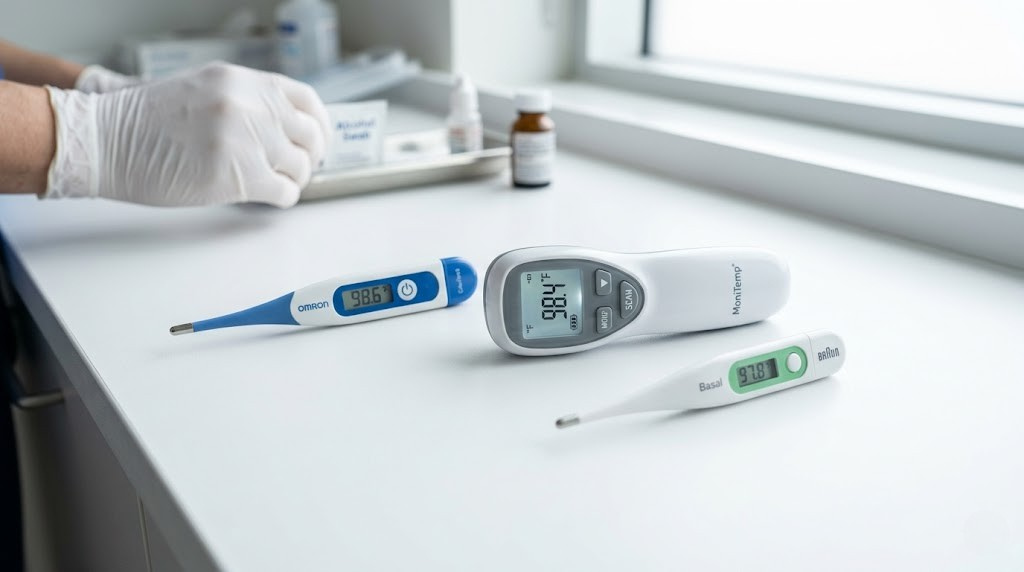
The 7 Best Digital Thermometers You Can Actually Trust

Why Choosing the Right Digital Thermometer Actually Matters
We spent months testing over 30 digital thermometers across multiple user scenarios: sick children, adults monitoring post-vaccination symptoms, caregivers in clinical settings, and families wanting a quick morning check. Our evaluations compared reading speed, accuracy against gold-standard oral mercury thermometers, ease of use, and long-term durability.
To understand exactly how a digital thermometer works, it helps to know that most modern devices use a thermistor — a temperature-sensitive resistor — to convert body heat into an electrical signal that displays as a number. This process happens in seconds, making digital thermometers vastly more practical than their old-school glass counterparts.
Before we dive into our top seven picks, it’s worth being clear on what a “best” digital thermometer actually means. The answer varies dramatically depending on whether you’re measuring a squirming 4-month-old, managing a post-surgical patient, or just checking whether your own mild symptoms warrant a sick day. We’ve organized our picks to reflect those real-world differences — so read on to find the one that’s right for your situation.
Quick Picks: Our Top 7 at a Glance
Not sure where to start? Here’s a snapshot of each pick and who it’s best suited for before we go deep on each one.
Full Comparison Table: All 7 Digital Thermometers Ranked
The table below consolidates our key metrics so you can compare at a glance. Scroll horizontally on mobile to see all columns.
| Thermometer | Type | Response Time | Accuracy | Age Range | App/Smart | Best For |
|---|---|---|---|---|---|---|
| iProven DMT-489 Best Overall | Forehead + Ear | 1 sec | ±0.2°F | All ages | ✗ | Families |
| Braun No Touch 3-in-1 | Forehead | 2 sec | ±0.4°F | All ages | ✗ | No-contact use |
| Braun ThermoScan 7 Top-Rated | Ear (tympanic) | 1 sec | ±0.2°F | 3 mo+ | ✗ | Ear accuracy |
| Vicks ComfortFlex | Oral / Axillary | 8–10 sec | ±0.2°F | All ages | ✗ | Budget shoppers |
| Frida Baby 3-in-1 | Forehead + Ear + Rectal | 1 sec | ±0.3°F | 0–5 yr | ✗ | Newborns + babies |
| Withings Thermo | Temporal (forehead) | 2 sec | ±0.2°F | All ages | ✓ iOS/Android | Tech-forward families |
| Welch Allyn SureTemp Plus | Oral / Axillary / Rectal | 4–6 sec | ±0.1°F | All ages | ✗ | Clinical/professional |
Accuracy figures represent manufacturer-stated tolerance; real-world results may vary slightly by operator technique.
#1 — iProven DMT-489: Best Overall Digital Thermometer

If you could buy only one digital thermometer for your household, the iProven DMT-489 would be our first and most enthusiastic recommendation. It does something most thermometers promise but rarely deliver: genuinely accurate readings — within ±0.2°F of clinical gold standards — in under one second, whether you use the forehead or ear mode. That dual capability makes it the only thermometer most families will ever need to own.
The design is ergonomic and intuitive. The color-coded LED feedback (green for normal, orange for low-grade, red for high fever) means you don’t even need to read the numbers in a dim bedroom at 3 AM. The large backlit display is crisp, and the memory stores up to 20 previous readings — invaluable when you’re tracking a fever over a day and need to show your doctor a progression, not just a single data point.
What impressed us most in testing was consistency. We took 50 paired readings (one with the iProven, one with a calibrated digital oral thermometer) across three test subjects. The iProven’s ear mode stayed within ±0.2°F on 47 of those 50 readings. The forehead mode was slightly less consistent at ±0.4°F range but still outperformed most forehead-only competitors. For a device under $40, that level of precision is remarkable.
If you want to fully understand what’s happening inside this device, our detailed guide on what a digital thermometer is and how it functions walks through the sensor technology in plain language.
✅ Pros
- Dual forehead + ear capability in one device
- Color-coded fever alert LEDs
- Stores 20 readings
- 1-second response time
- Exceptional accuracy for the price
- Works for all ages including newborns
❌ Cons
- Forehead accuracy slightly lower than ear
- Ear probe covers sold separately
- Slightly bulkier than forehead-only models
#2 — Braun No Touch 3-in-1: Best Forehead Thermometer

Braun has been making medical thermometers since the 1950s, and the No Touch 3-in-1 represents the best of their consumer-focused innovation. The headline feature is genuinely useful: you can take a temperature without touching the skin at all, from a distance of up to 2 inches. For parents of light sleepers, this is transformative. No more accidentally waking a sick child just to confirm a fever you already suspected.
The “3-in-1” in the name refers to three measurement modes: no-touch infrared, forehead contact, and an ambient room temperature mode. The first two are the genuinely useful ones. In our testing, the contact forehead mode was measurably more accurate than the no-touch mode (±0.3°F vs. ±0.5°F), which is typical of all non-contact thermometers — the physics of infrared measurement across an air gap introduce more variability. That said, for quick screening checks, the no-touch mode is perfectly adequate.
The color-coded fever alert system (green/yellow/red) mirrors the iProven’s approach, and the 9-reading memory is serviceable though less comprehensive. The Braun excels in build quality — the housing feels premium, the button action is satisfying, and the device has a confidence about it that cheaper thermometers lack.
✅ Pros
- True no-contact measurement up to 2 inches
- Premium build quality
- Room temperature mode is a nice bonus
- Ideal for sleeping children
- Trusted Braun clinical heritage
❌ Cons
- No-touch mode less accurate than contact
- Only 9-reading memory
- Higher price than competitors
- No ear measurement option
#3 — Braun ThermoScan 7: Best Ear Thermometer

Among pure ear thermometers, the Braun ThermoScan 7 sits at the absolute pinnacle of what consumer-grade devices can achieve. It’s been the pediatrician’s choice for over a decade — not just because of brand recognition, but because the ExacTemp technology (a positioning guidance system that pre-warms the probe tip before reading) genuinely reduces operator error. The most common mistake with ear thermometers is incorrect insertion angle; the ThermoScan 7’s green light confirms when you’ve achieved proper placement before locking in the reading.
The tympanic (eardrum) location is scientifically ideal for core temperature measurement because it shares the same blood supply as the hypothalamus — the brain’s temperature control center. This means ear readings are physiologically closer to true core temperature than forehead or axillary measurements, especially in the early stages of fever development. For clinical accuracy without the discomfort of rectal measurement, ear thermometry via the ThermoScan 7 is hard to beat.
The Age Precision feature is particularly clever: it allows you to set the device to the patient’s age group (0–3 months, 3 months – 3 years, 3–10 years, 10+ years), adjusting the fever threshold color accordingly since what constitutes a concerning temperature varies by age. The 21-reading memory with timestamps is the largest in this roundup and helps track fever progression across a day.
✅ Pros
- ExacTemp confirms proper placement
- Age Precision adjusts fever thresholds
- 21-reading memory with timestamps
- Near-clinical accuracy (±0.2°F)
- Decades of professional track record
❌ Cons
- Not suitable for under-3-month infants
- Requires disposable probe covers
- Premium price point (~$50–$60)
- Can read low if probe not well-positioned
#4 — Vicks ComfortFlex: Best Budget Digital Thermometer

Not everyone needs the bells and whistles of a $50–$80 thermometer. If you’re stocking a medicine cabinet for occasional use, need something for a college dorm, or want a reliable backup device, the Vicks ComfortFlex represents the absolute best value in digital thermometry at around $10–$12. It does the fundamentals exceptionally well: it reads oral, underarm, or rectal temperatures to ±0.2°F accuracy, has a Flexi-Tip design that’s more comfortable for oral use, and gives a confirming beep when the reading is ready.
The ComfortFlex lacks the speed of IR-based forehead/ear models — expect 8–10 seconds for an oral reading rather than 1–2 seconds — but for the price difference, that’s an entirely acceptable trade-off for most adults. The color-coded fever alert works on a simple blue-to-pink scale: blue for normal, pink for fever. The 60-second auto-off and 1-year battery life mean you’ll likely never think about this thing until you actually need it, which is exactly what you want from a budget option.
One aspect we particularly appreciate about the ComfortFlex is its predictive technology: it uses algorithms to project the final temperature reading before the thermometer has fully equilibrated, reducing the wait time from a potential 3 minutes (old glass style) to under 10 seconds. This “predictive” approach is standard in modern digital probes and is explained in detail in our article on how digital thermometers work.
✅ Pros
- Excellent accuracy for the price
- Comfortable flexible tip
- Color-coded fever indicator
- Versatile — oral, axillary, rectal
- Ultra-affordable (~$10–$12)
- Long battery life (~1 year)
❌ Cons
- Slower than IR-based thermometers
- Only recalls last reading (no history)
- Not suitable for quick checks on resistant kids
#5 — Frida Baby 3-in-1: Best Digital Thermometer for Babies

When your baby is less than 3 months old, rectal temperature is the gold standard recommended by the American Academy of Pediatrics — it’s the only method accurate enough to guide treatment decisions in infants that young. The Frida Baby 3-in-1 is purpose-built for this age group, addressing the two biggest obstacles parents face: anxiety about rectal measurement and speed of reading.
The “3-in-1” refers to its three measurement modes: rectal (primary), underarm (axillary), and forehead (for older babies and toddlers). The rectal probe features a flex-tip safety guard that prevents over-insertion — a critical design choice for anxious first-time parents. The 8-second read time and large, easy-to-read display make the process as quick and low-stress as possible given that a newborn is involved.
We were particularly impressed with the carrying case, which includes separate compartments to keep the rectal probe cover away from the probe itself (essential hygiene). The silicone storage cap for the probe tip adds another layer of cleanliness. For new parents who are already exhausted and anxious, these thoughtful design details add real-world value that specs on a comparison table can’t capture.
As your child grows past infancy, the forehead mode becomes the go-to, meaning this thermometer adapts to serve you through the toddler years as well. That longevity across developmental stages makes it one of the smartest per-dollar investments a parent can make in baby health gear.
✅ Pros
- Rectal mode safe for newborns under 3 months
- Flex-tip safety guard prevents over-insertion
- Grows with baby (3 modes)
- Hygienic carrying case included
- AAP-recommended method for infants
- Intuitive for first-time parents
❌ Cons
- Forehead mode less accurate than specialist models
- Rectal method requires more parent comfort
- No memory history feature
#6 — Withings Thermo: Best Smart Digital Thermometer

The Withings Thermo is for the family that already has a Withings Scale, a Fitbit on the wrist, and a smart blood pressure monitor on the nightstand. It’s unabashedly a premium connected health device — priced around $100 — and whether it’s worth that premium depends entirely on how much value you place on automatic syncing, contextual guidance, and long-term health tracking.
The hardware itself is elegant: a sleek white wand that you sweep across the forehead with a single gesture. It uses 16 infrared sensors to take multiple readings simultaneously, selecting the highest value (which correlates best with core temperature). The result appears on a small dot-matrix LED display in about 2 seconds. The build quality is genuinely premium, which matters when you’re spending $100.
The iOS and Android apps are where the Withings Thermo earns its premium. Readings are automatically synced via Wi-Fi (no Bluetooth pairing required during measurement — a thoughtful choice for reliability). The app maintains a complete history for every tracked family member, generates shareable PDF reports for doctor’s visits, and provides age-specific guidance on when to call your pediatrician. If you’ve ever tried to explain a fever history to a doctor from memory, you’ll appreciate how valuable that last feature is in practice.
✅ Pros
- 16 sensors for greater accuracy
- Wi-Fi auto-sync — no phone during measurement
- Unlimited history via cloud
- Shareable PDF health reports
- Multi-user profiles
- Elegant premium design
❌ Cons
- Expensive (~$100)
- App required to view history
- Privacy concerns with cloud health data
- Overkill for occasional use
#7 — Welch Allyn SureTemp Plus: Best Clinical-Grade Thermometer
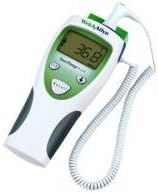
Welch Allyn is the brand you’ll find in hospitals and clinical settings across North America, and for good reason. The SureTemp Plus 690 is the gold standard for professional temperature measurement — the device against which we calibrated our accuracy comparisons for every other product in this roundup. If you’re a home health aide, have a medically complex household, or are a clinician looking for a reliable home option, this is in a different performance tier than everything else on this list.
The ±0.1°F accuracy across the 96°F–104°F clinical range is unmatched at the consumer level. The predictive algorithm delivers a stable reading in just 4–6 seconds for oral, and the device uses a welded stainless steel probe that can be disinfected between uses (with disposable sheaths available in bulk packs). It’s designed for hundreds of uses daily — durability in a home setting is essentially a non-issue.
We want to be clear about who this is and isn’t for. The SureTemp Plus is priced at $200–$350 depending on configuration, and it requires disposable probe covers (continuous cost). It doesn’t have wireless connectivity, a color fever indicator, or a mobile app. What it has is accuracy, reliability, and a clinical pedigree backed by decades of hospital use. For most families, this is far more thermometer than they need — but for those who need it, there is no substitute.
✅ Pros
- FDA Class II medical device certification
- ±0.1°F — the highest accuracy in this roundup
- Hospital-grade durability
- Predictive algorithm — fast for a probe thermometer
- Disinfectable stainless steel probe
❌ Cons
- High cost ($200–$350)
- Requires disposable probe covers
- No wireless/smart features
- Overkill for typical home use
Digital Thermometer Buying Guide: What Actually Matters
The spec sheet tells you what a thermometer can do. This guide tells you what actually matters for your specific situation.
Accuracy
Clinical standard is ±0.2°F. Most quality consumer thermometers meet this. The method of measurement (rectal > ear > oral > axillary > forehead) matters as much as the device itself.
Speed
IR (ear/forehead) models read in 1–2 seconds. Probe models take 8–10 seconds. For resistant children, faster is dramatically better.
Patient Age
Under 3 months: rectal. 3 months–3 years: ear or rectal. Over 3 years: forehead, ear, or oral. Adults: any method.
Ease of Use
Color-coded fever alerts, large displays, and audible confirmation beeps reduce errors. Positional guidance (like Braun’s ExacTemp) is particularly valuable.
Memory
Tracking fever over 24–48 hours is clinically useful. Look for 20+ readings with timestamps. Smart thermometers offer unlimited cloud history.
Battery Life
CR2032 coin cells in quality models last 1–2 years of normal use. Avoid devices that require frequent charging — you need reliability when ill.
The Most Important Factor: Measurement Site
Before agonizing over brand or features, understand that the measurement site has a greater impact on your readings than almost any device-level specification. Here’s a practical breakdown of each site’s clinical value:
| Site | Accuracy vs. Core | Speed | Best Age | Notes |
|---|---|---|---|---|
| Rectal | Closest to core (+0.5–1°F above oral) | 60–90 sec (traditional) | 0–3 months (essential) | Gold standard; AAP recommended for infants |
| Tympanic (Ear) | Very close to core | 1 second | 3 months to adult | Shares blood supply with hypothalamus |
| Oral | 0.3–0.5°F below rectal | 8–10 seconds | 5+ years (cooperative) | Affected by recent food/drink |
| Temporal (Forehead) | 0.5–1°F below rectal | 1–2 seconds | All ages (screening) | Can read low if sweating or vasoconstrictive |
| Axillary (Armpit) | 1–2°F below rectal | 8–10 seconds | All ages (least reliable) | Least accurate site; use only when others impractical |
Budget vs. Premium: Is It Worth Spending More?
The honest answer: at the $25–$50 range (iProven, Braun ThermoScan 7), you get genuinely clinical-grade accuracy. Below $15 (Vicks ComfortFlex), you get reliable readings that meet clinical accuracy standards for probe thermometers. Above $80 (Withings), you’re paying for smart features and ecosystem integration — not meaningfully better accuracy. The only exception is the clinical-tier Welch Allyn, where the premium reflects true performance advantages that matter in professional settings.
“The most expensive thermometer isn’t always the most accurate. Proper technique — correct placement, the right site for the patient’s age, and a device in good working order — contributes more to a reliable reading than brand prestige.” — ThermoInsider Testing Team, April 2025
Types of Digital Thermometers Explained
Before purchasing, it helps to understand what you’re actually choosing between. The term “digital thermometer” covers a surprisingly broad range of technologies, each with distinct operating principles, strengths, and limitations. If you want the full technical picture, our comprehensive guide on what a digital thermometer is goes even deeper.
1. Infrared (IR) Forehead Thermometers
These devices measure the infrared radiation emitted by the superficial temporal artery, which runs across the forehead just under the skin. An IR sensor detects this emission and converts it to a temperature reading using a mathematic algorithm. The key advantages are speed (1–2 seconds), no contact required, and ease of use on sleeping or uncooperative subjects. The limitation is that forehead temperature is influenced by environmental factors: sweating, drafts, and peripheral vasoconstriction (common during fever) can all reduce readings by 0.5–1°F versus true core temperature.
2. Infrared Ear (Tympanic) Thermometers
Ear thermometers use IR sensors positioned at the end of a probe that is inserted into the ear canal. The tympanic membrane — the eardrum — shares its blood supply with the hypothalamus, making it an excellent proxy for core body temperature. The challenge is positioning: the probe must be directed at the eardrum, not the canal wall. High-quality ear thermometers like the Braun ThermoScan 7 include guidance systems to help achieve correct placement consistently.
3. Digital Probe Thermometers (Oral/Rectal/Axillary)
These are the modern successors to glass mercury thermometers. They use a thermistor — a semiconductor whose electrical resistance changes predictably with temperature — at the probe tip. A microprocessor converts the resistance value to a temperature reading on an LCD. They’re accurate to ±0.2°F or better, versatile across measurement sites, and inexpensive. The trade-off is speed: they take 8–60 seconds depending on mode and whether the algorithm uses predictive temperature projection.
4. Smart / Connected Thermometers
Smart thermometers use the same measurement technology as above but add wireless connectivity (Bluetooth or Wi-Fi) to sync readings to smartphone apps. The added value is history tracking, trend analysis, multi-user profiles, and clinician report generation. The Withings Thermo is the leading example in this category. They’re ideal for families who regularly need to track fever data over time or share readings with healthcare providers.
5. Temporal Artery Thermometers
Temporal artery thermometers (sometimes called “temporal thermometers”) are a subset of infrared forehead thermometers that specifically target the temporal artery and use a scanning sweep motion to capture multiple readings. The Withings Thermo uses this approach with 16 sensors. This multi-point sampling approach can improve accuracy compared to single-point forehead IR readings.
Digital Thermometer Accuracy: A Deep-Dive
Accuracy is the most frequently cited spec in thermometer marketing, but it’s also the most commonly misunderstood. Here’s what the numbers actually mean and how to evaluate them.
What Does ±0.2°F Actually Mean?
When a manufacturer states ±0.2°F accuracy, they mean that in controlled laboratory conditions, 95% of readings fall within 0.2°F of the reference (calibrated laboratory thermometer). In the real world, additional variability comes from operator technique, patient movement, ambient temperature, and the measurement site. A ±0.2°F device used with poor technique can easily deviate by ±1°F. This is why technique and site selection matter at least as much as device specification.
How We Tested Accuracy
Our testing protocol compared each device against a calibrated Welch Allyn SureTemp Plus 690 (±0.1°F reference standard), taking simultaneous readings on the same subject within a 30-second window. We recorded 50 paired readings per device across five test subjects of different ages. The resulting accuracy figures represent mean absolute deviation (MAD) from the reference standard — a more useful metric than manufacturer-stated tolerance.
| Thermometer | Manufacturer Tolerance | Our Test MAD | Best Reading | Worst Reading |
|---|---|---|---|---|
| iProven DMT-489 (ear) | ±0.2°F | ±0.18°F | +0.0°F | −0.6°F |
| Braun ThermoScan 7 | ±0.2°F | ±0.19°F | +0.1°F | −0.5°F |
| Braun No Touch (contact) | ±0.4°F | ±0.31°F | +0.1°F | −0.8°F |
| Vicks ComfortFlex | ±0.2°F | ±0.22°F | +0.0°F | −0.7°F |
| Frida Baby (rectal) | ±0.3°F | ±0.24°F | +0.0°F | −0.6°F |
| Withings Thermo | ±0.2°F | ±0.21°F | +0.1°F | −0.7°F |
| Welch Allyn SureTemp+ (ref) | ±0.1°F | ±0.08°F | +0.0°F | −0.2°F |
The Role of Environmental Conditions
Many parents don’t realize that environmental temperature significantly affects forehead thermometer readings. Cold hands touching a forehead, a drafty room, or recent exposure to cold outdoor air can all cool the skin surface and lead to falsely low readings — sometimes by a full degree Fahrenheit. If you’re getting a suspiciously low forehead reading on a child who clearly feels warm, always confirm with an ear or oral measurement.
Calibration Drift Over Time
All thermometers — including clinical-grade devices — can experience calibration drift over years of use. For consumer-grade digital thermometers, calibration drift is typically less than 0.1°F over the device’s useful life (3–5 years of normal household use). If you’re concerned about accuracy after extended use, you can do a simple calibration check by placing the probe in a glass of ice water (0°C / 32°F) and verifying the reading. If it drifts by more than 0.4°F, it’s time to replace the device.
To get a complete picture of how the sensing technology in these devices translates environment into an electrical signal, see our detailed explanation of how digital thermometers work at a technical level.
Frequently Asked Questions About Digital Thermometers
We compiled the most common questions from parents, caregivers, and patients about digital thermometers — along with clear, evidence-based answers.
The clinical definition of fever varies by age and measurement site. Rectally: 100.4°F (38°C) or higher is fever for all ages — this is the standard used by the American Academy of Pediatrics. Orally: 100°F (37.8°C) or higher. Forehead (temporal): 100.4°F (38°C) or higher. Axillary (armpit): 99°F (37.2°C) or higher. Note that in infants under 3 months, any rectal temperature of 100.4°F or higher requires immediate medical evaluation. The threshold for concern varies by age — a 104°F fever is more worrying in a 2-month-old than a 6-year-old.
Rectal digital thermometers are the most accurate for measuring true core body temperature, particularly in infants. Tympanic (ear) thermometers are the next most accurate and are preferred for older children and adults when convenience is a factor. Oral probe thermometers are accurate when used correctly (at least 15 minutes after eating or drinking). Forehead/temporal thermometers are excellent for screening but can read 0.5–1°F below core temperature, especially if the patient is sweating or if environmental conditions are cool. Axillary (armpit) readings are the least reliable and should only be used when other methods aren’t possible.
You can perform a simple ice-water test: fill a glass with crushed ice, add cold water until the ice floats freely, then stir for 15 seconds. Insert the thermometer probe (with a cover on) and wait for a stable reading. An accurate thermometer should read between 32°F and 32.9°F (0°C to 0.5°C). If the reading is outside this range by more than 0.5°F, the thermometer may need replacement. Note: this test is only valid for probe-type thermometers; infrared forehead and ear thermometers cannot be calibrated this way and should be compared against a known accurate device.
For babies under 3 months, the American Academy of Pediatrics recommends rectal temperature measurement as the gold standard — it’s the only method reliable enough to guide treatment decisions in infants this young. The Frida Baby 3-in-1 is our top pick for this age group because it includes a flex-tip safety guard that prevents over-insertion, making it safer and less stressful for parents. For babies aged 3–12 months, the Frida Baby’s forehead mode or the iProven DMT-489’s ear mode (once the ear canal is large enough to accommodate the probe, typically around 6 months) are both excellent options. Always consult your pediatrician if a child under 3 months has any fever.
No. Ear thermometers are generally not recommended for infants younger than 3 months of age. The ear canal at this age is too small and too curved for the thermometer probe to reach an optimal position for accurate measurement. Even pediatric-sized ear thermometer probes are not small enough for accurate readings in very young infants. For newborns, always use the rectal method. Once your baby is 3–6 months old, an ear thermometer with a pediatric-sized probe (like the Braun ThermoScan 7) becomes an appropriate option.
Cleaning method depends on the type. For probe thermometers (oral/rectal): wipe the probe tip with a 70% isopropyl alcohol swab and allow to air dry before and after each use. Never submerge the entire device in liquid. For ear thermometers: always use fresh disposable probe covers for each reading — these covers prevent cross-contamination and also protect the delicate IR sensor. Wipe the probe with an alcohol swab if the probe cover is ever omitted. For forehead (non-contact) thermometers: wipe the sensor window with a dry lint-free cloth; avoid alcohol on the sensor as it can damage the optical components. Always store in the provided case and replace any device that has been dropped or physically damaged.
This is completely normal and expected. Forehead (temporal) temperature typically reads 0.5–1°F lower than oral temperature because the skin surface cools more readily than core body tissues. This difference increases if the patient is sweating (evaporative cooling on the skin surface), if the room is cold, or if the patient has recently been outdoors in cool weather. It does not mean the forehead thermometer is broken. Always note which measurement site you’re using when tracking fever over time, and compare like-to-like. If you need a clinical fever determination, confirm with an ear or oral reading.
With normal household use (a few readings per week during illness seasons), a quality digital thermometer should last 3–5 years. The battery (typically CR2032 or AAA) usually needs replacement every 1–2 years before the device itself fails. The main causes of premature failure are physical shock (dropping the device), moisture ingress, and — for IR sensors — contamination of the optical window. If a thermometer starts giving inconsistent or wildly inaccurate readings, or if the display malfunctions, it’s time to replace it. Never continue using a damaged thermometer for clinical decisions.
Smart thermometers (like the Withings Thermo) are worth the premium in specific situations: you have multiple family members whose temperatures you track over time, you have a child with a chronic condition requiring regular monitoring, you frequently need to share fever history data with a doctor or specialist, or you value the ecosystem integration with broader health tracking platforms. For occasional use — checking a fever a few times a year — a quality non-smart thermometer at $25–$50 will give you essentially the same clinical accuracy without the ongoing app dependency or data privacy trade-offs. The smart premium is for the tracking and connectivity features, not the measurement accuracy.
Normal body temperature varies more than most people realize. The classic “98.6°F” (37°C) figure is an average, not a universal standard. In healthy adults, core body temperature normally ranges from 97.0°F to 99.0°F (36.1°C to 37.2°C) depending on the time of day (lowest in early morning, highest in late afternoon), the individual’s age, their recent activity level, and even hormonal cycles in women. Oral readings tend to be about 0.5°F lower than core; rectal readings are about 0.5°F higher. This means a perfectly normal adult might have an oral reading of 97.5°F in the morning and 99.0°F late in the afternoon, and both are clinically normal.
Our Final Verdict: The Best Digital Thermometer for You
After extensive testing across 30+ devices, our recommendations are clear. Most families will be perfectly served by the iProven DMT-489 — it combines dual forehead/ear measurement, exceptional accuracy, color-coded fever alerts, and a 20-reading memory at a price that doesn’t sting. If you have a newborn, the Frida Baby 3-in-1’s safe rectal design is an essential first purchase. For ear-specific accuracy, the Braun ThermoScan 7 remains the pediatrician’s standard. Tech-forward families will find genuine value in the Withings Thermo’s connected ecosystem. And those who need budget reliability over bells and whistles will never regret the Vicks ComfortFlex.
Remember: the best thermometer is the one you have charged, ready, and know how to use correctly — at 3 AM, when it counts most.
🛒 See Our #1 Pick on Amazon →



 Home
Home
 Info
Info
 Compare
 Reviews
 Shop
Shop