Heating? Cooling? Both?
Solve the mystery of your thermostat’s erratic mode switching.
Why Your Thermostat Keeps Switching from Heat to Cool — Causes & Fixes
Is your furnace running in the middle of a hot afternoon, or is the AC kicking on during a chilly night? When a thermostat switches between heat and cool erratically, it doesn’t just waste energy—it puts immense strain on your HVAC compressor and burners through constant short-cycling. This comprehensive guide covers every possible cause of erratic mode switching, from simple settings errors to mechanical failures, and walks you step-by-step through the diagnosis and repair process.
Before diving into the technical causes, it’s worth understanding what a thermostat actually does at a fundamental level. If you’re not sure, read our full guide on what a thermostat is and how it works—it provides the conceptual foundation that makes the rest of this troubleshooting guide much clearer.
Understanding Thermostat Mode Switching
Most thermostats are designed to be “set and forget.” However, the internal logic that tells the system to switch from one mode to the other is more complex than a simple thermometer reading. To truly understand why things go wrong, you need to understand the underlying mechanism that governs heating and cooling commands.
How HVAC Systems Change Between Heating and Cooling
When you select a mode, the thermostat closes a specific circuit. The W wire typically controls heating, while the Y wire controls cooling. Erratically switching modes often means the thermostat is accidentally energizing both, or a software logic error is overriding your manual selection.
At its core, a thermostat is a low-voltage switching device. It uses 24V AC power (supplied by the HVAC transformer) to energize different relay circuits inside your air handler or furnace control board. Understanding how thermostats work is key—because when the wrong wire gets energized, you get unexpected mode changes.
R / Rh / Rc — Red — 24V Power (heating / cooling)
W / W1 / W2 — White — Heating Stage 1 / Stage 2
Y / Y1 / Y2 — Yellow — Cooling Stage 1 / Stage 2
G — Green — Fan (blower)
C — Blue/Black — Common (ground reference for 24V)
O/B — Orange/Blue — Heat Pump Reversing Valve
When the thermostat simultaneously activates both Y and W terminals—even briefly—the furnace and AC compressor can both attempt to run. Most modern HVAC control boards have lockout logic to prevent this, but the brief conflict still confuses the system and causes the behavior that looks like “switching modes.” For a deeper understanding of how the wiring works on both heating and cooling circuits, see our complete thermostat wiring guide.
What “Auto Changeover” Means on a Thermostat
Auto Changeover (or “Auto Mode”) allows the thermostat to switch between heating and cooling automatically based on a set temperature range. If your “cooling” setpoint is too close to your “heating” setpoint (the “deadband”), the system may constantly flip-flop as the room temperature fluctuates by just one degree.
In Auto mode, you typically set two temperatures: a heating setpoint (the lowest you want the room to go) and a cooling setpoint (the highest you’ll allow). The space between these two numbers is called the deadband or swing. The thermostat should stay completely off while the temperature is within this band.
📘 Auto Changeover — How It’s Supposed to Work
Example: Heat set to 68°F, Cool set to 74°F. The deadband is 6°F.
- If temp drops below 68°F → heating activates
- If temp rises above 74°F → cooling activates
- While temp is 68–74°F → system is idle
Problems happen when the deadband is too narrow (e.g., Heat 70°F / Cool 71°F), or when the thermostat’s temperature reading is inaccurate.
The Deadband Problem — The Most Overlooked Cause
The deadband is the single most common and most frequently overlooked cause of heat-to-cool switching. Many homeowners don’t realize their thermostat has two setpoints in Auto mode—they assume there’s just one target temperature. When they set both to 70°F (or 1 degree apart), the system becomes hypersensitive and switches modes every few minutes.
Every thermostat has a minimum allowable deadband. Most require at least 2–3°F of separation, but premium models allow you to customize this. If your thermostat does not allow you to adjust the deadband, you may need to check if your thermostat can be upgraded to a model with proper deadband control.
The recommended minimum deadband for comfortable, efficient operation is 3–5°F. Anything narrower invites oscillation, especially in variable climates or homes with high solar gain from large windows.
Common Reasons Your Thermostat Switches Between Heat and Cool
Incorrect Thermostat Settings or Mode Configuration
If your thermostat is set to “Auto,” it will hunt for a temperature between your two setpoints. If your home has high solar gain (sunlight through windows) during the day and drops quickly at night, the thermostat may cycle between AC and Heat multiple times in 24 hours.
Beyond the deadband issue, incorrect schedule programming is a surprisingly common culprit. Many homeowners set up a 4-period or 7-day schedule without realizing one of the time periods is configured for a dramatically different temperature. For example, an “Away” period set to 62°F heat and a “Home” period set to 78°F cool will cause the thermostat to switch modes when transitioning between periods, even if the house is already at a comfortable 70°F. Learn how to properly set, change, lock, and reset your thermostat to avoid these programming errors.
Malfunctioning or Incompatible Thermostat
Not all thermostats are compatible with all HVAC types. For example, using a standard thermostat on a 2-stage heat pump without proper configuration can cause the reversing valve to chatter or switch modes unexpectedly. To verify whether your thermostat is properly matched to your system, use our guide on thermostat and furnace compatibility.
A thermostat can also simply fail internally. Logic board failures, corrupted firmware, and failed temperature sensors are all capable of producing erratic mode-switching behavior. These failures can be subtle—the thermostat may appear to display correctly but behave erratically. Before replacing your entire HVAC system, check our detailed guide on how to tell if your thermostat is bad, which covers 12 symptoms and hands-on tests.
Faulty Thermostat Wiring or Loose Connections
A “short” between the Y and W wires can cause the system to receive conflicting signals. If the wires are old or were poorly installed, they may touch behind the wall plate. Intermittent contact is particularly deceptive—the thermostat may work correctly for hours, then briefly short-circuit when the building shifts slightly (from temperature expansion, a door slamming, etc.), causing a momentary mode change.
To properly check your wiring, remove the thermostat from its wall plate and visually inspect each wire terminal. Look for:
- Exposed copper strands that extend beyond the terminal and could touch adjacent terminals
- Wires that appear to have melted or discolored insulation
- Terminals that are loose or where the wire pulls out easily
- Old cloth-wrapped or aluminum wiring that may have degraded insulation
You can also consult our guide on how to hide and manage thermostat wires, which includes tips for ensuring wires are properly secured and separated from each other.
⚠️ Important: The C-Wire and Logic Board Reboots
If your thermostat lacks a proper C-wire (common wire), it may draw power parasitically through the Y or W circuit. This “power stealing” can cause erratic behavior including random mode changes, display glitches, and system reboots. Learn more about why thermostat reboots cause the AC to turn on — this is a well-documented issue with several popular thermostat models.
Heat Pump Reversing Valve Issues
In heat pump systems, a “reversing valve” determines whether the refrigerant flows to provide heat or cooling. If the thermostat loses power to the O/B terminal, the valve may default to its “home” position (usually cooling), causing an unexpected mode change while the thermostat still says “Heat.”
The O/B terminal configuration varies by manufacturer. Most systems use the O setting, which energizes the reversing valve during cooling. Others (primarily older Rheem/Ruud systems) use the B setting, which energizes the valve during heating. If your thermostat is configured with the wrong O/B setting, it will be in the wrong mode virtually all the time.
Heat pump systems are significantly more complex than traditional gas furnace + AC setups. If you’re dealing with persistent mode confusion on a heat pump, it’s worth understanding what a split HVAC system is and how the refrigerant cycle affects both heating and cooling modes. The reversing valve is a solenoid-operated component that physically redirects refrigerant flow—if it sticks or fails to fully shift, the system operates in a hybrid state that can confuse both the thermostat and the homeowner.
Signs of a failing reversing valve include:
- The system blows warm air when set to cool, or cool air when set to heat
- You can hear a distinct “whoosh” or “thunk” when the mode changes
- The outdoor unit runs continuously regardless of mode setting
- The system cools adequately but heats poorly in mild weather (partial valve shift)
Smart Thermostat Schedules, Automations, or App Overrides
Smart homes can be too smart. A routine in Google Home, Alexa, or IFTTT might be overriding your thermostat based on your phone’s location or a different sensor in another room. This is especially common if you use remote sensors for comfort, as the thermostat may switch to AC because a bedroom is hot while the hallway is cold.
Smart thermostat ecosystems have layers of logic that can interact in unexpected ways. Consider all the possible sources of an override command:
- Manufacturer App Schedules: The Nest, Ecobee, or Honeywell app schedule may be set to different temperatures or modes for different time periods.
- Adaptive Learning: Thermostats like the Nest Learning Thermostat observe your behavior and create automatic schedules. If someone manually adjusted the thermostat to a different mode on a previous day at 2pm, the thermostat may have “learned” to switch modes at 2pm every day. Learn how thermostat adaptive learning works to understand why this happens.
- Geofencing: Many smart thermostats use your phone’s GPS to determine if you’re home or away. If your geofencing thermostat has different “Home” and “Away” temperature targets set to different modes, arriving or leaving home can trigger a mode switch.
- Home/Away Assist: Similar to geofencing, the Home/Away feature on smart thermostats can transition the system into an energy-saving mode with different setpoints.
- Remote Sensor Priority: If you have remote temperature sensors in different rooms, the thermostat may be averaging or prioritizing a room that’s significantly hotter or cooler than the room containing the thermostat itself, triggering mode changes that feel random from where you’re standing.
- Third-Party Automations: Rules in Google Home, Amazon Alexa Routines, Apple Home automations, or IFTTT applets can send direct commands to change the thermostat mode based on time, weather, presence, or other triggers.
Pro Tip: To isolate smart override issues, temporarily disable Wi-Fi on the thermostat (or put it in “offline” mode if available) for 24 hours. If the erratic switching stops, the cause is definitely a cloud-based automation or schedule, not a hardware issue.
How Inaccurate Temperature Readings Cause Mode Switching
Even if your thermostat’s settings and wiring are perfect, the system will behave erratically if the thermostat’s temperature sensor is giving inaccurate readings. This is one of the most insidious causes of mode-switching because everything appears to be configured correctly—the thermostat just “thinks” the room is the wrong temperature.
Thermostat Placement Issues
Thermostat placement has an enormous impact on temperature accuracy. A thermostat installed in a bad location can trigger both heating and cooling within a single day even when conditions are comfortable. Common bad locations include:
- Direct sunlight: A window facing west can beam afternoon sunlight directly onto the thermostat, raising its reading by 10–15°F. The thermostat activates cooling even though the rest of the house is comfortable.
- Near exterior doors or windows: Cold drafts in winter can make the thermostat think the house is colder than it is, over-triggering heating and then causing the house to overheat.
- Above or near supply registers: Hot or cold air blowing directly onto the thermostat creates an extreme feedback loop.
- Near heat-generating appliances: Ovens, refrigerators, TVs, and even lighting can radiate enough heat to shift temperature readings.
- In a hallway with little airflow: The hallway may be a different temperature than the main living areas, causing unnecessary mode changes.
If you suspect placement is the issue, our detailed guide on why your thermostat shows the wrong room temperature covers every placement-related cause and how to correct it.
Dirty or Failing Internal Temperature Sensor
Inside the thermostat is a thermistor—a small electronic component whose electrical resistance changes with temperature. If this component is coated in dust, exposed to humidity, or has aged significantly, its readings become unreliable. This can cause the thermostat to report a temperature that oscillates by several degrees even as the actual room temperature is stable—triggering heating and cooling in rapid succession.
Cleaning the thermostat interior (using compressed air with the unit powered down) occasionally resolves this. If cleaning doesn’t help, the sensor itself may need replacement, which typically means replacing the entire thermostat. For guidance on assessing whether internal hardware failure is at play, see our guide on how to know if you need a new thermostat.
Impact of Outdoor Temperature Extremes
In climates with significant seasonal swings, the transition seasons (spring and fall) are when erratic mode switching is most common—because the outside temperature itself crosses the heating/cooling threshold multiple times per day. A 55°F spring morning that warms to 78°F by afternoon will naturally trigger both heating and cooling if the thermostat is in Auto mode with a narrow deadband. This is normal behavior—but it can be optimized by setting appropriate seasonal temperature settings.
Thermostat Compatibility Problems That Cause Erratic Switching
Voltage Mismatch: Line Voltage vs. Low Voltage
Most residential HVAC systems use low-voltage thermostats (24V AC). However, some systems—particularly electric baseboard heaters, radiant floor systems, and some older systems—operate on line voltage (120V or 240V). Installing a low-voltage thermostat on a line-voltage system is dangerous and will cause erratic operation including random mode changes. Our guide on line voltage vs. low voltage thermostats includes a 2-minute wiring test to identify which type your system requires.
Single-Stage vs. Multi-Stage Systems
Some HVAC systems have two stages of heating and/or cooling (W1/W2 and Y1/Y2). A single-stage thermostat installed on a multi-stage system may not properly control the second stage, and may inadvertently signal for both stages simultaneously, causing the system to overshoot its target temperature aggressively. This overshoot—hitting 80°F when the heat setpoint was 70°F—then triggers the cooling mode to kick in.
For information on how heating and cooling thermostats differ in terms of staging and compatibility, read our article on how heating and cooling thermostats differ.
Furnace Control Board Communication Issues
Modern communicating HVAC systems use proprietary protocols (like Carrier’s Infinity system, Lennox iComfort, or Trane’s ComfortLink) to send data between the thermostat and the system components. If a non-communicating thermostat is installed on a communicating system, or if the communication protocol is misconfigured, the thermostat and furnace/AC unit may each think they’re in charge of mode decisions—leading to conflicts. Our article on why your thermostat doesn’t start the furnace covers many of these communication failures.
Signs Your Thermostat Is Switching Modes Erratically
- Ghost Switching: You wake up to a different mode than the one you set before bed.
- Short Cycling: The AC runs for 2 minutes, stops, and the Heat starts 5 minutes later.
- Display Conflicts: The screen says “Heating” but the outdoor AC compressor is running.
- Temperature Overshoot: The house consistently goes 3–5°F past the set temperature before the system shuts off, triggering the opposite mode.
- Unexpected Energy Bills: Simultaneous or near-simultaneous heating and cooling usage causes a spike in both gas and electricity bills.
- Compressor Damage Warning Signs: Unusual sounds from the outdoor unit, tripped circuit breakers, or ice forming on the refrigerant lines.
These symptoms can also overlap with other thermostat problems. If your thermostat is clicking but nothing is happening, that’s a separate (though related) issue—see our guide on why your thermostat clicks but won’t turn on. Similarly, if the thermostat says “Heat On” but no heat is coming out, read our analysis of thermostat heat-on signals vs. furnace response.
How to Troubleshoot Thermostat Mode Switching
Verify Auto Changeover Settings
Disable “Auto” mode and switch to a manual “Heat” or “Cool” setting. If the problem stops, the issue was simply a narrow deadband or a confusing schedule. Increase the gap between your heat and cool temperatures to at least 3-5 degrees. Navigate to your thermostat’s settings menu and look for “Auto Changeover,” “Deadband,” or “Temperature Swing” options. Set the minimum separation to 4–5°F and test for 24 hours.
Inspect Wiring and Connections
Pop the thermostat off the wall. Ensure no copper from the W wire is touching the Y wire. If you recently had an issue where the thermostat clicks but nothing happens, check for a loose C-wire, which can cause the logic board to reboot and default to random modes. Photograph the existing wiring before disconnecting anything, then check each terminal for loose strands, corrosion, or contact between adjacent wires.
Check for Smart App Overrides
Open your Google Home, Alexa, or proprietary app (Nest/Ecobee). Look for “Routines” or “Geofencing” that might be changing the mode based on your GPS location. Check all connected automation platforms. For Sensi users, ensure you haven’t had a reset failure that left the device in an unconfigured state. Disable all routines temporarily and observe behavior for 48 hours.
Check Thermostat Placement and Temperature Accuracy
Use a separate indoor thermometer (a simple digital thermometer works fine) and compare its reading to what the thermostat displays. Place the thermometer next to the thermostat and wait 15 minutes for it to acclimate. If there’s a discrepancy of more than 2–3°F, the thermostat’s sensor may be compromised or it may be in a bad location. Read our full guide on why your thermostat shows the wrong room temperature for remediation steps.
Test with a Factory Reset
If the previous steps haven’t resolved the issue, perform a factory reset on the thermostat. This clears all schedules, automations, and learned behaviors, leaving only the base firmware. After the reset, manually configure only the settings you need—no schedules, no automations—and observe for 24 hours. If the erratic switching stops, the problem was in the configuration. If it continues, the issue is hardware-related. Instructions for resetting common brands: Honeywell reset guide | Sensi reset guide | General thermostat reset guide.
Verify Furnace and AC Control Board Health
Even if the thermostat appears to be working correctly, the problem might originate at the HVAC control board. Check the furnace control board for any flashing LED codes—most modern furnace control boards have a diagnostic LED that flashes a specific pattern to indicate fault codes. These codes are typically printed on a sticker inside the furnace access panel. A relay failure on the control board can cause the heating circuit to stay energized even after the thermostat signals off, which then triggers the cooling circuit. If your furnace fan runs but the heating doesn’t activate properly, the control board may be at fault.
Advanced Diagnostics: Using a Multimeter to Test Mode Switching
For homeowners comfortable with basic electrical testing, a multimeter provides definitive evidence of what’s happening at the thermostat terminal. This step is optional but invaluable if simpler troubleshooting hasn’t identified the cause.
What You’ll Need
- A basic digital multimeter (set to AC voltage, 50V range)
- A helper (optional, but useful)
- The thermostat wiring diagram from your HVAC system’s manual
The Test Procedure
With the thermostat mounted and all wires connected, carefully access the wire terminals (some thermostats have exposed test points, others require touching the multimeter probe to the wire itself behind the terminal). Set the thermostat to Heat mode and verify you see approximately 24V AC between the R terminal and the W terminal. The Y terminal should read 0V. Switch to Cool mode—Y should now read approximately 24V AC and W should read 0V.
If both W and Y show voltage simultaneously, you have confirmed a wiring short or thermostat logic fault. If neither shows voltage when it should, the issue may be with the transformer or C-wire. Our guide on thermostat battery failure and relay no-start diagnosis covers transformer-related issues in detail.
🔍 Quick Diagnostic Flowchart
Yes → Check deadband setting. Widen to 4–5°F. Test for 24 hours.
No → Continue to step 2.
Yes → Issue was in schedule/automation config. Reconfigure carefully.
No → Continue to step 3.
Yes → Repair or replace the thermostat wire. Ensure separation at terminals.
No → Continue to step 4.
No (off by 3°F+) → Relocate thermostat or replace sensor/unit.
Yes → Continue to step 5.
Yes → Verify O/B configuration (O vs B setting) matches your system.
No → Continue to step 6.
Action → Replace thermostat or call HVAC technician for control board diagnosis.
How to Prevent Thermostat Mode Switching Problems
Fixing the immediate problem is important, but preventing it from recurring is equally valuable. Here are the most effective preventive measures:
Set a Wider Deadband in Auto Mode
If you use Auto mode, always maintain a minimum 4–5°F deadband. For households in transitional climate zones (areas that need both heating and cooling within a single week), consider widening this to 6–8°F during spring and fall. This prevents the system from hunting for temperature in changeable weather. You can set optimal winter thermostat settings to establish a good baseline for the heating season, then adjust as needed for cooling season.
Use Manual Mode During Transition Seasons
In spring and fall, when outdoor temperatures are unpredictable, consider switching from Auto to manual Heat or Cool mode. Set a manual heating mode in the morning and change to cooling mode manually when temperatures warm up. It requires a tiny bit more attention but completely eliminates Auto-mode switching issues. For seasonal guidance, read our article on what temperature to set your thermostat when away—the principles apply to in-home settings as well.
Regularly Audit Smart Automations
Smart home ecosystems grow complex over time. Routines added months ago can interact unexpectedly with newer ones. Schedule a quarterly review of all thermostat-related automations in every platform you use (Google Home, Alexa, Apple Home, IFTTT, and the thermostat’s native app). Delete any routines you’re no longer using. Understanding how smart thermostat connectivity works helps you identify which platforms can send commands to your thermostat and audit them systematically.
Check and Replace Batteries Proactively
Low batteries cause more thermostat issues than most homeowners realize. When battery voltage drops below a threshold, the thermostat’s logic board may behave erratically—including random mode changes—before the low-battery warning even appears. Replace batteries annually as preventive maintenance. Learn how to replace batteries in a Honeywell thermostat and apply the same principle to other brands. For a detailed look at how low battery voltage affects relay operation, see our guide on thermostat low battery, fading display, and relay click failures.
Ensure Proper C-Wire Installation
The C-wire (common wire) provides a constant power return path for smart thermostats. Without it, the thermostat must steal power from other circuits, which can cause logic errors, reboots, and—yes—random mode changes. If your thermostat isn’t using a proper C-wire, consider adding one. Many modern HVAC systems have an unused wire in the bundle that can be repurposed as a C-wire. This is one of the most impactful upgrades you can make for thermostat stability. Our detailed thermostat wiring guide shows how to identify and connect the C-wire.
When a Thermostat Upgrade Solves the Problem
Sometimes the most efficient path to resolving chronic mode-switching issues is replacing the thermostat entirely—especially if the unit is more than 7–10 years old. Modern thermostats offer significantly improved control over Auto mode behavior, better sensors, and more granular configuration options.
What to Look for in an Upgrade
When evaluating a replacement thermostat, prioritize these features to prevent mode-switching issues:
| Feature | Why It Matters for Mode Switching |
|---|---|
| Adjustable deadband (3–10°F) | Prevents Auto mode hunting between heat and cool |
| Configurable O/B terminal | Essential for correct heat pump reversing valve behavior |
| C-wire support or adapter included | Ensures stable logic board power without power stealing |
| Remote sensor averaging | Prevents single hot/cold room from triggering unwanted mode changes |
| Granular schedule controls | Allows proper per-period mode assignment, not just temperature |
| System compatibility checker | Ensures the thermostat is matched to your specific HVAC type |
Before purchasing, always verify compatibility. Our detailed comparison of smart vs. programmable thermostats can help you decide which technology level best fits your situation. If you’re considering an energy-saving smart thermostat, read our analysis of whether smart thermostats really save money—fixing mode-switching issues also has a significant impact on energy efficiency.
Top Brands Recommended for Stable Auto Mode Operation
Not all thermostats handle Auto mode with equal sophistication. Based on user feedback and technical documentation, these brands are particularly well-regarded for stable heat/cool mode management:
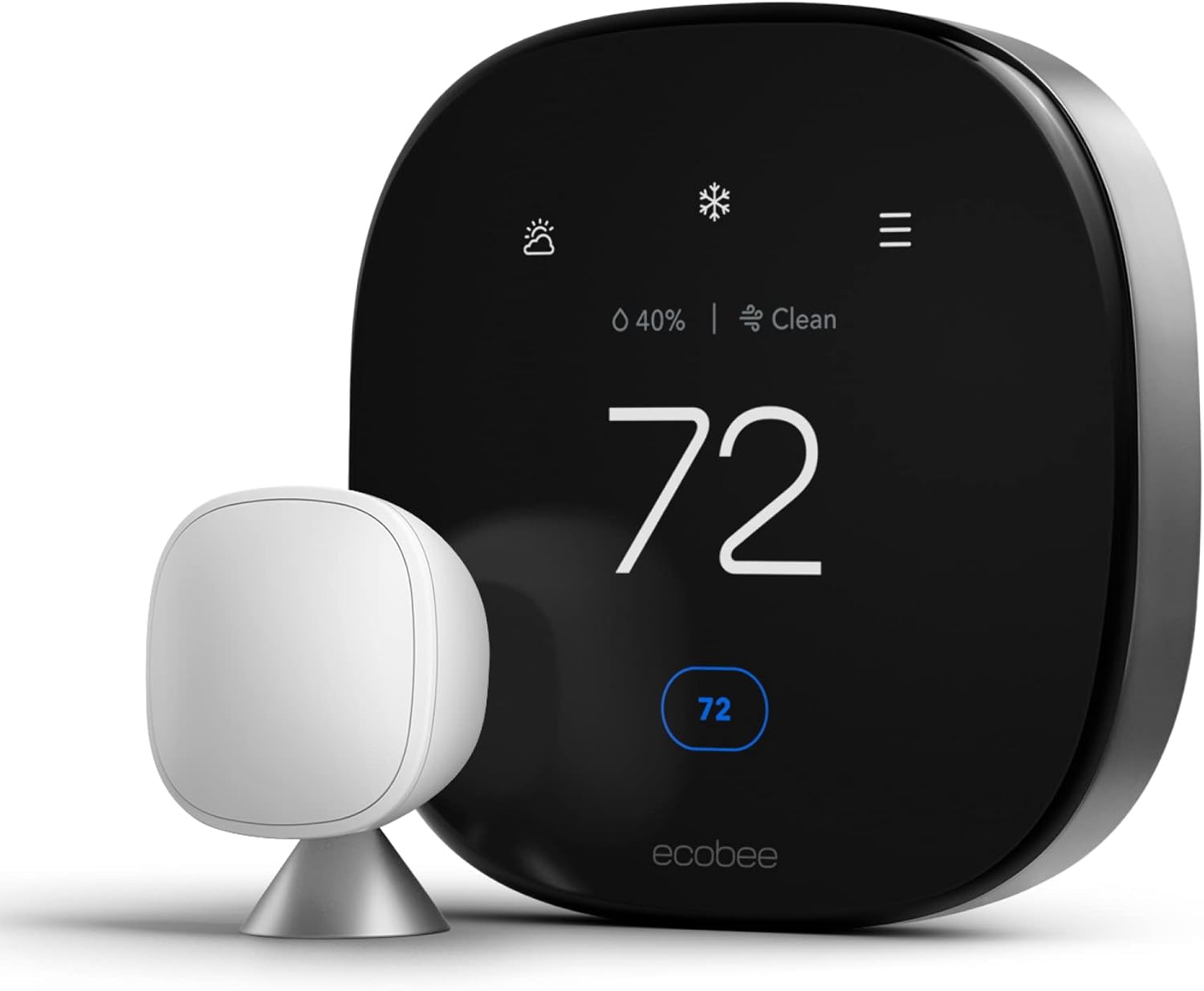
- Ecobee: Offers precise deadband configuration and excellent multi-sensor averaging. The Ecobee Premium vs. Enhanced comparison shows which model’s features best address mode-switching scenarios.
- Nest: The learning algorithm is well-tuned to avoid oscillation, though it requires proper setup. See our comparison of Nest vs. Honeywell thermostats.
- Honeywell Home T9/T10 Pro: Excellent for multi-room homes with remote sensors; configurable deadband prevents hunting. Read the Honeywell T9 vs. T10 Pro comparison.
- Sensi Touch: Simple but precise—a good choice for straightforward HVAC systems. See the Sensi Touch review.
For a comprehensive feature comparison to guide your decision, our guide on key features to compare when buying a smart thermostat provides a structured evaluation framework.
✅ Energy Savings from Fixing Mode Switching
Erratic heat/cool switching is one of the most energy-wasteful thermostat behaviors. Running both heating and cooling in close succession (or simultaneously) can increase your HVAC energy consumption by 20–40%. After resolving mode-switching issues, many homeowners see noticeable decreases in their monthly bills. For additional tips on reducing HVAC energy use, read our article on HVAC energy efficiency tips. You can also explore 2026 smart thermostat rebates to offset the cost of a replacement.
When to Call an HVAC Technician
If you have checked the settings and wiring but the system still flip-flops, the issue is likely mechanical or deep in the control board. At this point, DIY troubleshooting has reached its practical limit and professional diagnosis is warranted.
Signs You Need a Pro:
- The reversing valve makes a loud “whoosh” or clanging sound when the mode changes.
- The outdoor unit is covered in ice while in “Cool” mode.
- The furnace control board has a flashing LED code indicating a relay failure.
- The system has been short-cycling for more than a week (compressor damage risk is high).
- Your energy bills have increased significantly with no change in usage patterns.
- The thermostat display shows error codes or alternates between “Heat On” and “Cool On” in rapid succession.
Before calling a technician, it’s helpful to understand the potential cost scope. For reference, our guides on HVAC system replacement costs, furnace replacement costs, and AC unit installation costs can help you evaluate whether repair or replacement makes more financial sense for your specific situation.
Related Thermostat Troubleshooting Articles
Frequently Asked Questions
Can thermostat schedules cause unwanted heat/cool switching?
Yes. If you have a morning schedule set to 72°F Heat and an afternoon schedule set to 68°F Cool, a smart thermostat will force a mode change to meet those targets. This is particularly common with schedules that haven’t been updated for the current season—a “summer” schedule left active in winter will cause the thermostat to attempt cooling when the house gets above the summer setpoint, even on cold days. Always review your full schedule when erratic switching begins.
Does thermostat placement affect auto mode switching?
Absolutely. If a thermostat is in a sunny spot, it may think the house is 80°F (triggering AC) even if the rest of the house is 65°F (which would normally trigger Heat). Drafty locations near exterior walls or doors can create the opposite problem. The ideal thermostat location is an interior wall in a central room, away from windows, doors, air vents, and heat-generating appliances. If you’re dealing with persistent placement issues, read our detailed guide on why your thermostat shows the wrong room temperature.
Is a thermostat upgrade worth it to fix auto mode issues?
If your current thermostat doesn’t allow you to adjust the “deadband” (the buffer between heat and cool), upgrading to a more advanced model is highly recommended to prevent system wear. The cost of a new thermostat ($50–$250 depending on features) is typically recovered within 1–2 heating/cooling seasons through reduced energy waste from eliminated short-cycling. Additionally, smart thermostat rebates in 2026 can significantly offset the purchase price.
Why does my thermostat switch modes at the same time every day?
This is a strong indicator that a schedule, automation, or learned behavior is the culprit. Check your thermostat’s schedule programming and any connected smart home routines. If you use a learning thermostat (Nest Learning, etc.), it may have observed a pattern over several days and begun replicating it. A factory reset followed by manual reconfiguration will resolve this. Review how thermostat adaptive learning functions and how to disable or retrain it.
Can a low battery cause my thermostat to switch modes randomly?
Yes. When battery voltage drops to a critical level, the thermostat’s logic board may behave erratically—and one manifestation is random mode changes. The thermostat may display normal readings while the battery is too weak to maintain stable logic operation. Replace batteries immediately if you see any low-battery indicator, and consider doing so proactively once per year. For more detail on how battery failure affects thermostat behavior, read our guide on thermostat low battery and relay click failures.
My heat pump switches from heat to emergency heat randomly — why?
This is a specific heat pump issue. “Emergency heat” (or “Aux heat”) should only activate when the outdoor temperature drops below the system’s balance point, typically 35–40°F, or when the heat pump itself fails. Random switching to emergency heat suggests either a fault code from the heat pump (check the outdoor unit’s diagnostic LED), a thermostat configuration issue with the Aux/E heat thresholds, or a problem with the outdoor temperature sensor that the thermostat uses to determine when to activate auxiliary heat. Call an HVAC technician if this issue persists after a factory reset.
How do I know if it’s the thermostat or the HVAC system causing the switching?
The definitive test is to bypass the thermostat temporarily using jumper wires. With the power off, connect the R wire directly to W (heating only) and observe if the furnace runs without cycling off unexpectedly. Reconnect as normal. Then test R-to-Y (cooling only). If the HVAC components behave correctly with direct jumper connections but not with the thermostat connected, the thermostat is the cause. If the problems persist even with jumpers, the control board or refrigerant system is the culprit. For a comprehensive guide to this type of diagnosis, see our article on 12 symptoms and tests for a bad thermostat.
What is a “hunting” thermostat and is that the same as mode switching?
“Hunting” is a term used to describe a thermostat or control system that oscillates back and forth trying to reach a target setpoint, turning equipment on and off rapidly. Mode switching is a specific form of hunting where the system alternates between heating and cooling modes. Both problems stem from similar root causes: narrow deadbands, inaccurate temperature sensing, or logic errors. The solutions are the same: widen the deadband, verify sensor accuracy, and check for configuration errors.




 Home
Home
 Info
Info
 Compare
 Reviews
 Shop
Shop