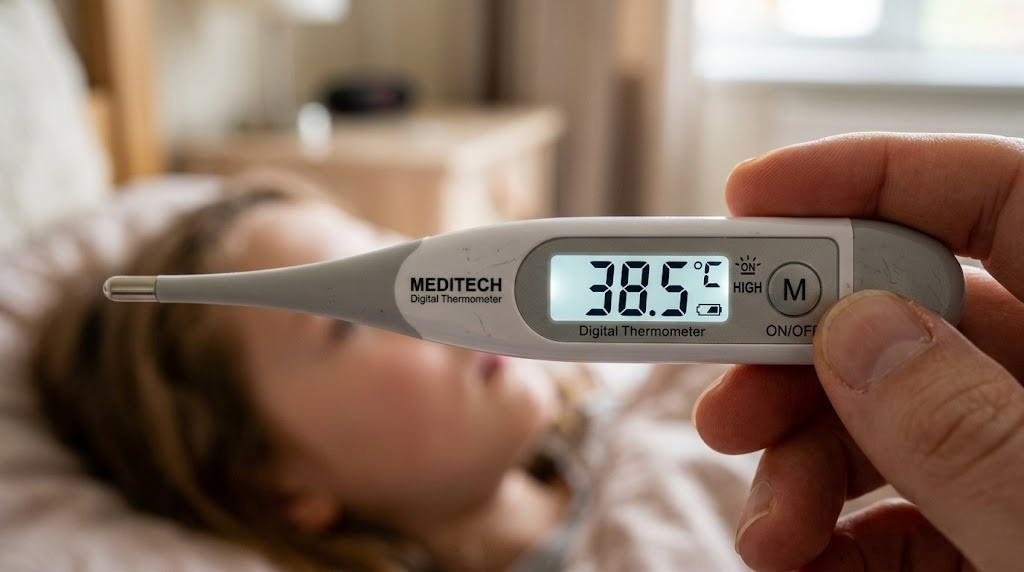
What Is a Digital Thermometer?
Everything You Need to Know
From thermistor sensors to infrared optics — a plain-language deep-dive into what digital thermometers are, how they’re built, and why the type you choose matters more than you think.
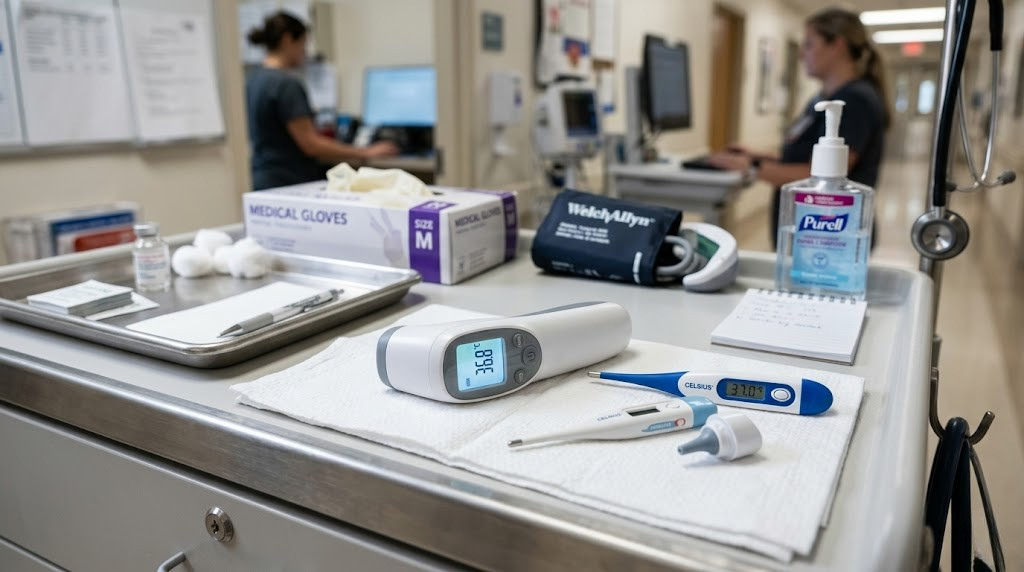
Defining the Digital Thermometer: More Than Just a Number
But that single-sentence definition barely scratches the surface. Modern digital thermometers span a dizzying range of technologies, designs, accuracy levels, and intended uses. The $9 oral probe thermometer in your bathroom cabinet and the $300 clinical-grade tympanic device in a hospital emergency department are both “digital thermometers” — yet they operate on different physical principles, achieve different accuracy tolerances, and serve meaningfully different purposes.
Understanding what a digital thermometer actually is — not just what it does, but how it works at a physical and electronic level — helps you make much better decisions when purchasing, using, and interpreting the readings from one. That’s what this guide is designed to give you: a complete, honest, and genuinely useful picture of the technology you’re trusting with your family’s health.
The practical stakes here are real. Choosing the wrong thermometer for your situation — or using the right one incorrectly — can lead to temperature readings that are off by 1–2°F. For a febrile infant under 3 months old, that difference can be the gap between reassurance and a 3 AM trip to the emergency room. For a post-surgical patient, it can mean missing a developing infection. Throughout this guide, we’ll keep that practical importance front and center.
A Brief History: From Mercury to Microchips
To understand what digital thermometers are, it helps enormously to know where they came from. The story of temperature measurement in medicine is a 400-year journey from crude water-filled tubes to connected devices syncing with your smartphone.
-
1612 — Santorio Santorio
Italian physician Santorio Santorio adapted Galileo’s thermoscope to create the first practical clinical thermometer — a sealed glass tube with a bulb at one end, containing water or alcohol. It was large, slow (taking up to 30 minutes), and not particularly precise by modern standards, but it established the foundational concept that body temperature is a measurable clinical variable.
-
1714 — Daniel Fahrenheit
German physicist Daniel Gabriel Fahrenheit created the first mercury-in-glass thermometer, establishing the temperature scale that still bears his name. His invention used mercury — a liquid metal — because of its predictable linear expansion with temperature, its visibility against glass, and its wide useful temperature range. The Fahrenheit scale, oddly, placed the zero point at a brine solution’s freezing point and 96°F at body temperature (later revised to 98.6°F after improved calibration).
-
1866 — Sir Thomas Allbutt
British physician Sir Thomas Allbutt designed a compact, portable clinical mercury thermometer that took just 5 minutes to read — a revolutionary improvement over the 30-minute instruments then in use. His design became the standard clinical thermometer and remained so for over a century. By the early 20th century, mercury clinical thermometers were a household staple worldwide.
-
1954 — Thermistor Technology
The development of the negative temperature coefficient (NTC) thermistor — a semiconductor whose electrical resistance decreases predictably as temperature increases — laid the groundwork for electronic temperature measurement. The thermistor would become the core sensor in the first generation of digital clinical thermometers.
-
1969–1977 — First Digital Thermometers
The first electronic digital clinical thermometers began appearing in hospital settings in the early 1970s. These early devices used thermistors combined with analog-to-digital converter (ADC) circuits to produce numerical LCD readouts. They were expensive, designed for professional use, and required calibration. By the mid-1970s, miniaturization brought the first consumer-facing digital thermometers to pharmacy shelves in the United States.
-
1984 — Infrared Ear Thermometry
David Phillips at Thermoscan Inc. developed and patented the first infrared tympanic (ear canal) thermometer. By directing an infrared sensor at the eardrum — which shares blood supply with the hypothalamus — the device could take a near-core temperature reading in under 2 seconds. This technology, later acquired by Braun, revolutionized pediatric temperature measurement and is still the gold standard for consumer ear thermometry.
-
2001 — Temporal Artery Thermometry
Francesco Pompei at Exergen Corporation introduced the temporal artery thermometer — a forehead-scanning device that captures infrared emissions from the superficial temporal artery as the device sweeps across the forehead. This method offered a genuinely non-invasive, high-speed alternative to ear and oral measurement and became widely adopted in clinical and home settings.
-
2015–Present — Smart Connected Thermometers
The integration of Bluetooth and Wi-Fi connectivity, smartphone apps, and cloud health platforms created a new category: the connected smart thermometer. Devices like the Withings Thermo and Kinsa QuickCare thermometer sync temperature data automatically to apps, maintain family health histories, and can even contribute anonymously to disease surveillance networks — a feature that proved remarkably valuable during the COVID-19 pandemic when real-time fever data helped map outbreak patterns.
The trajectory from Fahrenheit’s glass tube to today’s cloud-connected temporal artery scanners is remarkable — but the core purpose has never changed: give clinicians and caregivers a fast, reliable number that tells them something meaningful about what’s happening inside the body.
How a Digital Thermometer Works: The Science Explained
At its core, every digital thermometer does the same thing: it converts thermal energy (heat) into an electrical signal, then processes that signal into a number displayed on a screen. But the physical mechanism by which it detects heat varies significantly by type — and that variation has real consequences for accuracy, speed, and appropriate use.
For a complete technical deep-dive, our dedicated guide on how a digital thermometer works covers the sensor physics in even greater depth. Here, we’ll give you a thorough but practical explanation of the three main sensing mechanisms.
Mechanism 1: Thermistor-Based Measurement (Probe Thermometers)
The thermistor is the workhorse of probe-style digital thermometers — oral, rectal, and axillary types. A thermistor is a semiconductor component whose electrical resistance changes in a predictable, characterizable way as its temperature changes. Specifically, NTC (Negative Temperature Coefficient) thermistors — the type used in thermometers — decrease in resistance as temperature increases.
The key process: a small voltage is applied across the thermistor. As the probe tip absorbs heat from body tissue, the thermistor’s resistance falls. This changes the current flowing through it, which changes the voltage across a reference resistor in the circuit. An analog-to-digital converter (ADC) converts this voltage into a digital value, which a microprocessor then translates into a temperature using a factory-calibrated lookup table or equation. The LCD then displays that value.
A critical refinement in modern probe thermometers is predictive temperature measurement. Rather than waiting for the probe to fully equilibrate with body tissue (which can take 2–5 minutes), the microprocessor uses the rate of temperature rise over the first 8–10 seconds to mathematically project the final equilibrium temperature. This algorithm, unique to each manufacturer and refined through thousands of calibration data points, is why a modern digital probe thermometer reads in 8–10 seconds rather than 3 minutes.
Mechanism 2: Infrared (IR) Sensor Technology
Infrared thermometers — used in forehead and ear thermometers — detect temperature without touching the tissue directly. They work on a fundamental principle of physics: all objects emit infrared radiation proportional to their temperature. The hotter the object, the more infrared it emits. An infrared sensor (technically called a thermopile or photodiode array) captures this radiation and converts it into an electrical signal.
In an ear thermometer, the IR sensor is directed at the tympanic membrane (eardrum). The thermopile generates a small voltage proportional to the infrared energy it receives. The device’s microprocessor also reads an ambient temperature sensor to compensate for room temperature effects, then applies a calibration algorithm to calculate the body temperature equivalent and displays it. The whole process takes under 1 second.
Forehead (temporal artery) thermometers work on the same IR principle but measure the emission from the skin over the temporal artery. Because skin is cooler than the eardrum, these devices apply larger correction algorithms — and are more susceptible to environmental artifacts like sweat, wind, or cold ambient air.
Mechanism 3: Smart Sensor Arrays (Multi-Point IR)
The most sophisticated consumer thermometers, like the Withings Thermo, use arrays of multiple IR sensors (up to 16 or more) rather than a single point sensor. The device sweeps across the forehead while the array captures dozens of readings per second, selecting the peak temperature reading from the temporal artery pass. Statistical processing across multiple measurements reduces single-point error and improves consistency. This multi-point approach is closer to the methodology used in hospital-grade temporal artery thermometers.

Key Components of a Digital Thermometer
Every digital thermometer — regardless of type — is made up of a core set of functional components. Understanding these helps you evaluate quality, troubleshoot issues, and understand why some models outperform others.
Temperature Sensor
The NTC thermistor (probe models) or thermopile/IR sensor (forehead/ear models) — this is the critical component that actually “feels” the temperature. Sensor quality directly determines accuracy floor.
Signal Conditioning
Amplifier circuits boost the tiny voltages from the sensor into measurable signals. Low-noise analog front-ends are essential for precise readings — this is where cheaper thermometers often cut corners.
Analog-to-Digital Converter
The ADC converts the continuous analog voltage from the sensor into a discrete digital number the microprocessor can work with. Higher-resolution ADCs (more bits) mean finer temperature discrimination.
Microprocessor
Runs the firmware: applies calibration curves, executes predictive algorithms, manages the display, triggers alerts, and handles memory. The quality and sophistication of the firmware is a major differentiator.
LCD Display
Most thermometers use LCD (liquid crystal display) screens. Backlit displays are essential for dark-room use. Some premium models use LED or OLED for higher contrast and color capability.
Power Source
Most consumer thermometers run on CR2032 coin cells or AAA batteries. Battery life of 1–2 years is standard with normal use. Some smart thermometers use rechargeable batteries.
Memory Module
Small non-volatile memory (typically EEPROM) stores recent temperature readings and calibration constants. More memory means more readings retained — useful for tracking fever progression.
Audio Indicator
A piezoelectric buzzer signals when the reading is complete (and on some models, alerts for high fever). The number of beeps and their pitch pattern encode different information depending on the device.
Types of Digital Thermometers: A Complete Breakdown
Not all digital thermometers are equal — or even comparable. The five main types use different sensor technologies, measure at different body sites, have different accuracy characteristics, and suit different patient demographics. Let’s walk through each in depth.
1. Digital Probe Thermometers (Oral, Rectal, Axillary)
The classic digital thermometer most people grew up with: a probe-tipped wand with an LCD display at the handle end. These are thermistor-based, multi-site capable (oral under the tongue, rectal, or underarm), and generally the most affordable category. They are also — counterintuitively — among the most accurate consumer options when used correctly, because the probe makes direct thermal contact with tissue rather than inferring temperature from radiation.
✅ Strengths
- Highest accuracy for price
- Multi-site versatility
- Simple to use correctly
- Excellent long-term battery life
❌ Limitations
- Slower than IR types
- Not ideal for uncooperative children
- Requires sanitation between uses
2. Infrared Ear (Tympanic) Thermometers
Ear thermometers are the go-to for older infants, children, and adults who need a fast, moderately non-invasive temperature reading. The tympanic membrane shares arterial blood supply with the hypothalamus — the brain structure that regulates temperature — making it a biologically privileged measurement site. With proper positioning (probe directed at the eardrum, not the canal wall), ear thermometers can match oral accuracy in 1 second flat. The challenge is that correct positioning requires practice and is harder to achieve in infants under 6 months due to their smaller, more curved ear canals.
3. Infrared Forehead (Temporal Artery) Thermometers
Forehead thermometers — from basic single-point non-contact devices to the sophisticated 16-sensor Withings Thermo — measure the infrared emission from the skin overlying the temporal artery. They’re fast, contactless (or near-contactless), and require zero cooperation from the patient. These qualities make them excellent for screening large numbers of people quickly, or for measuring a sleeping child without waking them. Their key limitation is susceptibility to environmental factors: sweating, ambient cold, and even recent exposure to cold water can suppress skin temperature and lead to falsely low readings.
4. Smart Connected Thermometers
Smart thermometers combine the measurement technology of types 2 or 3 above with wireless connectivity (Bluetooth, Wi-Fi, or both), a companion smartphone app, and cloud data storage. The measurement accuracy is comparable to their non-connected equivalents; the added value is entirely in the data layer: automatic logging, multi-user profiles, trend graphs, clinician-shareable reports, and (in some systems) population-level disease surveillance. The Withings Thermo is the leading example using Wi-Fi for always-on syncing without requiring you to hold your phone during measurement.
5. Clinical / Professional Grade Thermometers
Devices like the Welch Allyn SureTemp Plus 690, Covidien Genius 2, and Spacelabs tympanic thermometers represent the clinical tier — FDA Class II medical devices with ±0.1°F accuracy, welded stainless steel probes, multi-site capability, and designs built for hundreds of measurements per day over years of use. They’re calibrated against NIST-traceable standards, often support EMR integration, and cost $200–$400+. For home use, they’re significant overkill — but for home health aides, hospice workers, or families managing complex medical conditions, the accuracy margin and durability justify the price.

Digital Thermometer Types: Side-by-Side Comparison
The table below distills the key differences across all major digital thermometer categories so you can quickly identify which type best matches your needs.
| Type | Sensor | Typical Accuracy | Speed | Best Age | Non-Contact? | Price Range |
|---|---|---|---|---|---|---|
| Probe (Oral/Rectal) Most Accurate/Value | NTC Thermistor | ±0.1–0.2°F | 8–10 sec | All ages | ✗ | $8–$25 |
| Ear (Tympanic) Clinically Preferred | IR Thermopile | ±0.2°F | ~1 sec | 3 months+ | ✗ | $30–$80 |
| Forehead / No-Touch | IR Sensor Array | ±0.4–0.6°F | 1–2 sec | All ages | ✓ | $20–$60 |
| Smart / Connected | IR Array + App | ±0.2°F | ~2 sec | All ages | ✓ | $60–$120 |
| Clinical Grade | High-Spec Thermistor | ±0.1°F | 4–6 sec | All ages | ✗ | $200–$400 |
Accuracy ranges represent manufacturer-stated specifications. Real-world accuracy also depends on operator technique and patient cooperation.
Understanding Digital Thermometer Accuracy
Accuracy is the most important spec when evaluating a digital thermometer — and also the most misunderstood. Here’s what you need to know to evaluate it intelligently.
What ±0.2°F Actually Means
A stated accuracy of ±0.2°F means that in controlled laboratory conditions, at least 95% of readings fall within 0.2°F of the true temperature (as measured by a reference standard). It does not mean every reading will be within ±0.2°F. Extreme cases may deviate further. In real-world household use, factors including patient movement, incorrect placement, environmental temperature, and technique variation can easily add another ±0.3–0.5°F of variability on top of the device’s inherent specification.
Temperature Site Hierarchy
Device accuracy is only one part of the accuracy equation. The measurement site’s relationship to true core temperature is often a larger source of variation:
| Site | Relation to Core Temp | Typical Offset | Key Variables |
|---|---|---|---|
| Rectal | Closest (gold standard) | ~+0.5°F above oral | Depth of insertion |
| Tympanic (ear) | Very close | ~+0.2°F above oral | Probe angle, canal anatomy |
| Oral | Good proxy | Reference baseline | Recent food/drink, mouth breathing |
| Temporal (forehead) | Adequate for screening | ~−0.5 to −1°F below oral | Sweat, ambient temp, technique |
| Axillary (armpit) | Least reliable | ~−1 to −2°F below oral | Arm position, hair, clothing |
“The choice of measurement site influences the reading more than the brand or model of device. A $10 oral thermometer used correctly will outperform a $70 forehead thermometer used incorrectly.” — ThermoInsider Testing Team, 2025
Normal Temperature Range: It’s Wider Than You Think
The famous “98.6°F” benchmark is a historical artifact — an average derived from 19th-century German physician Carl Wunderlich’s measurements of 25,000 patients. Modern research (including a 2020 Stanford University study) suggests that average healthy body temperature has actually declined over the past 150 years, now sitting closer to 97.9°F (36.6°C). More importantly, individual variation is significant: a healthy adult’s normal resting oral temperature can range from 97.0°F to 99.0°F depending on time of day, age, recent activity, and hormonal status. Compare temperatures to an individual’s personal baseline rather than assuming the population average applies to them.
How to Choose the Right Digital Thermometer for Your Situation
With five major types across a price range from $9 to $400, the choice can feel overwhelming. In practice, it reduces to three key questions.
Question 1: Who Are You Measuring?
This is the most important factor and should be answered before any other consideration:
- Newborn (0–3 months): Rectal only. The AAP (American Academy of Pediatrics) is unambiguous on this point. Use a probe thermometer with a pediatric flex-tip and safety guard (like the Frida Baby 3-in-1).
- Infant (3–12 months): Ear (tympanic) or rectal. Forehead is acceptable for screening but always confirm a high reading with ear or rectal.
- Toddler/Child (1–12 years): Ear or forehead. Either mode of the iProven DMT-489 works well here.
- Adults: Any method. Oral probe is perfectly adequate and highly accurate. Forehead or ear for speed and convenience.
- Elderly (especially immunocompromised): Consider ear or oral for reliability. Elderly patients may not mount a high fever even with serious infection — accuracy matters more here than convenience.
Question 2: How Often Will You Use It?
Occasional use (a few times a year during illness season): a budget oral probe like the Vicks ComfortFlex at $10–$12 is entirely adequate. Regular use with multiple family members: invest in a dual-mode device like the iProven DMT-489 ($30–$40). Frequent use for tracking purposes: consider a smart thermometer with cloud history. Professional or caregiving context: clinical-grade.
Question 3: What Features Actually Matter to You?
Backlit Display
Essential for nighttime readings without turning on bright lights. Most mid-range and up devices include this.
Color Fever Alert
Green/orange/red LED coding lets you read the result in a dark room without squinting at numbers. Excellent for anxious parents at 3 AM.
Reading Memory
Storing 20+ readings with timestamps lets you track fever progression and show a doctor a chart rather than trying to recall numbers from memory.
App Connectivity
Only pay for this if you’ll genuinely use the history and reporting features. Adding it just for “smart” appeal is a cost-benefit lose.
For comprehensive model-by-model guidance on which specific products we recommend in each category, see our detailed reviews of the best digital thermometers currently available.

How to Use a Digital Thermometer Correctly
The most accurate thermometer in the world will give you a useless number if used incorrectly. Proper technique is especially critical for IR-based thermometers, where placement errors of a few millimeters can shift readings by 0.5°F or more.
Oral Temperature: Step-by-Step
- Wait at least 15 minutes after eating, drinking, or exercising. Hot drinks or food can raise oral temperature; cold can depress it.
- Place the probe tip under the tongue, to one side of the frenulum (the central cord under the tongue). This sublingual pocket is closest to the sublingual artery and gives the most consistent reading.
- Close lips firmly around the probe shaft — no biting. Breathe through your nose.
- Wait for the confirmation beep. Do not remove until you hear it.
- Note the reading, then clean the probe tip with an alcohol swab.
Ear Temperature: Step-by-Step
- Attach a fresh disposable probe cover to the ear thermometer tip.
- For children under 1 year: gently pull the ear straight back to straighten the canal. For older children and adults: pull up and back.
- Insert the probe snugly and point it toward the opposite eye (not straight in). This angles the probe toward the eardrum.
- Press the button and hold steady until the beep. Remove promptly and read.
- Discard the probe cover. Do not reuse covers between patients or even between readings on the same patient.
Forehead Temperature: Step-by-Step
- Ensure the patient has been indoors, at rest, for at least 5 minutes. Remove hats, headbands, or hair from the forehead.
- For no-touch models: hold the device 1–2 inches from the center of the forehead (follow manufacturer distance guidelines precisely — even 0.5 inches too far can affect accuracy).
- For contact models: place the sensor flat in the center of the forehead.
- For temporal artery sweep models: place on center of forehead and sweep steadily to the hairline at the ear, keeping contact.
- Press and hold the button throughout. The device will beep or indicate when complete.
- If the reading seems low and the patient clearly feels warm, confirm with an ear or oral reading.
Caring for and Maintaining Your Digital Thermometer
A digital thermometer is a medical instrument. Treat it as such, and it will give you reliable readings for years. Neglect it, and accuracy drift, contamination, or physical damage can silently corrupt the readings you’re trusting for health decisions.
Cleaning and Disinfection
Probe thermometers: Wipe the probe tip and shaft with a 70% isopropyl alcohol swab before and after every use. Allow to air dry completely before storing. Never submerge the device in water or liquid disinfectant. The electronics are not waterproof. Replace the probe cover (if your model uses them) for each use.
Ear thermometers: Always use a fresh disposable probe cover. The probe cover serves a dual purpose: it prevents cross-contamination and protects the delicate IR sensor window from fingerprints, earwax, and debris. If the sensor window becomes contaminated (cloudy, waxy), clean it gently with a dry cotton swab — do not use alcohol on the sensor window as it can damage the optical coating. Braun and other manufacturers sell compatible replacement probe covers in bulk packs.
Forehead thermometers: Wipe the sensor housing with a damp cloth. Clean the sensor window with a dry lint-free cloth only — no alcohol, no acetone, no cleaning sprays directly on the sensor face. Alcohol can damage the anti-reflective coating on the IR sensor aperture and cause drift over time.
Storage
Store in the provided case or a clean, dry location away from direct sunlight, extreme temperatures, and humidity. Never store in a bathroom cabinet near the shower — the steam and temperature cycling can damage electronic components over time. Most manufacturers recommend storage between 59°F and 95°F (15°C and 35°C). If the device was stored in a very cold car, allow 20–30 minutes of room-temperature acclimatization before taking a reading.
Battery Management
Replace batteries when the low-battery indicator appears, rather than waiting for complete failure. A low battery can cause inconsistent or artificially low readings in some thermometer designs because the ADC circuit reference voltage is affected by the supply voltage. When replacing batteries, note the polarity carefully — installing a battery backward, even briefly, can damage the microprocessor in some models.
Medical vs. Home Digital Thermometers: Understanding the Difference
When most people think of digital thermometers, they picture the consumer devices sold in pharmacies and on Amazon. But there’s a meaningful distinction between consumer-grade and clinical-grade thermometers that matters if you’re making important health decisions.
Regulatory Classification
In the United States, medical thermometers are regulated by the FDA as medical devices. Clinical-grade thermometers that meet strict accuracy and reliability standards are classified as FDA Class II medical devices — meaning they must demonstrate safety and effectiveness through the 510(k) premarket notification process. Consumer-grade thermometers sold for home use typically fall into a lower regulatory tier, though many quality brands (including Braun and iProven) voluntarily meet clinical accuracy standards.
Accuracy Tolerances
FDA guidance for thermometers used in clinical decision-making recommends accuracy within ±0.1°F (±0.05°C) in the clinical range. This is tighter than the ±0.2°F typical of quality consumer thermometers. For most household fever monitoring, ±0.2°F is entirely adequate — the clinical decision threshold (fever vs. normal) involves at least 1–2°F margin in either direction. The tighter tolerance matters most in two contexts: very young infants (where even 0.5°F matters for treatment thresholds) and immunocompromised patients who may not mount a typical fever.
| Feature | Consumer Grade | Clinical Grade |
|---|---|---|
| Typical Accuracy | ±0.2°F | ±0.1°F |
| Calibration Standard | Factory; periodic drift acceptable | NIST-traceable; documented |
| Build Durability | Home use (100s of readings) | Clinical (1000s of readings/year) |
| Regulatory Oversight | Limited FDA oversight | FDA 510(k) Class II |
| Price | $8–$120 | $200–$400+ |
| Best Use | Household fever monitoring | Clinical settings, medically complex patients |
For the vast majority of families, a quality consumer thermometer from a reputable brand is not just acceptable — it’s the right choice. The premium of clinical-grade devices is justified in professional contexts, not typical home use. If you want expert-vetted recommendations across both categories, our guide to the best digital thermometers covers options at every tier and price point.
To go even deeper on the technical and scientific principles underlying these devices, our detailed piece on how a digital thermometer works covers the physics and electronics in granular depth — recommended reading if you want to truly understand what’s happening inside the device in your hand.
Frequently Asked Questions About Digital Thermometers
A “regular” (or traditional) thermometer typically refers to a mercury-in-glass or alcohol-in-glass thermometer — a sealed glass tube where the liquid expands with temperature and rises up a calibrated scale. A digital thermometer replaces the glass-and-liquid mechanism with electronic sensors (thermistors or infrared detectors), a microprocessor, and an LCD display. Key advantages of digital over traditional: digital thermometers are faster (seconds vs. minutes), easier to read (no squinting at a scale), safer (no mercury), more durable (no glass to break), and can store readings in memory. Mercury thermometers have been banned or phased out in many countries due to environmental toxicity. In practice, if you buy a thermometer today, it will almost certainly be digital — glass mercury thermometers are no longer sold in most consumer markets.
Yes — quality digital thermometers are highly accurate. Consumer-grade probe thermometers (oral/rectal) from reputable manufacturers achieve ±0.2°F accuracy, which is equivalent to or better than traditional mercury thermometers. Infrared ear thermometers from brands like Braun achieve the same ±0.2°F when used correctly. The main accuracy variables are: (1) the measurement site chosen, (2) operator technique, and (3) environmental conditions. A well-made digital thermometer used correctly will give you a clinically reliable temperature reading. Accuracy issues in consumer reports are almost always technique-related rather than device failures.
Digital thermometers display temperature on an LCD (liquid crystal display) screen as a numerical readout, typically to one decimal place (e.g., 98.6°F or 37.0°C). The display is driven by the device’s microprocessor, which receives a processed digital value from the temperature sensor, applies a calibration lookup, and sends the result to the display driver. Most modern digital thermometers also use additional visual indicators: backlit displays for visibility in low light, and color-coded LEDs (green/orange/red) on premium models that indicate normal, low-grade fever, and high fever ranges at a glance. Some devices beep a certain number of times depending on whether the temperature is normal or elevated.
Yes, virtually all modern digital thermometers sold in global markets can switch between Fahrenheit (°F) and Celsius (°C) modes. The conversion is handled entirely in software by the microprocessor — the sensor reads the same physical value regardless, and the microprocessor simply applies the appropriate conversion formula before displaying. Switching between modes typically involves holding a button combination for 3–5 seconds (the exact method varies by model and is described in the user manual). The device will retain your last mode setting in its non-volatile memory. If your thermometer is stuck in the wrong unit, the reset/mode-switch is almost always a single button held for several seconds.
Inconsistent readings are usually caused by one of these factors: (1) Technique variation — this is the most common cause. Ensure consistent placement, especially with ear and forehead models. (2) Low battery — replace batteries first. (3) Environmental factors — for forehead thermometers, ensure the patient has been resting indoors for 5+ minutes with clear skin. (4) Dirty sensor — clean the probe tip or IR sensor window. (5) Device malfunction — if readings are wildly inconsistent (±3°F or more) across repeated measurements under identical conditions, the device may have failed and should be replaced. To test: take 5 consecutive readings within 2 minutes on the same site. A well-functioning thermometer should vary by no more than ±0.3°F across those readings.
Reading speed depends on the thermometer type. Infrared ear and forehead thermometers are fastest: 1–2 seconds to a complete, reliable reading. Digital probe thermometers (oral, rectal, axillary) use predictive algorithms to estimate the equilibrium temperature from the rate of rise in the first 8–10 seconds, then beep to confirm. Without predictive mode, full equilibration takes 2–3 minutes — which is why always using the predictive mode is important. Smart thermometers with multi-sensor arrays typically take 2–4 seconds as the device processes multiple readings simultaneously. Clinical-grade probe thermometers typically take 4–6 seconds for their more rigorous predictive measurement.
Digital thermometers are safe for newborns when used correctly and with the appropriate method. For infants under 3 months, the American Academy of Pediatrics (AAP) recommends rectal temperature measurement only. A digital probe thermometer with a pediatric flex-tip safety guard (like the Frida Baby 3-in-1) is the safe, appropriate choice for this age group. The flex-tip prevents over-insertion, and the measurement takes only 8–10 seconds. Ear thermometers should not be used on newborns — the ear canal is too small for accurate positioning. Forehead thermometers are acceptable for quick screening but should not be used as the sole basis for clinical decisions in infants under 3 months. Any fever (rectal temperature ≥100.4°F / 38°C) in a baby under 3 months requires immediate medical evaluation.
Digital thermometers don’t have a formal expiration date, but they can degrade in performance over time. The main failure modes are: (1) battery failure or corrosion (most common, and preventable by using quality batteries), (2) physical damage to the probe tip or sensor (from dropping or improper storage), (3) calibration drift from temperature extremes, humidity, or aging of the sensor, and (4) display or circuit failure. With normal household use and proper care, a quality digital thermometer should remain accurate for 3–5 years. If you’ve had a thermometer for several years and want to verify it’s still accurate, perform the ice-water test described in our buying guide section, or compare readings against a freshly purchased device.
The best digital thermometer depends on your specific needs. For most families, the iProven DMT-489 is our top overall pick — it offers dual forehead and ear measurement, ±0.2°F accuracy, color-coded fever alert, 20-reading memory, and works for all ages from newborns to adults. For ear-specific clinical accuracy, the Braun ThermoScan 7 is the pediatrician’s standard. For newborns specifically, the Frida Baby 3-in-1 with its safe rectal mode is essential. For budget-conscious buyers, the Vicks ComfortFlex provides excellent accuracy at around $10. For tech-forward families, the Withings Thermo offers the best connected experience. See our complete guide to the best digital thermometers for detailed reviews, accuracy testing data, and model-specific recommendations at every price point.
Yes — many modern digital thermometers include modes beyond body temperature. Non-contact forehead thermometers often include a “room temperature” or “ambient” mode that measures air temperature. This can be useful for checking whether a baby’s room is in the safe sleep temperature range (68–72°F recommended by pediatric sleep guidelines). Some models like the Braun No Touch 3-in-1 include a “surface temperature” mode for measuring the temperature of liquids (like formula or bath water). Industrial-grade IR thermometers designed for surface temperature measurement are not suitable for body temperature — they use different algorithms and display uncorrected surface readings, which can be 5–10°F lower than equivalent body temperatures and should never be used clinically.
Now You Know What a Digital Thermometer Really Is
From Santorio’s 17th-century glass tubes to today’s Wi-Fi-connected 16-sensor temporal artery scanners, the mission has never changed: give caregivers a fast, reliable number that tells them something true about what’s happening inside the body. A digital thermometer is simply the best tool we currently have for that job — and understanding how it works makes you a significantly better user of it.
Whether you choose a $10 probe thermometer or a $100 smart device, the same principles apply: pick the right type for your patient’s age, use the right technique, understand what the number means in context, and don’t let a single reading drive a panicked decision. Temperature is one data point in a clinical picture — a knowledgeable caregiver is more important than any device.
🏆 See Our Top 7 Digital Thermometer Picks →



 Home
Home
 Info
Info
 Compare
 Reviews
 Shop
Shop